
By: Robert J. Nahoum
If you have been contacted by a collection agency, you may be wondering: do collection agencies actually sue consumers?
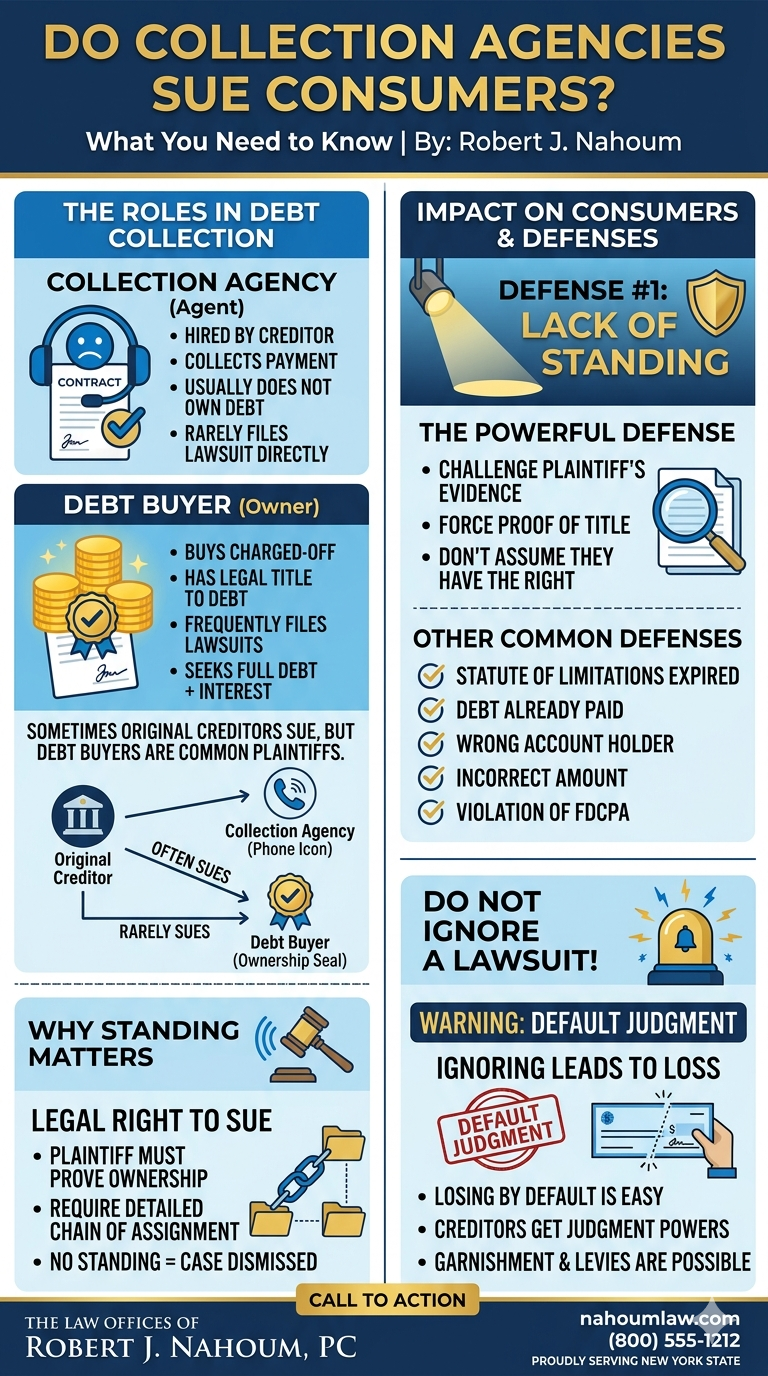
The answer is often misunderstood. In most cases, collection agencies themselves do not sue. Instead, lawsuits are typically filed by the original creditor or by a company that claims it purchased the debt – junk debt buyers.
Understanding this distinction can help you identify who is really suing you, and whether they have the legal right to do so.
Collection Agencies vs. Debt Buyers
A “collection agency” is usually a company hired by a creditor to collect a debt on its behalf. Because the agency does not own the debt, it generally does not have standing to file a lawsuit in its own name.
By contrast, a debt buyer is a company that purchases defaulted accounts and then attempts to collect for its own profit. Debt buyers frequently file lawsuits because they claim to own the debt.
This distinction is critical. If the wrong party files suit, the case may be subject to dismissal.
So Who Actually Sues Consumers?
Debt collection lawsuits are most commonly brought by:
- Original creditors (such as banks or credit card issuers)
- Debt buyers claiming ownership of the account
If you see a lawsuit filed in the name of a “collection agency,” that raises an important legal question: do they actually own the debt, or are they just acting as an agent?
Why Standing Matters
To bring a lawsuit, the plaintiff must have legal standing, meaning a valid right to enforce the debt.
In many cases, especially those involving debt buyers, the plaintiff must prove:
- A valid chain of assignment from the original creditor
- Ownership of the specific account at issue
- The amount allegedly owed
If they cannot establish these elements, the case may be dismissed.
What This Means for Consumers
If you are sued over a debt, do not assume the plaintiff has the legal right to collect. Issues with standing are one of the most common, and most powerful, defenses in debt collection cases.
You should carefully review:
- Who is suing you
- Whether they claim to own the debt
- Whether they have documentation supporting that claim
Common Defenses in Debt Collection Lawsuits
Consumers often have strong defenses, including:
- Lack of standing (plaintiff does not own the debt)
- Expired statute of limitations
- Incorrect amount or accounting errors
- Identity theft or mistaken identity
- Insufficient documentation
Raising these defenses properly requires filing a timely response to the lawsuit.
Do Not Ignore a Lawsuit
Even if you believe the wrong party is suing you, you must still respond to the complaint. Failing to do so can result in a default judgment, regardless of the merits of the case.
How a Consumer Protection Lawyer Can Help
An experienced attorney can evaluate whether the plaintiff has standing and whether the case can be challenged or dismissed.
At Nahoum Law, we represent consumers facing debt collection lawsuits and regularly defend cases involving improper plaintiffs and lack of proof.
Get Your Free Consultation Today
Contact The Law Offices of Robert J. Nahoum, PC immediately.
📞 Call Us: [Insert Phone Number]
📍 Serving: all of New York State
🌐 Learn More: www.nahoumlaw.com
Disclaimer: This FAQ is for informational purposes only and does not constitute legal advice. Laws change, and every case is unique—consult a qualified New York attorney at Nahoum Law for guidance on your specific situation. Prior results do not guarantee outcomes. This is general information, not legal advice; consult an attorney for your case.