
By: Robert J. Nahoum
Phishing scams are no longer just about suspicious emails, they are one of the leading causes of unauthorized electronic funds transfers affecting everyday consumers. When scammers gain access to your banking information through deception, the financial fallout can be immediate and severe. Fortunately, federal law offers important protections.
What Is a Phishing Scam?
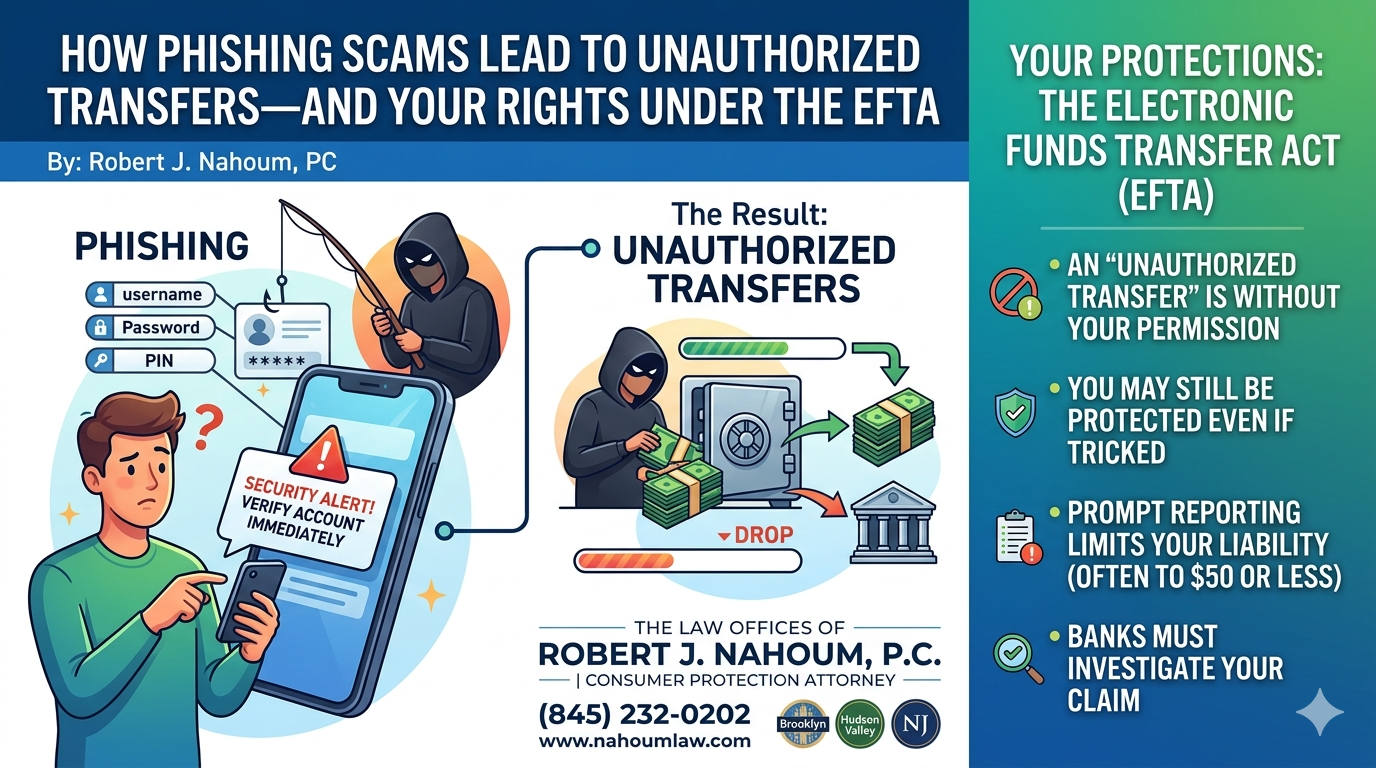
A phishing scam is a type of fraud where a bad actor tricks you into revealing sensitive information such as:
- Online banking usernames and passwords
- Debit card numbers and PINs
- One-time security codes sent by your bank
These scams often appear as legitimate communications from banks, payment apps, or even government agencies. You might receive a text alert about “suspicious activity” or an email urging you to “verify your account immediately.”
Once you provide the requested information, the scammer can access your account and initiate unauthorized transfers, sometimes within minutes.
How Phishing Leads to Unauthorized Transfers
After obtaining your credentials, scammers typically:
- Log into your bank account or payment app
- Transfer funds to external accounts
- Initiate peer-to-peer payments (e.g., Zelle, Venmo, CashApp PayPal Etc…)
- Change account settings to delay detection
From the bank’s perspective, these transactions may appear “authorized” because your login credentials were used. However, that does not automatically mean you are responsible for the loss.
Your Rights Under the Electronic Funds Transfer Act (EFTA)
The Electronic Fund Transfer Act (EFTA) (EFTA) is a federal law designed to protect consumers from unauthorized electronic transactions. Even in phishing situations, you may still be protected.
Under the EFTA:
- An “unauthorized electronic fund transfer” is one made without your permission
- You are generally not liable for unauthorized transfers if you report them promptly
- Your liability may be limited (often to $50 or less) depending on timing
- Banks must conduct a reasonable investigation of your claim
Critically, courts and regulators have increasingly recognized that transactions resulting from phishing scams can still qualify as “unauthorized” under the law, even if the consumer was tricked into providing information.
If your bank denies your claim on the basis that you “authorized” the transaction, that determination may be legally incorrect.
Common Bank Defenses (and Why They Fail)
Financial institutions often deny phishing-related claims by arguing:
- “You shared your credentials, so the transaction was authorized”
- “The login came from your device or IP address”
- “You failed to safeguard your account information”
These arguments don’t tank your EFTA claim. The real legal issue hinges on whether you authorized the actual transfer, or if you were simply tricked into handing over your account info.
What to Do If You Are a Victim
If you suspect a phishing-related unauthorized transfer:
- Report the transaction to your bank immediately
- Document all communications and account activity
- File a written dispute under the EFTA
- Request copies of the bank’s investigation findings
- File a police report
Timing matters. Prompt reporting strengthens your legal protections and limits potential liability.
When to Speak With a Consumer Protection Attorney
If your bank denies your claim or fails to conduct a proper investigation, you may have a valid legal case under the EFTA.
Protecting Consumers From Unauthorized Transfers
If you need help recovering money lost to unauthorized electronic fund transfers, contact us today to see what we can do for you. With offices located in Brooklyn and the Hudson Valey, the Law Offices of Robert J. Nahoum represents consumers in cases throughout the Tristate area including New Jersey.
The Law Offices of Robert J. Nahoum, P.C
(845) 232-0202
www.nahoumlaw.com
info@nahoumlaw.com
Disclaimer: This blog post is for informational purposes only and does not constitute legal advice. Laws and regulations are subject to change. Please consult with an attorney for advice regarding your specific situation.