
By: Robert J. Nahoum
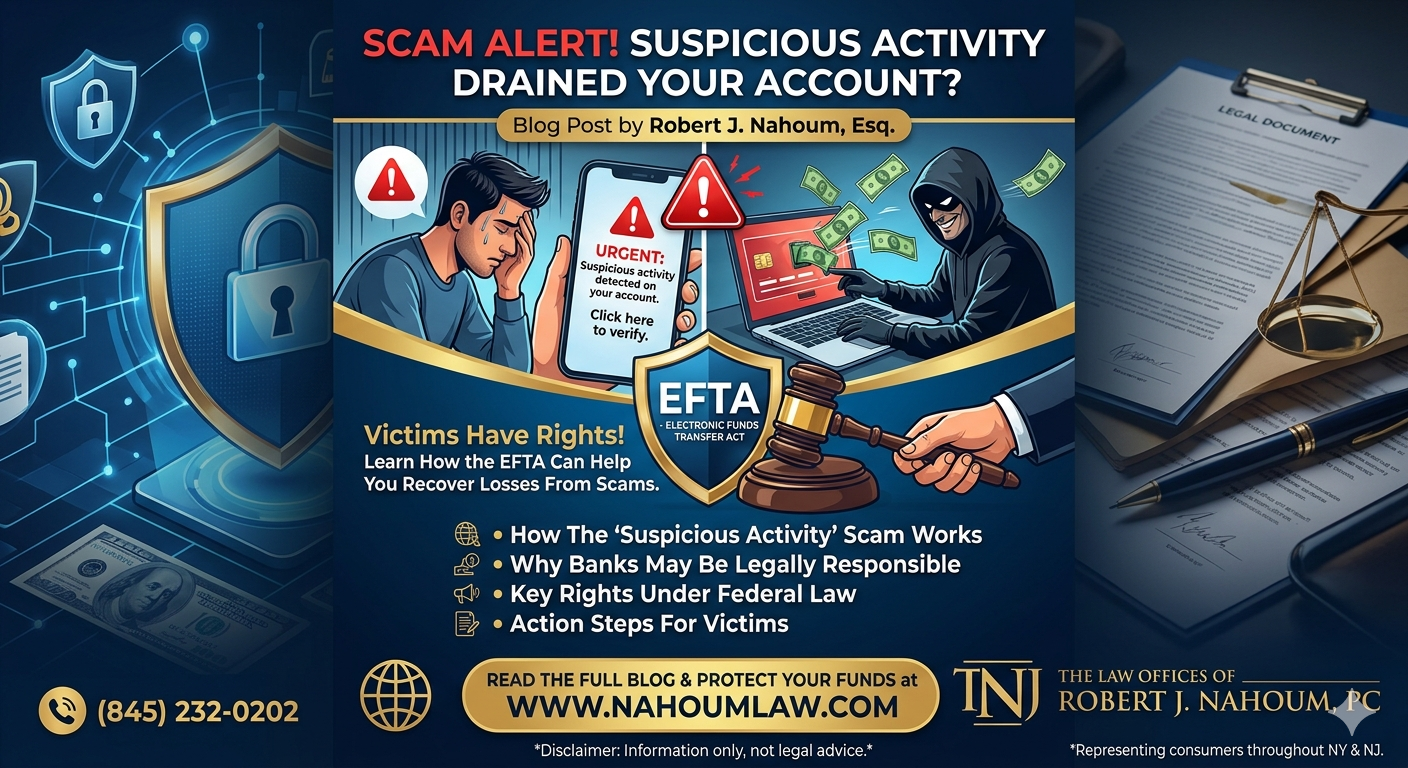
Scam alerts warning of “suspicious activity” on your bank account are becoming increasingly sophisticated—and increasingly dangerous. A recent report highlights how fraudsters are using these messages to trick consumers into giving up access to their accounts, often leading to devastating financial losses.
If you or someone you know has fallen victim to this type of fraud, it is important to understand that federal law—specifically the Electronic Funds Transfer Act (EFTA)—may provide a path to recovery.
How the Scam Works
Scammers pose as banks or financial institutions and send urgent messages claiming there has been suspicious activity on an account. These alerts often:
- Appear legitimate, using bank logos or spoofed phone numbers
- Create urgency, pushing the consumer to act quickly
- Direct victims to click a link or call a number
- Prompt entry of login credentials or verification codes
Once the scammer gains access, they initiate unauthorized electronic funds transfers, draining the account before the victim realizes what has happened.
Why These Losses May Be Legally Recoverable
Many consumers assume that if they were “tricked,” they are automatically responsible for the loss. That is not always true.
Under the Electronic Funds Transfer Act, consumers are protected against unauthorized transfers from their accounts. An “unauthorized electronic fund transfer” generally includes transactions initiated by someone other than the consumer without actual authority.
Even in scam situations, key legal questions include:
- Did the consumer actually authorize the transfer?
- Did the bank follow proper investigation procedures?
- Were required disclosures and safeguards in place?
In many cases, banks improperly deny claims by arguing that the consumer “authorized” the transaction simply because they were deceived. Courts and regulators have increasingly rejected this position.
Common Bank Mistakes in Scam Cases
Financial institutions do not always comply with their obligations under the EFTA. Common issues include:
- Failing to conduct a reasonable investigation
- Relying solely on the fact that login credentials were used
- Ignoring evidence of fraud or account takeover
- Missing deadlines for resolving disputes
- Providing vague or incomplete denial letters
These failures can form the basis of a legal claim.
What to Do If You Are a Victim
If you believe you were targeted by a scam like the one described:
- Report the unauthorized transfers to your bank immediately
- Document all communications and transactions
- Request written confirmation of the bank’s investigation
- Avoid accepting a denial without reviewing your legal rights
Timing matters. The sooner you act, the stronger your position under federal law.
When to Speak With a Lawyer
If your bank denies your claim or fails to fully reimburse your losses, it may be time to consult an attorney experienced in EFTA claims.
At Nahoum Law, we represent consumers in disputes involving unauthorized electronic funds transfers and improper bank investigations.
Protecting Consumers From Unauthorized Transfers
If you need help recovering money lost to unauthorized electronic fund transfers, contact us today to see what we can do for you. With offices located in Brooklyn and the Hudson Valey, the Law Offices of Robert J. Nahoum represents consumers in cases throughout the Tristate area including New Jersey.
The Law Offices of Robert J. Nahoum, P.C
(845) 232-0202
www.nahoumlaw.com
info@nahoumlaw.com
Disclaimer: This blog post is for informational purposes only and does not constitute legal advice. Laws and regulations are subject to change. Please consult with an attorney for advice regarding your specific situation.