
By: Robert J. Nahoum
Most people assume they’ll know right away if they’ve been sued. In reality, many New Yorkers only discover a debt collection lawsuit after their paycheck is suddenly reduced by a wage garnishment.
If that sounds surprising, you’re not alone, and there are specific legal and practical reasons why this happens so often.
How Debt Lawsuits Are Supposed to Work
In New York, a debt collector must first file a lawsuit and then properly “serve” you with legal papers (called a summons and complaint). This step is meant to give you notice and an opportunity to respond.
If you respond in time, you can defend yourself, challenge the debt, or negotiate a resolution.
But if you don’t respond, the creditor can obtain a default judgment, and that’s where things start to spiral.
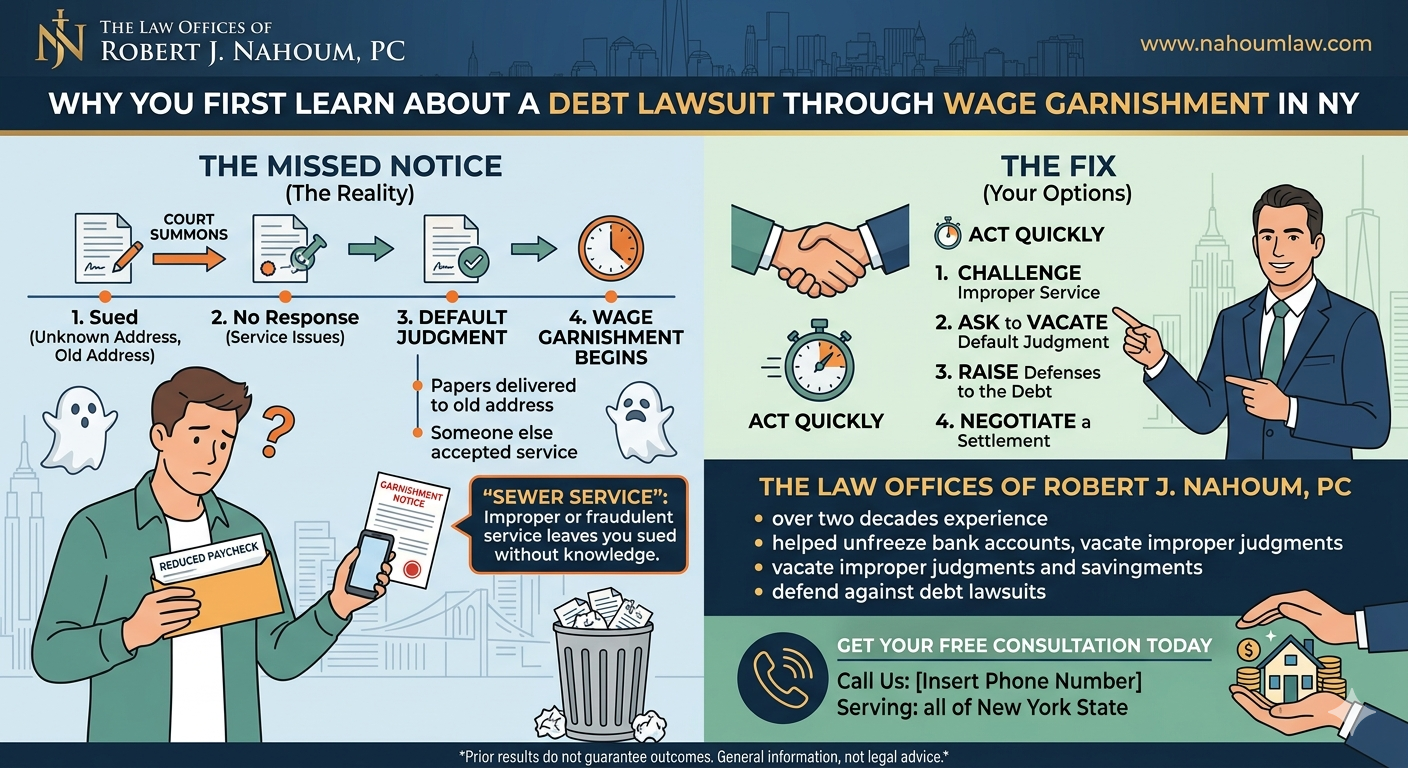
The Reality: “Sewer Service” and Missed Notices
In many cases, consumers never actually receive the lawsuit papers. This can happen for several reasons:
- The papers were delivered to an old address.
- Someone else accepted service and never passed it along.
- The process server claims service was made, but it wasn’t (“sewer service”).
“Sewer service” is a well-documented issue in New York, where improper or fraudulent service results in people being sued without their knowledge.
Because of this, many consumers never get the chance to appear in court or defend themselves.
What Happens After a Default Judgment
If you don’t respond to the lawsuit, the court may enter a default judgment against you. Once that happens, the creditor gains powerful collection tools, including:
- Wage garnishment (income execution)
- Bank account restraints
- Property liens
At that point, the creditor no longer needs to notify you in advance of enforcement. Instead, you may first learn about the lawsuit when:
- Your employer informs you of a wage garnishment, or
- Your paycheck is suddenly reduced
Why Wage Garnishment Is Often the First Notice
Wage garnishment tends to be the first clear signal because it directly impacts your income. Unlike mailed court papers, which can be missed, ignored, or improperly served, a garnishment is immediate and difficult to overlook.
By the time garnishment begins:
- A lawsuit has already been filed
- A judgment has already been entered
- The creditor has already taken steps to enforce it
In other words, you’re seeing the end of the process, not the beginning.
What You Can Do If This Happens
If you first learn about a debt lawsuit through wage garnishment, you still have options, but timing matters.
You may be able to:
- Challenge improper service of process
- Ask the court to vacate (undo) the default judgment
- Raise defenses to the underlying debt
- Negotiate a settlement or payment arrangement
An experienced consumer defense attorney can evaluate whether the judgment can be reopened and whether the creditor followed the law.
Final Thoughts
It’s frustrating, and often unfair, to learn about a lawsuit only after your wages are being garnished. But this situation is more common than most people realize, especially in debt collection cases.
The key is to act quickly. Even if a judgment has already been entered, there may still be a path to challenge it and protect your income.
Why Choose The Law Offices of Robert J. Nahoum, PC?
Debt collection laws are complex, and banks often err on the side of the creditor. Robert J. Nahoum is a seasoned consumer protection advocate with over two decades of litigation experience in New York and New Jersey. We have successfully helped countless consumers:
- Unfreeze bank accounts containing exempt funds.
- Vacate improper default judgments.
- Defend against aggressive debt collection lawsuits.
Get Your Free Consultation Today
If your bank account has been frozen by a restraining notice, do not wait for the money to be levied. Contact The Law Offices of Robert J. Nahoum, PC immediately.
📞 Call Us: [Insert Phone Number]
📍 Serving: all of New York State
🌐 Learn More: www.nahoumlaw.com
Disclaimer: This FAQ is for informational purposes only and does not constitute legal advice. Laws change, and every case is unique—consult a qualified New York attorney at Nahoum Law for guidance on your specific situation. Prior results do not guarantee outcomes. This is general information, not legal advice; consult an attorney for your case.