
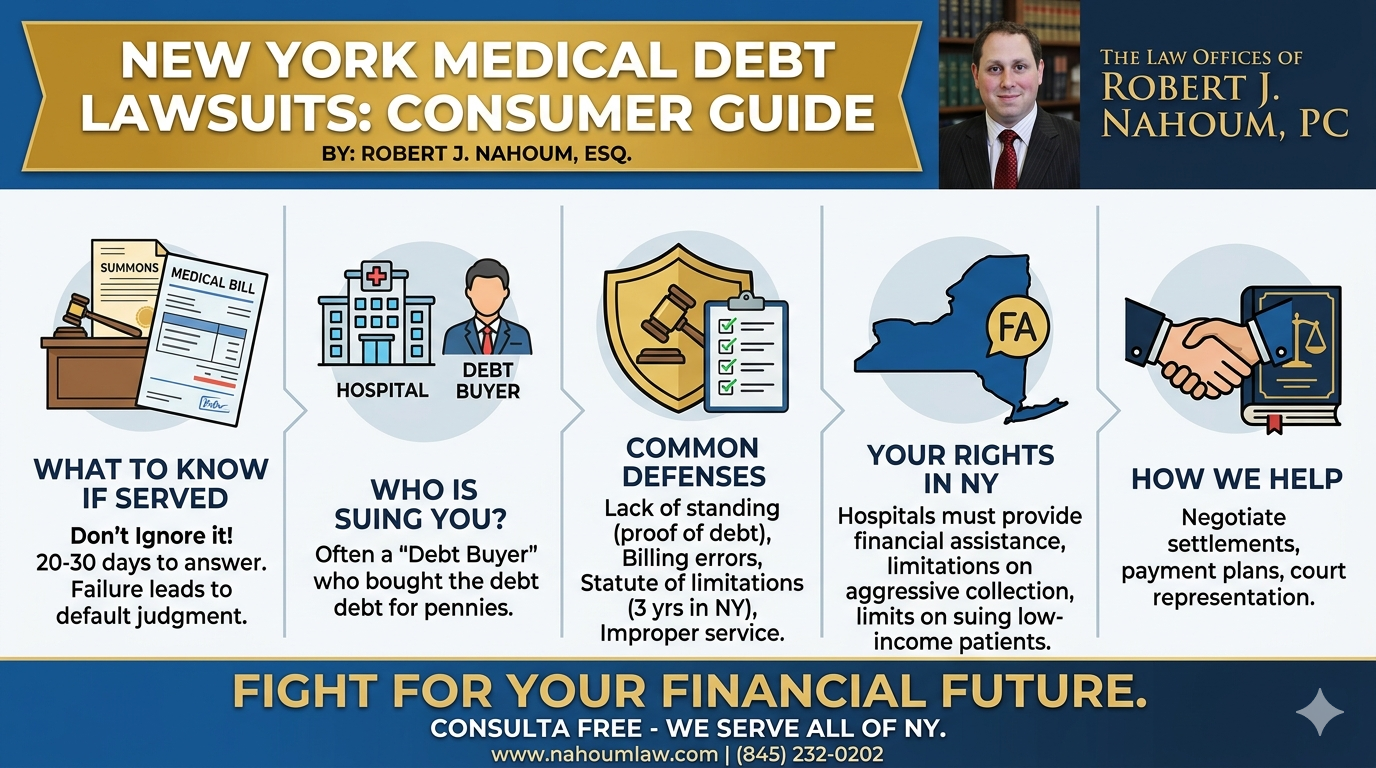
By: Robert J. Nahoum
Medical bills can pile up quickly, even for insured patients. In New York, doctors, hospitals, and other healthcare providers (or companies that buy their debt) often file lawsuits to collect what they claim is unpaid medical debt. If you’ve been served with court papers, it’s important to understand what’s happening and what your rights are.
Who Is Suing for Medical Debt?
Medical debt lawsuits are commonly brought by:
- Hospitals and health systems
- Private medical practices (doctors, specialists, dentists)
- Debt buyers that purchased the debt
- Law firms representing any of the above
In some cases, the entity suing you is not the original provider but a third-party debt buyer. These companies often purchase old accounts for pennies on the dollar and then attempt to collect the full balance.
Why Am I Being Sued?
You may be sued for:
- Unpaid hospital bills after insurance
- Out-of-network charges
- High deductibles or co-insurance balances
- Disputed or incorrectly billed services
Even if you believe the bill is wrong, the lawsuit can still move forward unless you respond properly.
What Happens in a New York Medical Debt Lawsuit?
Most medical debt lawsuits in New York are filed in Civil Court or Supreme Court, depending on the amount claimed.
The process generally includes:
- You are served with a summons and complaint
- You have a limited time to respond (often 20–30 days)
- If you fail to respond, the plaintiff can seek a default judgment
- If a judgment is entered, they may pursue wage garnishment or bank restraints
Failing to respond is one of the most common, and costly, mistakes consumers make.
Common Defenses to Medical Debt Claims
Just because you’re sued doesn’t mean the debt is valid or collectible. There are several potential defenses, including:
- Lack of standing (if the plaintiff is a debt buyer, can it prove it owns the debt?)
- Billing errors or inflated charges
- Insurance payment disputes
- Statute of limitations (generally 3 years for consumer debt in New York)
- Failure to provide proper documentation
An experienced attorney can evaluate whether the lawsuit complies with New York’s consumer protection laws.
Special Protections for Medical Debt in New York
New York has enacted consumer-friendly protections related to medical debt, including:
- Restrictions on aggressive collection practices by hospitals
- Financial assistance requirements for nonprofit hospitals
- Limits on lawsuits against low-income patients in certain situations
These protections don’t automatically stop a lawsuit, but they can provide leverage in defending or negotiating the case.
What Should You Do If You Are Sued?
If you receive court papers, take action immediately:
- Do not ignore the lawsuit
- Verify the identity of the plaintiff
- Gather your medical bills and insurance records
- Consult a consumer protection attorney
Can These Cases Be Settled?
Yes. Many medical debt lawsuits are resolved through:
- Negotiated settlements (often for less than the full amount)
- Payment plans
- Dismissal based on legal defenses
The right approach depends on your financial situation and the strength of the plaintiff’s case.
Final Thoughts
Medical debt lawsuits are increasingly common in New York, but consumers have rights and options. Understanding the legal process, and responding promptly, can help you avoid judgments and protect your financial future.
If you are facing a medical debt lawsuit, it’s worth exploring your defenses before assuming you owe what is claimed.
Get Help With Your Debt Collection Lawsuit Today
If you have been sued by a debt collector in New York, do not wait for a default judgment. The sooner you act, the more leverage you have to negotiate a favorable settlement.
At The Law Offices of Robert J. Nahoum, PC, we represent consumers in the Hudson Valley, Manhattan, Brooklyn, Queens, the Bronx, Staten Island, and throughout New York State. We offer free initial consultations to review your case and discuss your settlement options.
Contact us today at 845-232- 0202 to schedule your free consultation.
Disclaimer: This FAQ is for informational purposes only and does not constitute legal advice. Laws change, and every case is unique—consult a qualified New York attorney at Nahoum Law for guidance on your specific situation.