
By: Robert J. Nahoum
Buying a car should be exciting. Unfortunately, for many consumers, it turns into a legal headache when what they were told at the dealership doesn’t match what they actually signed.
As a consumer protection attorney, I regularly speak with people who say some version of the same thing: “That’s not what the salesperson told me.” While that may be true, the law often looks at things very differently.
The Hard Truth: The Contract Controls
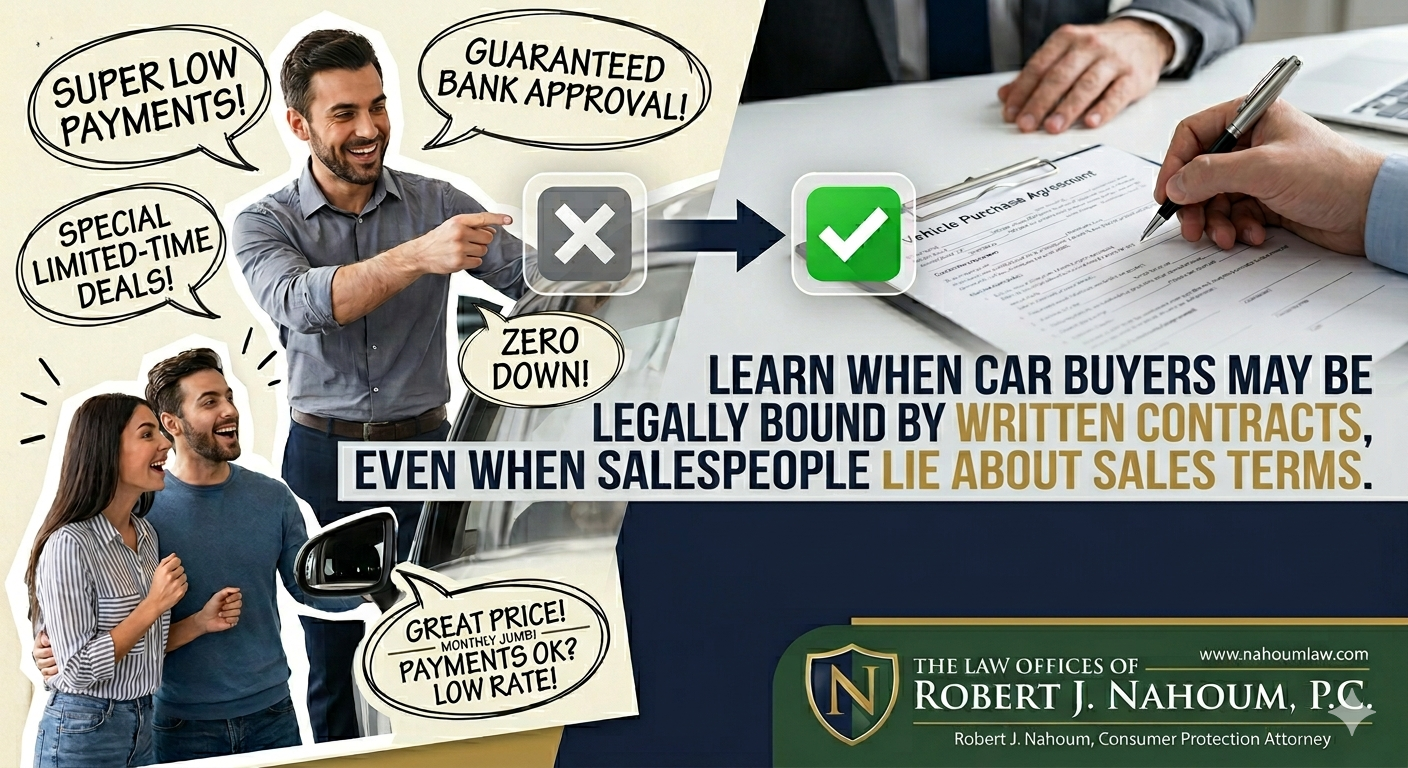
In most situations, once you sign a written contract to buy a vehicle, you are legally bound by its terms, even if they directly contradict what a salesperson or finance manager told you.
Courts generally assume that a signed contract reflects the full agreement between the parties. That means:
- Verbal promises usually don’t count
- Side conversations are often ignored
- The written contract is what matters at the end of the day
This can feel unfair, especially when a buyer relied on what they were told. But the law places a heavy responsibility on consumers to read and understand what they sign.
The Parol Evidence Rule Explained
This principle comes from what’s called the parol evidence rule.
In simple terms, the rule says that when a written contract is intended to be the final agreement, outside statements, like verbal promises or earlier discussions, cannot be used to change or contradict the written terms.
A common example is when the salesperson tells you that the bank requires you to buy an extended warranty to be approved for financing, but the contract clearly states that no such extended warrant purchase is required.
If the contract is clear and complete, a court will generally enforce the written term, not what was said verbally.
That’s why it’s so important to carefully review every document before signing.
Why Car Dealers Rely on This
Auto dealers know that most buyers focus on the monthly payment and trust what they’re told. The paperwork, often dozens of pages long, is where the real terms live.
Some common issues buried in contracts include:
- Hidden fees or add-ons
- Higher interest rates than discussed
- “As-is” language disclaiming warranties
Once signed, these terms are usually enforceable.
When the Law Protects Consumers
There are important exceptions. The law does not protect deceptive or fraudulent conduct.
If a dealer actively prevents you from knowing what you’re signing, the situation changes.
Commons Examples include:
- Rushing you through digital signing screens without allowing you the opportunity to review the full terms
- Hiding key pages and skipping disclosures
- Altering documents after you sign them
- Using forged signatures or falsified paperwork
In these cases, courts may allow claims for fraud, deceptive practices, or violations of consumer protection laws.
What You Should Do Before Signing
The best protection is prevention. Before you sign anything at a dealership:
- Take your time—don’t let anyone rush you
- Read every page carefully
- Ask for copies of all documents
- Compare what you were told with what’s written
- Don’t sign incomplete or blank forms
If something doesn’t match, stop the process and ask questions.
Final Thought
The biggest mistake car buyers make is trusting the conversation more than the contract. Legally, it’s the opposite that matters.
If you believe you were misled or defrauded in a vehicle purchase, you may still have legal options, even if you signed the paperwork.
If you feel you have been misled by an auto dealer you are not without legal recourse. New York State has strong consumer protection laws designed to hold dealerships accountable for deceptive practices.
Protect Your Consumer Rights Today
You don’t have to face predatory auto dealers alone. If you have questions about a recent purchase or believe you were misled by deceptive car advertising in New York, contact us today for a consultation.
Disclaimer: This blog post is for informational purposes only and does not constitute legal advice. If you are experiencing an auto lending or consumer protection issue, it is highly recommended to consult with a qualified attorney.