
By: Robert J. Nahoum
Buying a vehicle is one of the most significant purchases you will make. Unfortunately, not all car dealerships play fair. From bait-and-switch pricing tactics to hidden fees and misleading advertisements, some dealers resort to deceptive practices to lure buyers onto the lot.
If you feel you have been misled by a dealer’s advertisement, you are not without legal recourse. New York State has strong consumer protection laws designed to hold dealerships accountable for deceptive practices.
Here is what you need to know about false advertising under New York law and how a New York consumer rights attorney can help if you have been taken advantage of.
What Constitutes False Advertising Under New York Law?
In New York, false advertising is governed primarily by Section 350 of the New York General Business Law (GBL § 350). This law makes it illegal to use false or misleading advertising in the conduct of any business, trade, or commerce.
For an advertisement to be considered “false” under the law, it must meet the following criteria:
- Likely to Deceive: The advertisement must be misleading in a material way to a reasonable consumer.
- Consumer-Oriented: The deceptive advertising must be aimed at the consumer public.
- Causes Actual Injury: The consumer must have suffered an actual financial loss or injury as a result of relying on the deceptive advertisement.
Common Examples of Car Dealership Deceptive Advertising
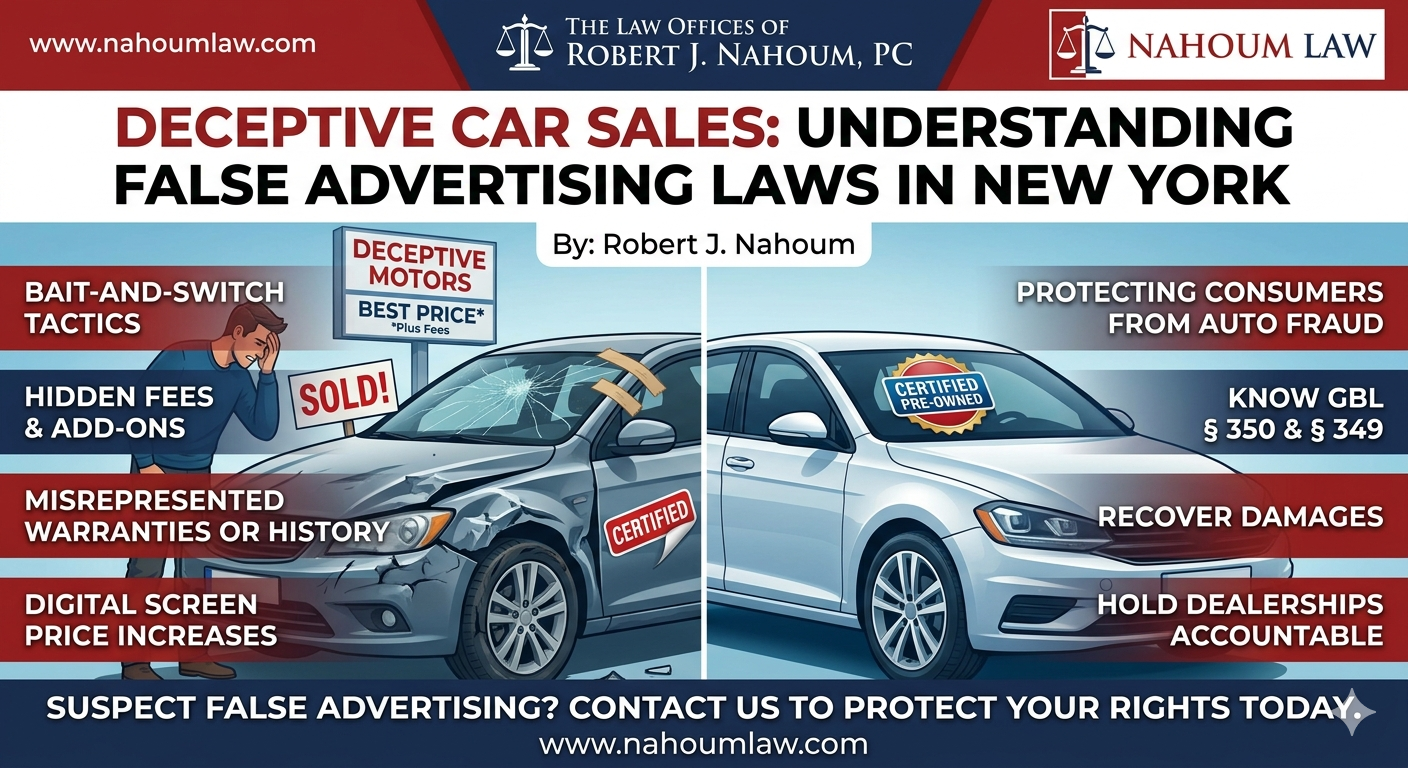
- Bait-and-Switch Tactics: Advertising a specific vehicle, make, or model at an exceptionally low price, only to claim it is “sold out” upon arrival and attempt to sell a much more expensive car.
- Hidden Fees and Add-ons: Advertising a total price but subsequently adding mandatory, undisclosed fees in the finance office.
- Misrepresented Warranties or Vehicle History: Advertising a vehicle as “certified pre-owned” or “accident-free” when it has a salvage or flood title.
- Digital Screen Price Increases: Advertising a vehicle at a specific price, only to have the dealer increase the price within the digital sale or finance documents, often rushing the buyer or hiding the changes behind a digital signature pad or screen.
Consumer Protections Against Deceptive Practices
In addition to GBL § 350, Section 349 of the New York General Business Law prohibits deceptive acts and practices. Together, these two statutes form the backbone of consumer protection in New York State.
If a car dealer violates these provisions, you may be entitled to recover damages. Under the law, a consumer can sue the dealer to recover either actual damages or a statutory fine, whichever is greater. Furthermore, if the court finds that the dealer willfully violated Section 350-a, it may award treble damages (up to three times the actual damages up to $10,000) and reasonable attorney’s fees.
What to Do If You Are a Victim of Car Dealer Fraud
If you suspect that you have been the victim of deceptive advertising or auto dealer fraud in New York, taking the following steps can help protect your rights:
- Keep All Documentation: Save copies of all advertisements, emails, window stickers, and contracts.
- Review Your Paperwork Carefully: Compare the advertised terms with the actual terms listed in your final sales and finance contracts.
- Contact an Experienced Consumer Rights Lawyer: Navigating consumer protection laws demands a thorough understanding of New York State auto fraud regulations.
At the Law Office of Nahoum Law, we are dedicated to representing consumers who have been ripped off by car dealers. We fight to hold deceptive businesses accountable and help you recover the compensation you deserve.
Protect Your Consumer Rights Today
You don’t have to face predatory auto dealers alone. If you have questions about a recent purchase or believe you were misled by deceptive car advertising in New York, contact us today for a consultation.
Disclaimer: This blog post is for informational purposes only and does not constitute legal advice. If you are experiencing an auto lending or consumer protection issue, it is highly recommended to consult with a qualified attorney.