
By: Robert J. Nahoum
Many consumers assume that when something goes wrong with a vehicle, the warranty will protect them. Unfortunately, auto dealers and manufacturers do not always honor those promises. That is where the Magnuson-Moss Warranty Act comes in, a powerful federal law designed to protect consumers from deceptive warranty practices.
If you purchased a car and the dealer or manufacturer is refusing to honor the warranty, understanding this law can make a significant difference.
What Is the Magnuson-Moss Warranty Act?
The Magnuson-Moss Warranty Act, colloquially referred to as the “Federal Lemon Law” is a federal consumer protection law enacted in 1975. It governs how warranties are written and enforced for consumer products, including motor vehicles.
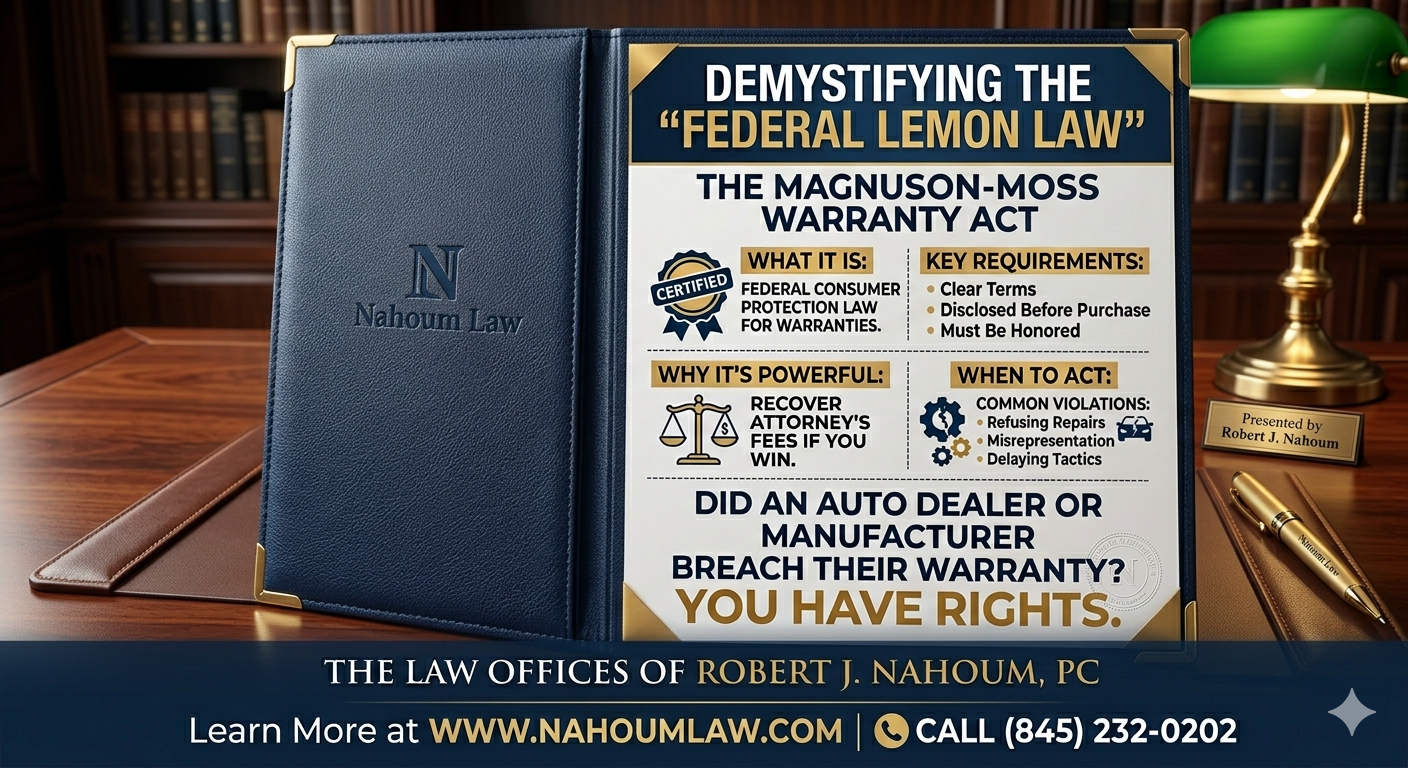
In simple terms, the law requires that warranties be:
- Clearly written and easy to understand
- Fully disclosed before purchase
- Honored according to their terms
It also gives consumers the right to take legal action when a warranty is breached.
How It Applies to Auto Sales
The Act plays a major role in car purchases, especially when a dealer or manufacturer provides a written warranty.
Here is how it impacts auto sales:
- Dealers cannot misrepresent warranty coverage.
- Warranty terms must be disclosed before the sale.
- “Full” vs. “limited” warranties must be clearly labeled.
- Manufacturers and dealers must follow through on repair obligations.
For example, if you buy a used car with a 90-day warranty and the transmission fails within that period, the dealer cannot simply refuse to fix it without violating the law.
Common Warranty Violations by Auto Dealers
Common violations include:
- Refusing to perform covered repairs
- Requiring unnecessary conditions to honor a warranty
- Misrepresenting a warranty as more comprehensive than it is
- Selling vehicles “as is” while verbally promising warranty coverage
- Delaying repairs to avoid responsibility
Why the Magnuson-Moss Act Is Powerful
One of the most important features of the law is that it allows consumers to recover attorney’s fees if they win their case. This levels the playing field and makes it possible to pursue claims that might otherwise be too costly.
Key advantages include:
- Federal cause of action for breach of warranty
- Ability to recover legal fees
- Applicability to both new and used vehicles with warranties
- Strengthens state law claims
This makes it a valuable tool alongside state lemon laws and fraud claims.
What Consumers Should Do If a Warranty Is Violated
If a dealer or manufacturer refuses to honor a warranty, consumers should:
- Keep all purchase and repair records
- Document communications with the dealer
- Request repairs in writing
- Avoid unauthorized repairs that could complicate claims
Most importantly, they should consult an attorney experienced in consumer protection and auto fraud litigation.
How Legal Representation Helps
Warranty claims can quickly become complex, especially when dealers deny responsibility or shift blame to manufacturers.
An experienced consumer protection attorney can:
- Evaluate whether the warranty was breached
- Identify additional claims (fraud, deceptive practices, financing violations)
- Pursue compensation, repairs, or vehicle replacement
- Recover attorney’s fees under federal law
When to Speak With a Lawyer
If you believe you were misled about a warranty, you may have legal options. Misrepresentation, deceptive practices, and improper financing disclosures can all give rise to claims under state and federal law.
Visit www.nahoumlaw.com to learn more about your rights, or contact The Law Offices of Robert J. Nahoum, PC today to schedule a consultation and find out how we can help you fight back.
At The Law Offices of Robert J. Nahoum, P.C., we represent New York and New Jersey consumers who have been ripped off by dishonest auto dealers. If your deal doesn’t match what was promised, you have rights—and we can help you enforce them.
For a free consultation about an auto‑fraud or deceptive‑sales issue, contact us at our Hudson Valley office or our Brooklyn location.
📞 Call (845) 232‑0202 or visit our contact page: www.nahoumlaw.com/contact