
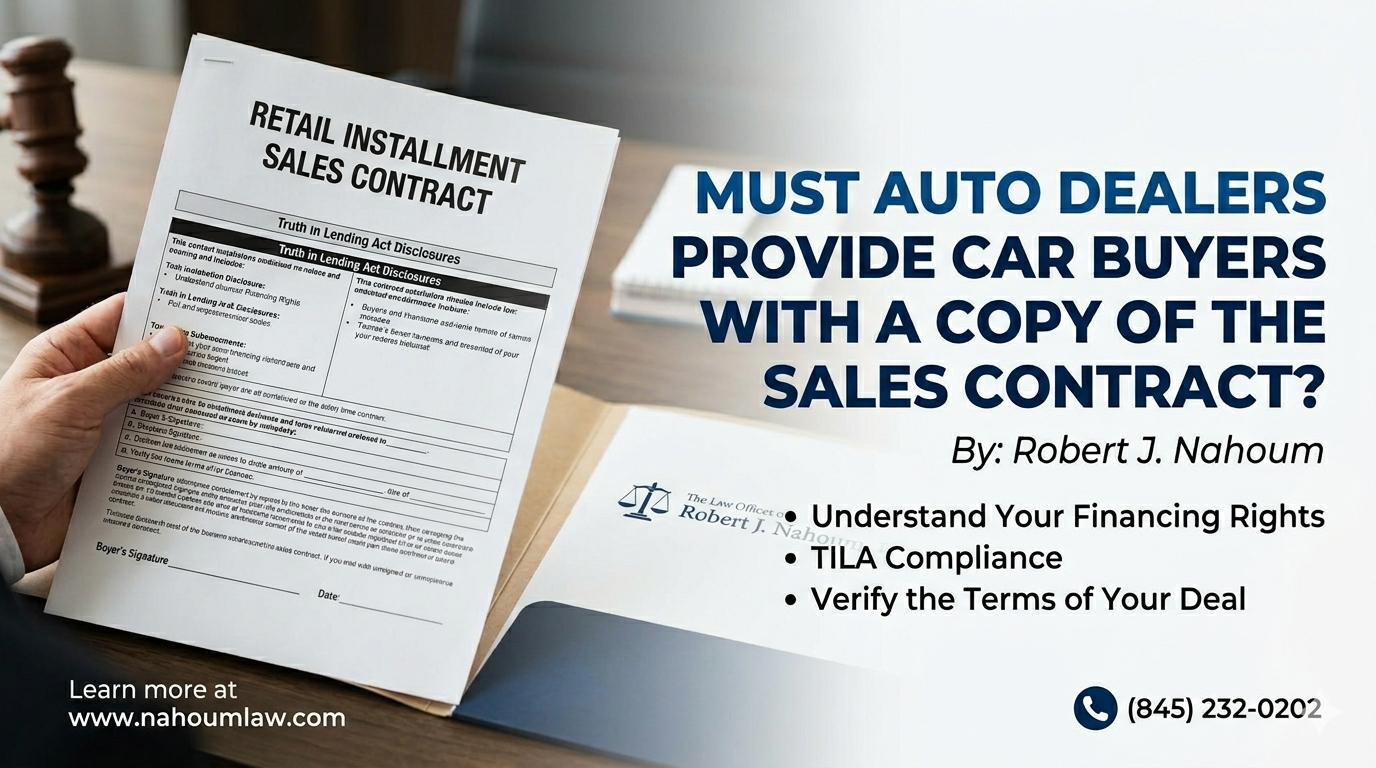
By: Robert J. Nahoum
When you finance a car through a dealership, one of the most important documents in the transaction is the retail installment sales contract. The buyer should receive a copy of that contract, because it shows the real terms of the deal and helps the consumer verify what was actually agreed to.
This matters not only as a basic fairness issue, but also because the financing paperwork is required by the Truth in Lending Act. Federal law requires lenders and creditors to make certain key credit terms clear to consumers before or at the time credit is extended. If a dealer-financed car sale is missing required disclosures, or if the paperwork the buyer receives does not accurately reflect the financing terms, that can raise serious legal issues.
What Is a Retail Installment Sales Contract?
A retail installment sales contract, often called a RISC, is the main finance agreement for a vehicle purchase. It includes the amount financed, the interest rate, the payment schedule, the finance charge, the total amount of payments, and other terms connected to the sale.
For many car buyers, this is the document that controls the deal. It is also the document that contains the disclosures required by the Truth in Lending Act, including information about the cost of credit. Because of that, getting a full copy is essential. Without it, the buyer may not be able to confirm whether the terms disclosed at the dealership were accurate.
Why the Truth in Lending Act Matters
The Truth in Lending Act, often called TILA, is designed to help consumers understand the cost of credit. In a car financing transaction, TILA requires clear disclosure of important credit terms such as the finance charge, annual percentage rate, amount financed, total of payments, and payment schedule.
If a dealer or creditor fails to provide accurate disclosures, or if the buyer does not receive the paperwork reflecting those terms, that can become more than just a paperwork problem. It may create a disclosure violation if the financing terms were not properly presented in the manner required by law. In other words, the failure to give the buyer a copy of the contract can overlap with a TILA issue when the missing paperwork means the consumer cannot review the required credit disclosures.
Should Dealers Provide a Copy?
In a financed vehicle sale, the buyer must receive a copy of the retail installment sales contract. That is true whether the dealer arranges the financing directly or the contract is assigned to a lender after the sale.
The copy matters because it lets the consumer compare what was signed against what was promised. It also gives the buyer a record of the TILA disclosures that should have been provided with the transaction. If a dealer says the paperwork is “still being processed” or that the buyer can obtain it later, that should not be treated as satisfactory in a consumer financing transaction.
What Happens If You Did Not Get One?
If you financed a car and did not receive a copy of the RISC, request it in writing right away. Ask for the executed retail copy and all related disclosures, including any financing disclosures required by TILA.
You should also save your temporary buyer’s order, receipts, lender letters, emails, text messages, and proof of payment. Those documents may help show what terms were offered, what was signed, and whether the disclosures matched the deal. If the dealer refuses to provide the paperwork, that may be a sign that the transaction needs closer legal review.
When Missing Paperwork Becomes a Legal Problem
A missing contract copy can matter for several reasons. It may prevent the buyer from confirming the amount financed or the interest rate, and it may make it harder to detect hidden charges, add-ons, or other undisclosed costs.
It can also become a Truth in Lending Act issue if the missing paperwork means the consumer never received the required credit disclosures in a clear and usable form. That is especially concerning if the numbers later change, if terms were added after signing, or if the buyer is pressured to rely on oral statements instead of written disclosures. In a consumer finance dispute, those facts can support claims that the dealer’s paperwork process was improper.
Related Consumer Protection Concerns
A missing copy of the contract is often only part of a larger problem. Dealers that mishandle financing paperwork may also be involved in misleading sales practices, unauthorized add-ons, or inaccurate credit terms.
For consumers, the takeaway is simple: the finance contract is not just a formality. It is the written record of the bargain, and it is often the document that shows whether the dealer complied with the Truth in Lending Act. If something does not look right, the buyer should not assume it is a harmless clerical issue.
What Buyers Should Remember
Auto dealers should provide financed car buyers with a copy of the retail installment sales contract. That document is important on its own, and it is also central to whether the dealership properly disclosed the financing terms under the Truth in Lending Act.
If you did not receive a copy, demand it immediately and keep a record of your request. If the dealer refuses, or if the paperwork does not match what you were told, the issue may involve more than a missing document and may warrant legal review.
Get Help from a New York Consumer Rights Attorney
Car dealerships have teams of lawyers defending their practices, and they count on everyday consumers staying quiet. If you believe you were the victim of fraud, deceptive advertising, or predatory financing at a dealership, we are here to level the playing field.
Visit www.nahoumlaw.com to learn more about your rights, or contact The Law Offices of Robert J. Nahoum, PC today to schedule a consultation and find out how we can help you fight back.
At The Law Offices of Robert J. Nahoum, P.C., we represent New York and New Jersey consumers who have been ripped off by dishonest auto dealers. If your deal doesn’t match what was promised, you have rights—and we can help you enforce them.
For a free consultation about an auto‑fraud or deceptive‑sales issue, contact us at our Hudson Valley office or our Brooklyn location.
📞 Call (845) 232‑0202 or visit our contact page: www.nahoumlaw.com/contact