
By: Robert J. Nahoum
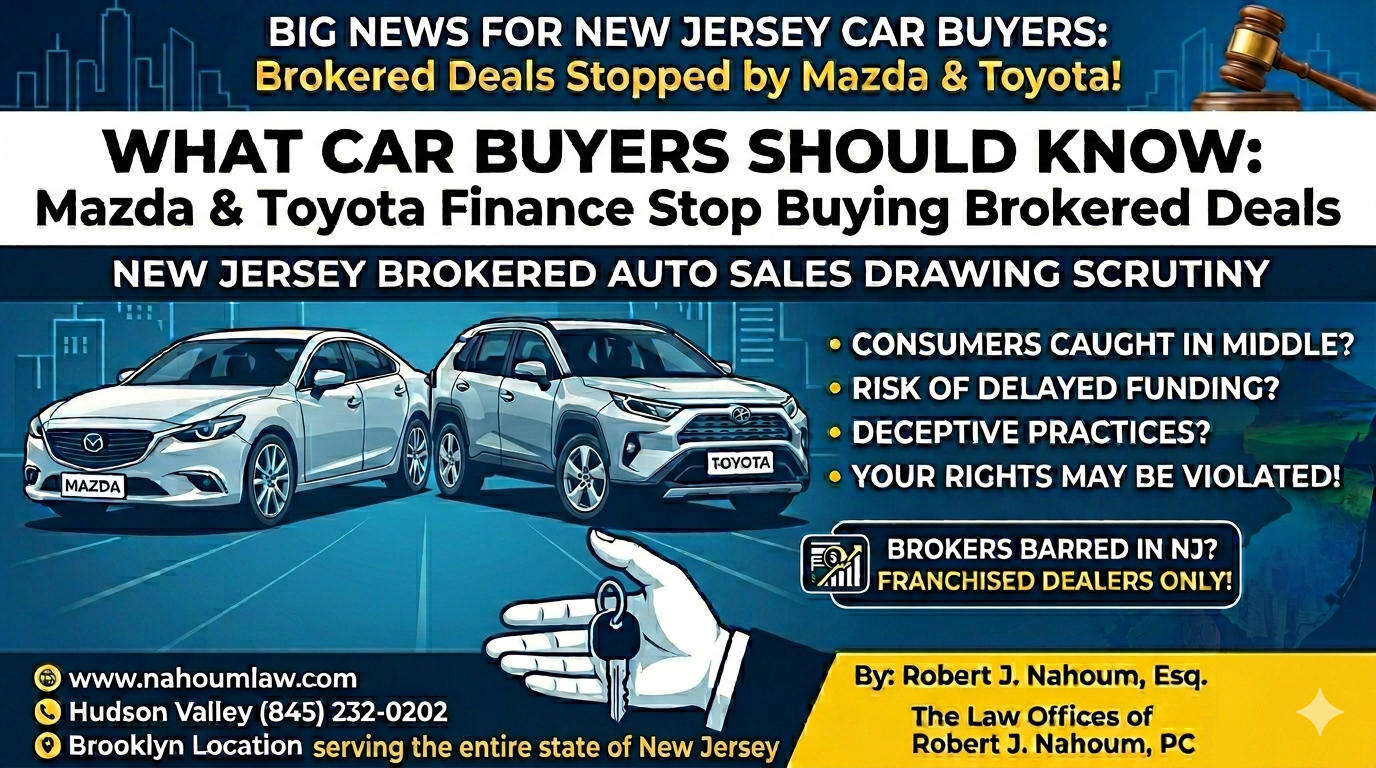
Mazda and Toyota’s finance companies have taken a big step in New Jersey: they will no longer purchase lease or retail contracts involving brokered vehicle deals in the state. For consumers, this is another sign that brokered auto sales are drawing more scrutiny, especially when they involve transactions that may not comply with New Jersey law.
What is a brokered car deal?
A brokered car deal is one where a middleman helps arrange the purchase or lease of a vehicle between the customer and the dealer. Some shoppers use brokers because they want help finding a car or negotiating a price, while others like the convenience of a less stressful buying process. But in New Jersey, franchised dealers are generally barred from arranging new-car sales and leases through brokers, and state regulators have reminded dealers that brokering new-car transactions violates state rules.
What changed for Mazda and Toyota?
According to recent industry reporting, Toyota Financial Services, Lexus Financial Services, and Mazda Financial Services have told dealers that they will not buy contracts tied to brokered deals that originate in New Jersey. If a brokered deal is submitted anyway and gets through by mistake, the dealer may have to repurchase the contract. Toyota and Lexus reportedly made the policy effective May 20, while Mazda’s policy is effective June 2.
That matters because in many car deals, the dealer does not keep the loan or lease itself. Instead, the dealer arranges the financing at the showroom, has the buyer sign the contract, and then sells or assigns that contract to a lender or finance company after the deal closes. In a brokered transaction, that process can become even more complicated because more than one business may be involved in originating, packaging, and transferring the deal. If the paperwork, disclosures, or deal structure is defective, the problem does not disappear just because the car was delivered.
When a lender or finance company refuses brokered deals, the dealer is left with a much bigger compliance and financial risk. In plain English: if a dealer ignores the rule, it may have to take the deal back and absorb the consequences itself.
Why consumers should care
At first glance, this may sound like an issue only for dealers and brokers. But consumers are often the ones caught in the middle when auto transactions are handled improperly. A deal that is structured through a broker can raise questions about disclosures, contract handling, and whether the transaction was lawful under state rules.
If a dealership or broker tells you not to worry about the details, be careful. Problems in the paperwork can lead to delayed funding, contract rescissions, surprise fees, or disputes over who is responsible for the vehicle and financing. Consumers should keep copies of every advertisement, email, text message, worksheet, buyer’s order, lease agreement, and any broker paperwork they receive.
What this means in New Jersey
New Jersey has become a more aggressive state when it comes to brokered auto transactions. Regulators have warned dealers that brokering new-car sales can violate state law, and manufacturers and captive finance companies are increasingly backing that up with their own policies. That combination makes it harder for shady transactions to hide in the background.
For buyers, this is a reminder to ask exactly who is involved in the deal and who is being paid. If a broker is steering the transaction, the consumer should understand whether that arrangement is permitted, whether all fees are disclosed, and whether the vehicle is being sold directly by the dealer or through a middleman.
What to do if you think something is wrong
If you bought or leased a car through a broker and the paperwork looks odd, do not ignore it. Save every document and communication, and consider having the transaction reviewed by a consumer lawyer familiar with auto dealer fraud and leasing disputes.
Your rights may depend on what was promised, what was disclosed, and whether the dealer, broker, or finance company violated New Jersey law. Consumers who were misled, overcharged, or sold an improperly structured vehicle deal may have legal claims worth investigating.
Related legal help
If your case involves a car dealer, broker, lease, or financing problem, you may also want to read: Car Dealer Fraud and Auto Lease Problems. If a debt collector is pressuring you after a vehicle-related dispute, see Debt Collection Defense.
Final thought
This New Jersey policy shift shows that brokered auto transactions are under a brighter spotlight than ever. For consumers, the safest approach is simple: know who is actually selling the car, know what fees are being charged, and get legal advice quickly if the paperwork does
At The Law Offices of Robert J. Nahoum, P.C., we represent New York and New Jersey consumers who have been ripped off by dishonest auto dealers. If your deal doesn’t match what was promised, you have rights—and we can help you enforce them.
For a free consultation about an auto‑fraud or deceptive‑sales issue, contact us at our Hudson Valley office or our Brooklyn location.
📞 Call (845) 232‑0202 or visit our contact page: www.nahoumlaw.com/contact