
By: Robert J. Nahoum
New York City Releases FAQs and Delays Sweeping Debt Collection Rules Until January 1, 2027: What Consumers Need to Know
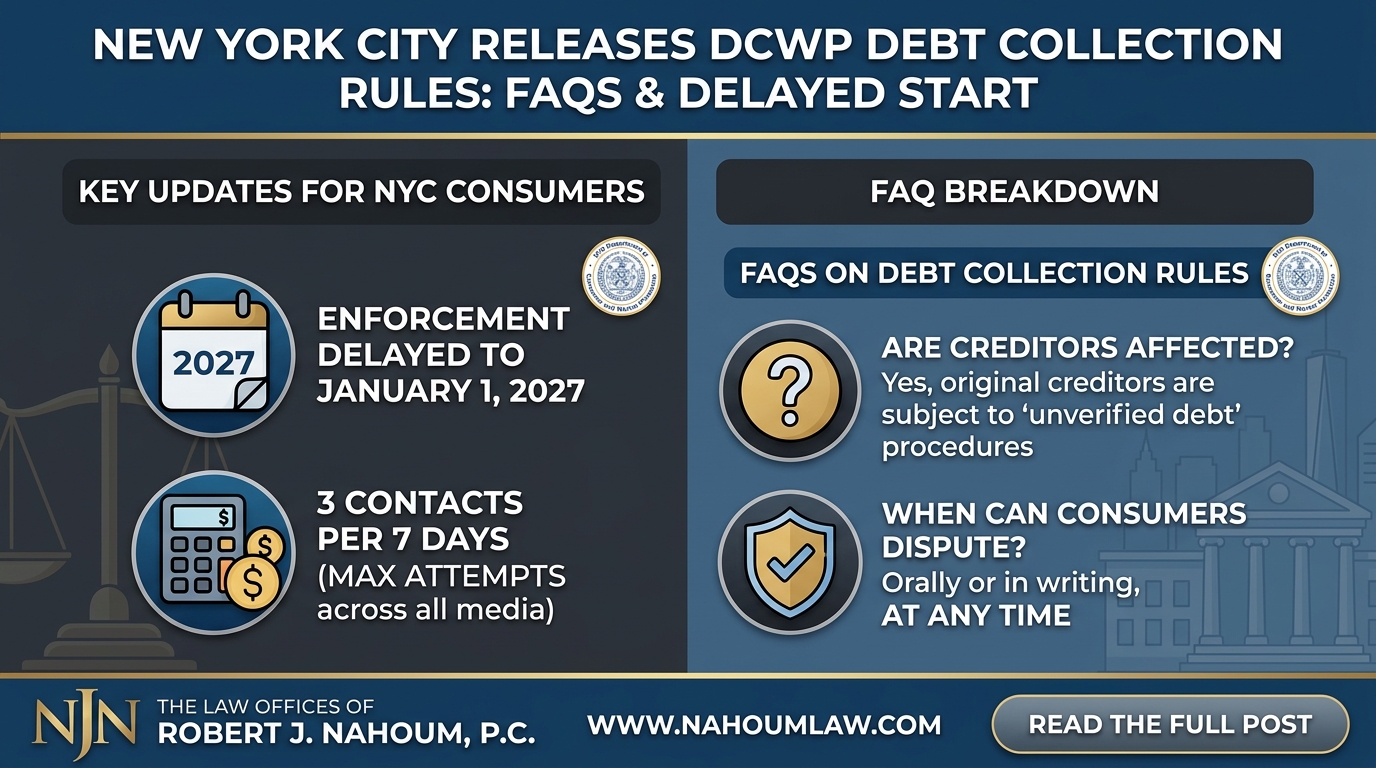
In a significant update for New York City consumers and the debt collection industry, the New York City Department of Consumer and Worker Protection (DCWP) released official Frequently Asked Questions (FAQs) regarding its landmark debt collection rules. Alongside this clarification, the DCWP officially announced a postponement, the enforcement date for these rules has been delayed from 2026 to January 1, 2027.
At The Law Offices of Robert J. Nahoum, P.C., we closely monitor state and local regulatory changes to ensure NYC consumers understand their rights when facing debt collection attempts.
Below is a breakdown of what these DCWP updates mean, how the key rules function, and what protections New York City residents will gain when full enforcement begins on January 1, 2027.
Key Takeaways from the DCWP Guidance
- New Effective Date: The DCWP has delayed enforcement until January 1, 2027, giving creditors and collection agencies additional time to overhaul operational systems.
- Broader Scope: The “SHIELD” framework extends beyond traditional collection agencies to cover original creditors once defined “debt collection procedures” begin.
- Strict Contact Limits: Debt collectors will be restricted to a total of 3 communications or attempts per 7-day period per account across all media channels (phone, email, text combined).
- Enhanced Consumer Dispute Rights: NYC consumers can dispute or request debt verification at any time in the collection process through any channel.
Major Protections Under the NYC Debt Collection Rules
When the rules take full effect on January 1, 2027, NYC consumers will enjoy some of the strongest anti-harassment debt collection protections in the United States.
- The Cross-Channel “3-Contact Limit”
Under federal rules like CFPB Regulation F, phone calls are capped separately from emails or texts. The NYC DCWP rule is far stricter:
- Debt collectors are limited to three total communications or attempted communications per distinct consumer account within any seven-day rolling period.
- This cap applies across all electronic and voice media combined (phone calls, voicemails, text messages, and emails).
- Exemption: Physical letters sent via postal mail do not count toward this 3-contact weekly limit.
- Mandatory Debt Verification & “Notice of Unverified Debt”
Federal law limits formal validation rights primarily to the initial 30 days after receiving a notice. NYC’s rule eliminates this boundary:
- Consumers can dispute a debt or request verification orally or in writing at any point in the collection cycle.
- Debt collectors have 60 days to provide documentation proving the debt.
- If they cannot verify the debt within 60 days, they must issue a formal Notice of Unverified Debt and cease collection efforts on that account. A court default judgment alone will not satisfy this verification threshold.
- Medical Debt Reporting and Disclosures
The new framework places strict boundaries on medical debt collection:
- Medical debt info cannot be reported to consumer credit reporting agencies.
- All validation notices must explicitly disclose this prohibition, ensuring consumers are informed regardless of the underlying debt type.
- 14-Day Credit Bureau Reporting Buffer
Collectors are prohibited from reporting collection information to credit bureaus unless they wait at least 14 days after sending the consumer an initial notice, providing a crucial window to review or dispute the debt.
Why the DCWP Postponed the Effective Date to 2027
The DCWP postponed the compliance deadline to January 1, 2027, to allow debt collectors, original creditors, and debt buyers sufficient time to reconfigure their automated dialing, messaging, and dispute-tracking workflows. Combining call logs, SMS platforms, and email delivery into a single 3-attempt weekly counter requires substantial technological overhauls across the ARM (Automated Receivables Management) industry.
How This Impacts New York City Debt Litigation
While the rules provide debt collectors extra operational runway until 2027, existing protections under the Fair Debt Collection Practices Act (FDCPA), the New York General Business Law (GBL § 601), and the NYC Administrative Code remain active today.
If a debt collector or debt buyer in New York:
- Harasses or calls you excessively,
- Sues you on a debt that is unverified or time-barred,
- Fails to provide legally required validation disclosures, or
- Attempts to collect amounts not authorized by contract or law,
they may already be in direct violation of federal or state debt collection statutes.
Need Legal Help with a Debt Collector in New York?
If you are dealing with debt collection harassment, abusive callers, or a debt collection lawsuit in New York City or surrounding counties, The Law Offices of Robert J. Nahoum, P.C. is here to fight for your rights.
- Call Us Directly: (845) 232-0202
- Visit Our Website: www.nahoumlaw.com
- Schedule a Consultation: Contact our office today to evaluate your debt defense or debt harassment case.
How The Law Offices of Robert J. Nahoum, P.C. Can Help
The Law Offices of Robert J. Nahoum, P.C. is a New York consumer protection law firm that defends consumers in debt collection lawsuits and sues abusive debt collectors under the FDCPA and related laws. With offices in Brooklyn and the Hudson Valley, the firm represents clients throughout New York City, the Hudson Valley, and the broader Tri‑State area.
If you have been contacted or sued by a debt collector, a debt buyer, or a collection law firm in New York City, the new SHIELD Rule may give you additional defenses and claims, including in cases involving medical debt, original creditors, and time‑barred or improperly documented obligations. To learn more about your rights or to schedule a consultation, visit the firm’s website at https://nahoumlaw.com, where you can read more about recent high‑volume collection lawsuits and how the firm defends consumers in New York courts.
The Law Offices of Robert J. Nahoum, P.C
(845) 232-0202
www.nahoumlaw.com
info@nahoumlaw.com