
How Car Dealerships Really Make Money (And How Consumers Can Protect Themselves)
BY: Robert J. Nahoum
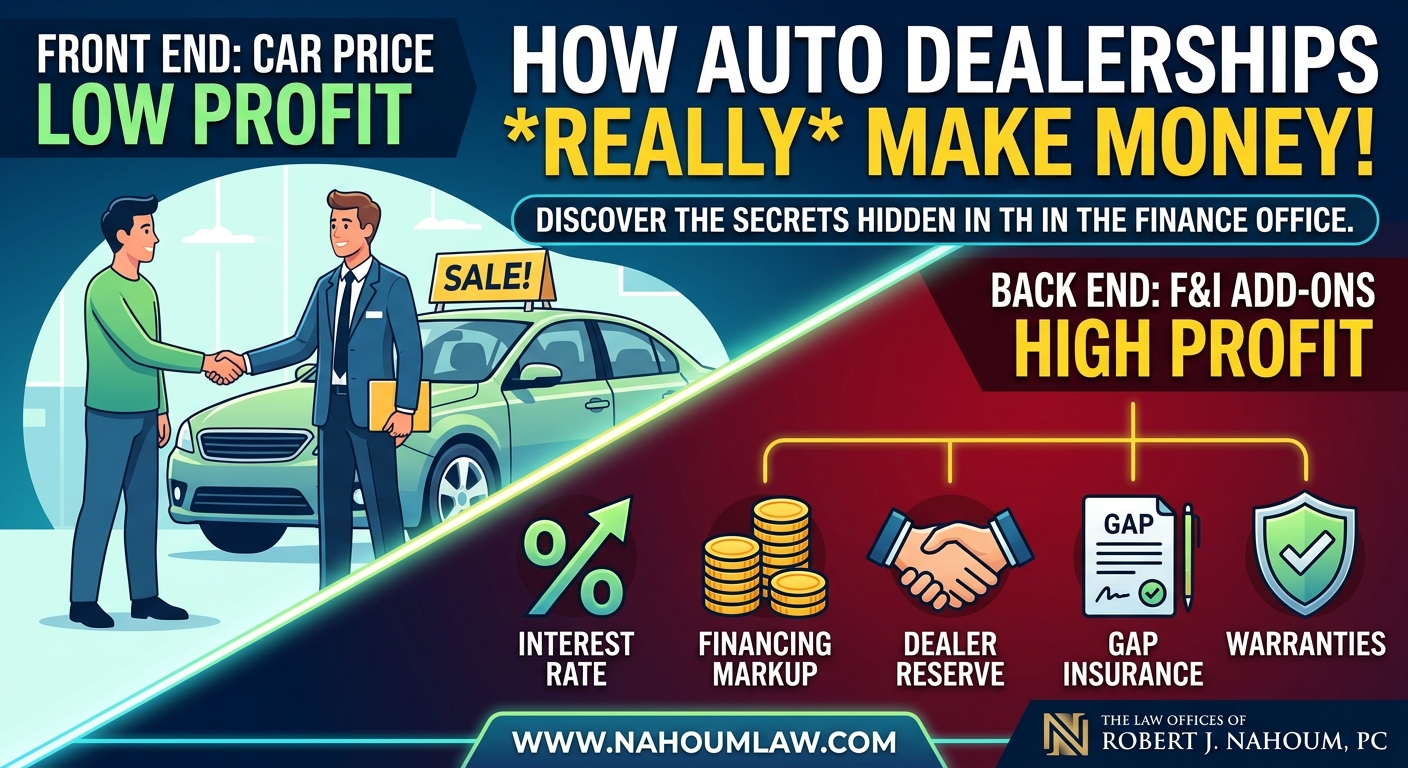
When most consumers walk onto an auto dealership lot, they assume the dealer makes the bulk of its profit by selling cars above wholesale cost. In reality, modern dealerships often treat the sale of the vehicle itself as a loss leader or break-even transaction.
So where does the real profit come from? The “backend” of the sale: Financing, Insurance, and Add-ons.
Watch the short video breakdown below, and read on as consumer protection attorney Robert J. Nahoum exposes how auto dealerships really generate revenue—and what you need to look out for in the contract.
Watch: The Truth About Dealership Profits
The 3 Pillars of Dealership Profitability
To understand how auto dealers operate, you need to look past the sticker price on the window (the MSRP) and look directly into the Finance & Insurance (F&I) office.
1. Dealer Reserve (Interest Rate Markup)
When a dealership submits your loan application to a bank or finance company, the lender might approve you at a 5% interest rate (the “buy rate”). However, the dealership finance manager might present you with a 7% interest rate (the “contract rate”).
That extra 2% is known as the dealer reserve or finance markup. The dealership splits that extra interest revenue directly with the lender. Over a 60- or 72-month loan, this markup can net the dealer thousands of extra dollars in pure profit off a single deal.
2. High-Margin F&I Add-On Products
Once you agree to buy the car, you are escorted into the F&I room. Here, the finance manager introduces expensive add-on contracts:
-
GAP Insurance: Often marked up 200% to 300% over third-party costs.
-
Extended Warranties / Service Contracts: Pushed heavily because profit margins frequently exceed 50%.
-
Tire & Wheel Protection, Paint Sealants, & VIN Etching: High-margin services that cost the dealer very little to provide.
3. Manufacturer Holdbacks and Volume Bonuses
Automakers often pay dealers a secret 2% to 3% percentage of the MSRP (called a holdback) after a car is sold. Additionally, manufacturers offer lucrative monthly or quarterly cash bonuses to dealerships that meet specific sales targets. This allows dealers to sell a vehicle “at invoice cost” while still turning a substantial profit behind the scenes.
Red Flags: When Dealership Tactics Cross into Auto Fraud
While marking up finance rates and selling warranties is common practice, dealers sometimes cross the line into deceptive trade practices or illegal auto fraud:
-
Yo-Yo Sales (Spot Delivery Scams): Telling a buyer days after driving off the lot that their financing “fell through,” forcing them to return and sign a new contract at a higher interest rate.
-
Packing the Contract: Adding products like GAP insurance, window etching, or service contracts into the final financing agreement without the buyer’s explicit consent.
-
Rate Creep / Credit Misrepresentation: Falsely telling a borrower with good credit that they only qualified for a high-interest rate to maximize the dealer reserve markup.
How to Protect Yourself at the Dealership
-
Get Pre-Approved: Secure financing from your local bank or credit union before stepping foot on the lot. This sets a hard benchmark for your interest rate.
-
Negotiate the Out-of-The-Door (OTD) Price: Ignore monthly payment discussions until you have agreed on the total vehicle price including all fees.
-
Itemize Every Line Item: Audit the final truth-in-lending disclosure line by line before signing. Refuse any add-on products you did not explicitly request.
Need Legal Help with an Auto Financing Issue?
If you suspect an auto dealer engaged in fraudulent financing practices, packed your contract with unauthorized fees, or misrepresented your loan terms, you have rights under state and federal consumer protection laws.
Contact The Law Offices of Robert J. Nahoum, P.C. today for a legal consultation.
-
Website: www.nahoumlaw.com
-
Phone: (845) 232-0202
-
Location: Serving New York and New Jersey consumers.
┌────────────────────────────────────────────────────────┐