
By: Robert J. Nahoum
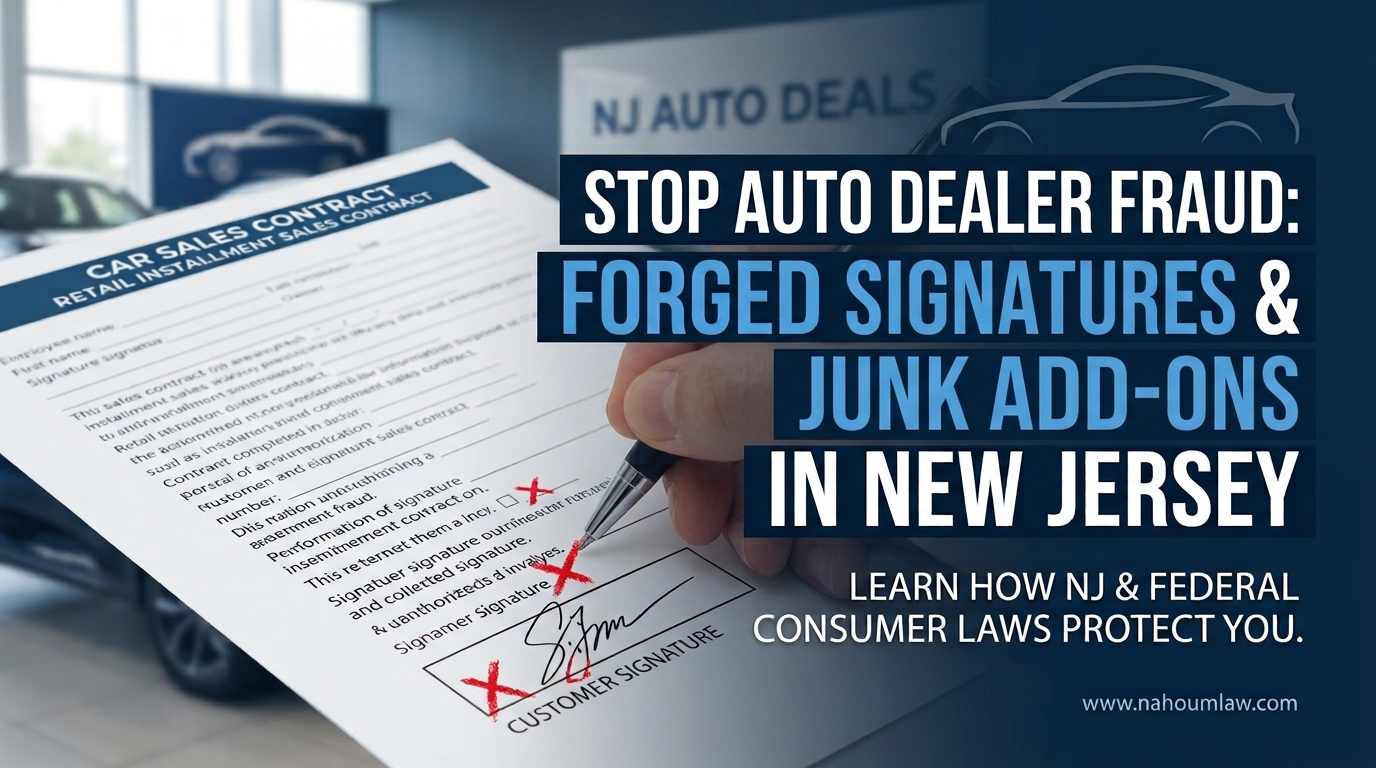
Buying a car should be an exciting milestone, not a financial trap. Yet, one of the most egregious and deceptive tactics used by dishonest car dealerships in New Jersey is forging signatures on sales and financing documents.
When consumers sit down in the Finance & Insurance (F&I) office, they expect transparency. Instead, corrupt dealership staff sometimes alter contract terms, forge electronic or physical signatures on agreements, or rewrite credit applications after the buyer has left the lot.
If you discovered an unauthorized charge, an unexpected warranty, or an inflated sales price or rate of interest on your vehicle contract, you may be the victim of dealership fraud. Here is how unscrupulous New Jersey auto dealers use forged signatures to rip off consumers—and the powerful state and federal laws available to protect you.
How Auto Dealers Use Forged Signatures to Defraud Buyers
Forgery in auto sales is rarely an accident; it is usually a deliberate scheme to increase dealership profit margins or force loan approvals through deceptive means. Here are the most common ways auto dealers misuse signatures on sales and finance paperwork:
- “Payment Packing” and Unwanted Add-Ons
Dealership finance representatives often quote a monthly payment figure that secretly includes optional junk products—such as extended warranties, GAP insurance, tire protection, or chemical paint coatings. If a consumer refuses these add-ons, dishonest F&I personnel may forge the buyer’s signature or initials on add-on disclosures to sneak thousands of dollars in extra charges into the final loan.
- Income Inflation and Credit Application Fraud (“Power Booking”)
To convince third-party auto lenders to approve financing for a vehicle the buyer cannot actually afford, dealers may alter the credit application. Staff might falsify job titles, inflate monthly income, or add false optional equipment (known as “power booking”). When the buyer leaves without seeing the final submitted loan application, the dealership forges the buyer’s electronic signature before transmitting it to the bank.
- Contract Switching and “Yo-Yo” Sales
In “yo-yo” financing scams, a dealer lets a buyer drive off the lot believing loan approval is finalized. Weeks later, the dealership calls the buyer back, claiming financing fell through and forcing them to re-sign new documents with a higher interest rate or larger down payment. In severe cases, dealers cut corners by simply forging the buyer’s signature on a revised retail installment sales contract without their knowledge or consent.
- Digital Signature Abuse
With the rise of e-sign pads and tablets in F&I offices, forgery has gone digital. Dishonest staff may ask you to sign an electronic pad without showing you the document you are signing, or they may repeatedly copy and paste your digital signature onto unauthorized disclosures, add-ons, and revised finance agreements.
Legal Protections Against Dealer Forgery in New Jersey
Forging signatures on financial and sales agreements is illegal. Car buyers in the Garden State are backed by some of the strongest consumer laws in the country.
- The New Jersey Consumer Fraud Act (NJ CFA)
The New Jersey Consumer Fraud Act (N.J.S.A. 56:8-1 et seq.) provides robust protections for car buyers. Under the NJ CFA, unlawful business practices fall into affirmative acts of deception, unconscionable commercial practices, and knowing omissions.
- Treble (Triple) Damages: If you prove an “ascertainable loss” (a quantifiable financial injury) resulting from dealership fraud, courts must award three times your actual damages. For example, if a dealer forged your signature to add $3,000 in unauthorized add-ons, statutory recovery starts at $9,000.
- Mandatory Attorney’s Fees: The NJ CFA includes a fee-shifting provision requiring the dealership to pay your legal fees and court costs if you win.
- New Jersey Motor Vehicle Advertising & Sales Regulations
Under N.J.A.C. 13:45A-26B, state regulations dictate how car sales must be conducted. Dealers are strictly prohibited from altering sales documents after execution or requiring consumers to sign blank or incomplete contracts.
- Federal Truth in Lending Act (TILA)
The federal Truth in Lending Act (15 U.S.C. § 1601) mandates clear transparency in credit terms. Forging signatures to obscure APRs, manipulate finance charges, or hide unauthorized add-ons in total loan amounts violates federal credit disclosure laws.
- Common Law Fraud and Breach of Contract
In addition to statutory protections, forging a signature on a binding contract constitutes common law fraud and renders forged provisions void or voidable.
Action Steps If You Suspect Forgery on Your Dealership Documents
- Request Your Complete Paperwork: Ask the lender directly for a full copy of the finalized credit application and Retail Installment Sales Contract on file. Compare it line-by-line with the initial paperwork you reviewed at the dealership.
- Do Not Sign “Updated” Paperwork: If the dealer contacts you claiming there was a “clerical error” and asks you to return to the lot to sign revised contracts, do not sign anything. Dealers often use re-signing requests to cure illegalities, waive consumer legal rights, or alter terms.
- Preserve All Communication: Keep text messages, emails, sales quotes, window stickers (Monroney labels), and original receipts.
- Consult an Experienced Consumer Protection Attorney: Evaluating dense vehicle contracts and identifying forged signatures or hidden financial alterations requires specialized legal review.
How The Law Offices of Robert J. Nahoum, P.C. Can Help
At The Law Offices of Robert J. Nahoum, P.C., we represent consumers who have been ripped off by deceptive auto dealers across New Jersey and New York. Because state and federal laws contain fee-shifting provisions, holding dishonest car dealerships accountable often costs consumers nothing out-of-pocket.
If you suspect an auto dealer forged your signature or altered contract terms on your vehicle purchase, visit our New Jersey Auto Dealer Fraud Practice Page to learn more about your rights, or contact our office today for a free case evaluation.
- Phone: (845) 232-0202
- Email: info@nahoumlaw.com
- Online: www.nahoumlaw.com/contact
For a free consultation about an auto‑fraud or deceptive‑sales issue, contact us at our Hudson Valley office or our Brooklyn location.
📞 Call (845) 232‑0202 or visit our contact page: www.nahoumlaw.com/contact