
By: Robert J. Nahoum
Buying a new or used vehicle is one of the largest purchases most New Jersey residents will ever make. While most car buyers expect tough negotiations, many are unprepared for deceptive tactics, hidden fees, and illegal financing schemes executed in the showroom or the Finance & Insurance (F&I) office.
If you feel like a car dealership pulled a fast one on you, you are not alone. New Jersey has some of the strongest consumer protection laws in the country. Below are answers to the most common questions about auto dealer violations in New Jersey and the laws that protect you.
Frequently Asked Questions About NJ Auto Dealer Fraud
What is considered auto dealer fraud in New Jersey?
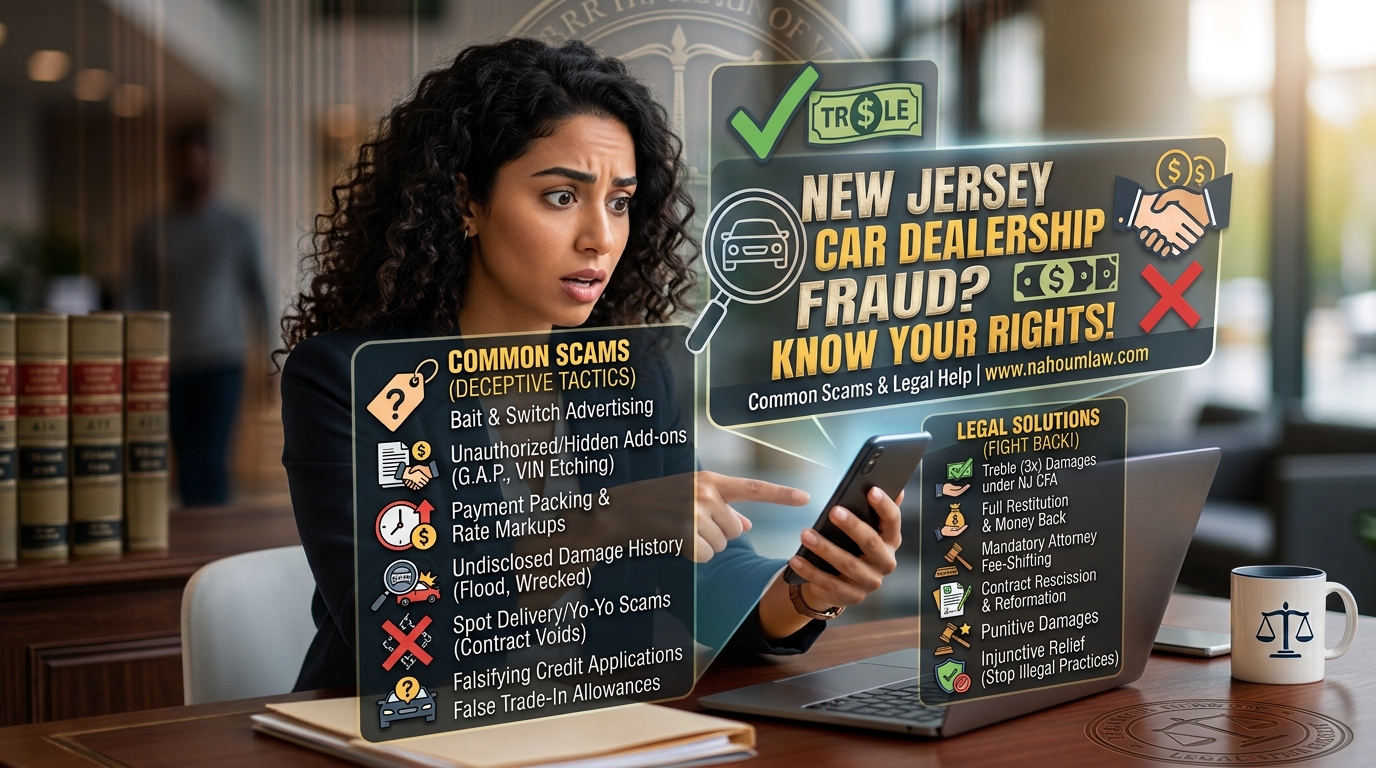
Auto dealer fraud occurs when a dealership uses misrepresentation, deception, unconscionable commercial practices, or material omissions to sell or finance a motor vehicle. Common examples include lying about the vehicle’s condition, altering financial figures on a credit application, forcing unauthorized add-on products, or breaking promises made during sale negotiations.
Under state and federal law, dealerships are legally obligated to provide truthful disclosures regarding both the condition of the vehicle and the exact terms of your financing.
What are some most common illegal practices used by NJ car dealers?
While deceptive dealers use many tactics, the most frequent violations we see fall into five categories:
- “Yo-Yo” Financing & Spot Delivery Scams: The dealer lets you drive off the lot believing your financing is finalized (“spot delivery”). Days or weeks later, they call to claim your loan “fell through” and demand you return to sign a new contract with a higher interest rate or larger down payment.
- Payment Packing & Unauthorized Add-Ons: F&I managers quote you a monthly payment figure that secretly packs in optional aftermarket items, such as GAP insurance, service contracts, key replacement, or tire protection, without your knowledge or explicit approval.
- Bait-and-Switch Tactics: A dealer advertises a vehicle at an ultra-low price to get you through the door, only to claim that vehicle was “just sold” or that the price requires thousands in unadvertised down payments. Learn more about how to spot a car dealership bait and switch.
- Failure to Disclose Vehicle History or Prior Damage: Hiding that a car was in a severe accident, suffered frame/unibody damage, had flood damage, or was previously used as a daily rental or lemon buyback.
- Income Inflation & “Power Booking”: Dealership staff falsifying your income or job title on credit applications without your consent to force a loan approval you cannot afford, leaving you vulnerable to repossession down the road.
What laws protect consumers from car dealership fraud in New Jersey?
Car buyers in New Jersey are backed by powerful state regulations and federal laws:
- The New Jersey Consumer Fraud Act (NJ CFA): One of the most robust consumer protection statutes in the nation. It prohibits unconscionable commercial practices, deception, and false promises in auto sales. Victims under the NJ CFA may be awarded treble damages (three times their actual financial loss) and mandatory legal fees.
- NJ Motor Vehicle Advertising Regulations (N.J.A.C. 13:45A-26B): Mandates exact rules for auto ads, including the clear disclosure of vehicle history, mandatory fees, and exact terms required to receive advertised prices.
- The Truth in Lending Act (TILA): A federal law requiring clear, itemized transparency in auto loans. Dealers who manipulate APRs, misrepresent finance charges, or hide add-ons in the total loan amount violate federal law.
The dealer asked me to come back and sign “updated paperwork.” Should I go?
No. Do not sign new paperwork or return to the dealership before consulting a lawyer.
When consumers notice discrepancies, like an inflated purchase price or surprise add-ons, dealers often pretend it was a simple “clerical error” and ask you to come back to the dealership. In reality, they may be attempting to get you to sign revised contracts that erase their legal liability, waive your right to sue, or lock you into worse financial terms.
How much does it cost to hire an auto fraud lawyer in New Jersey?
In most auto fraud cases, it costs you nothing out-of-pocket.
Both the NJ Consumer Fraud Act and federal statutes like TILA feature fee-shifting protections. This means if the dealership violated the law, the judge orders the dealership to pay your reasonable legal fees and costs. Understanding how much an auto fraud lawyer costs reveals that fee-shifting allows everyday consumers to go toe-to-toe with large car dealerships without financial risk.
What steps should I take if I suspect auto dealer fraud?
If you suspect you have been ripped off by a dealership:
- Gather Your Documents: Save the Buyer’s Order, Retail Installment Sales Contract, window sticker (Monroney label), credit applications, and any advertisements you relied on.
- Preserve All Evidence: Save texts, emails, call logs, and voicemail messages from dealership staff.
- Do Not Sign Anything New: Decline all requests to return to the lot to re-sign documents.
- Get a Professional Contract Review: Have an experienced consumer lawyer evaluate your deal.
Stand Up to Dishonest Auto Dealers
You do not have to accept deceptive tactics or pay for illegal charges added to your vehicle loan. If you bought or leased a vehicle in New Jersey and feel the dealership cheated you, our legal team can evaluate your paperwork for hidden violations.
Visit our dedicated New Jersey Auto Dealer Fraud Law Practice Page to learn more about how we fight back against dishonest dealerships.
Contact The Law Offices of Robert J. Nahoum, P.C. today for a free case evaluation:
- Phone: (845) 232-0202
- Email: info@nahoumlaw.com
- Online: Contact Us Here
For more information about consumer rights and deceptive business practices, visit our consumer protection practice page and our auto-fraud articles.
At The Law Offices of Robert J. Nahoum, P.C., we represent New York and New Jersey consumers who have been ripped off by dishonest auto dealers. If your deal doesn’t match what was promised, you have rights—and we can help you enforce them.
For a free consultation about an auto‑fraud or deceptive‑sales issue, contact us at our Hudson Valley office or our Brooklyn location.
📞 Call (845) 232‑0202 or visit our contact page: www.nahoumlaw.com/contact