
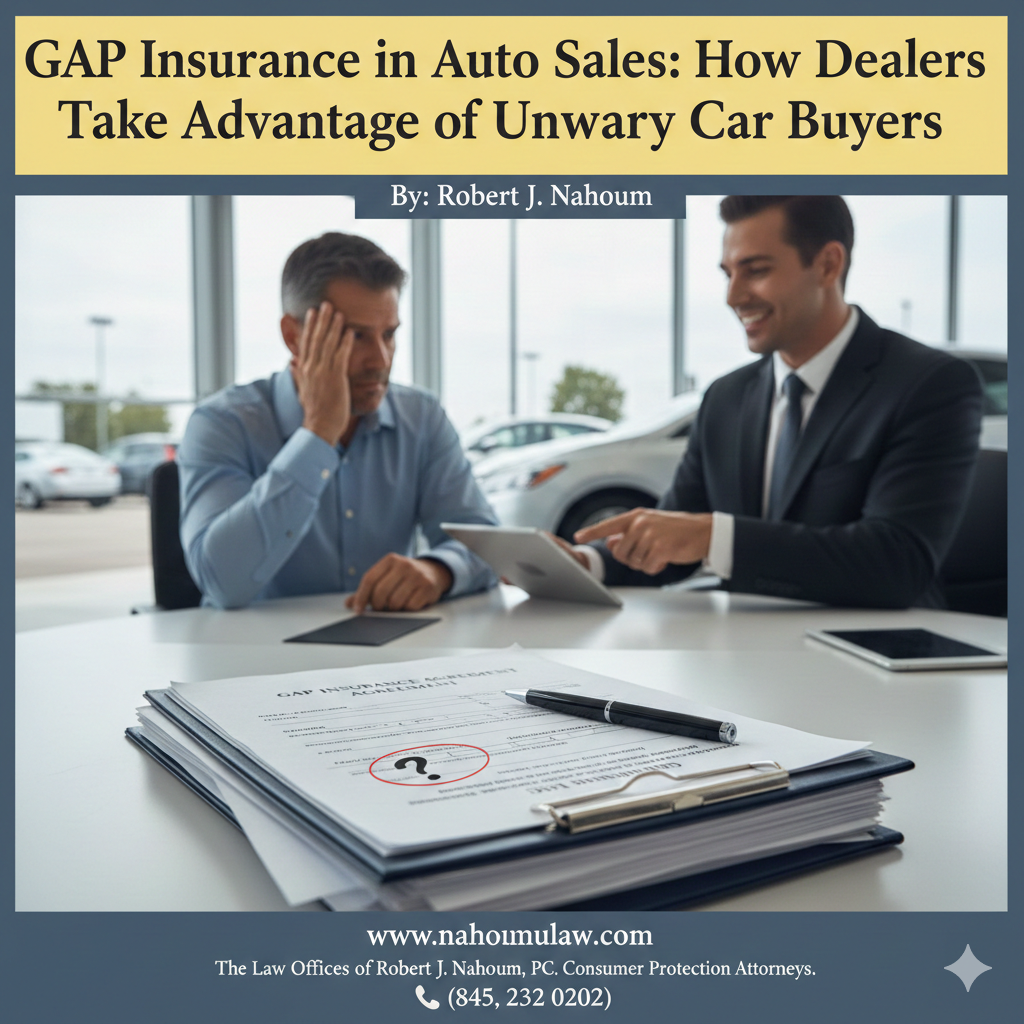
By: Robert J. Nahoum
Walking into a car dealership can feel like stepping into a high-stakes negotiation where every signature carries weight. You’ve done the hard work—found the perfect car and settled on a price—only to reach the “fateful” final stop: the Finance & Insurance (F&I) office.
Among the mountain of paperwork and add-ons, the representative will inevitably pitch you GAP insurance. But what exactly is it, and more importantly, is it a must-have or just an extra expense?
GAP Insurance: What It Is and Why It Matters
Guaranteed Asset Protection, better known as GAP insurance, is designed to cover the difference between what a consumer owes on a car loan and what their vehicle is worth if it’s totaled or stolen. For example, if your car is worth $15,000 but you still owe $20,000 on your loan, GAP insurance should cover the $5,000 “gap.”
In theory, this optional coverage can help protect consumers from financial loss. In practice, however, auto dealers often exploit GAP insurance to increase profits through inflated prices, hidden fees, and deceptive sales tactics.
How Dealers Take Advantage of Consumers
Many dealerships use GAP insurance as a high-margin add-on product during the finance and insurance (F&I) stage of car sales. Common abuses include:
- Inflated pricing: Dealers may charge $700–$1,200 for policies that cost them less than half that amount.
- Packaging or preloading GAP: Some dealers include GAP insurance automatically in the payment calculation without disclosure or consent.
- Misrepresentation: Buyers are told GAP coverage is “required” by the lender, when in fact most lenders only require that the car be insured.
- Failure to refund after payoff: When a loan is paid off or a lease ends early, consumers are often entitled to a prorated refund of unused GAP—but dealers or administrators frequently fail to provide it.
These practices often amount to deceptive or unfair conduct that may violate state and federal consumer protection laws, including New York General Business Law §349 and the federal Truth in Lending Act (TILA).
What Consumers Can Do
If you believe you were misled about or overcharged for GAP insurance, you have rights. You may be able to:
- Demand a prorated refund if you paid off your loan early or traded in your car.
- Contest deceptive charges through a written dispute to the lender under TILA and Regulation Z.
- File a complaint with the New York Department of Financial Services (DFS), which regulates GAP waivers in retail installment contracts.
- Consult with a consumer protection attorney experienced in auto fraud cases.
How a Consumer Law Firm Can Help
At The Law Offices of Robert J. Nahoum, P.C., we represent consumers across New York and New Jersey who have been misled or exploited in auto sales and financing. Our firm investigates GAP insurance overcharges, hidden fees, and other forms of auto dealer fraud. We fight to recover money that should never have been taken in the first place.
If you suspect your car dealer took advantage of you through GAP insurance, contact us for a free consultation to understand your rights and options.
📞 Call (845) 232‑0202 or visit our contact page: www.nahoumlaw.com/contact