
By: Robert J. Nahoum
If you are receiving phone calls or letters from a collection agency, it often feels like they hold all the cards. However, the Fair Debt Collection Practices Act (FDCPA) is a powerful federal law designed to level the playing field.
While many people know that the FDCPA stops collectors from using harassing tactics, fewer realize that the law also requires collectors to be completely transparent. They aren’t just told what they can’t do; they are given a specific list of what they must tell you.
If a collector fails to provide these disclosures, they may be in violation of federal law, and you may be entitled to damages. Here are the key disclosures every consumer should look for.
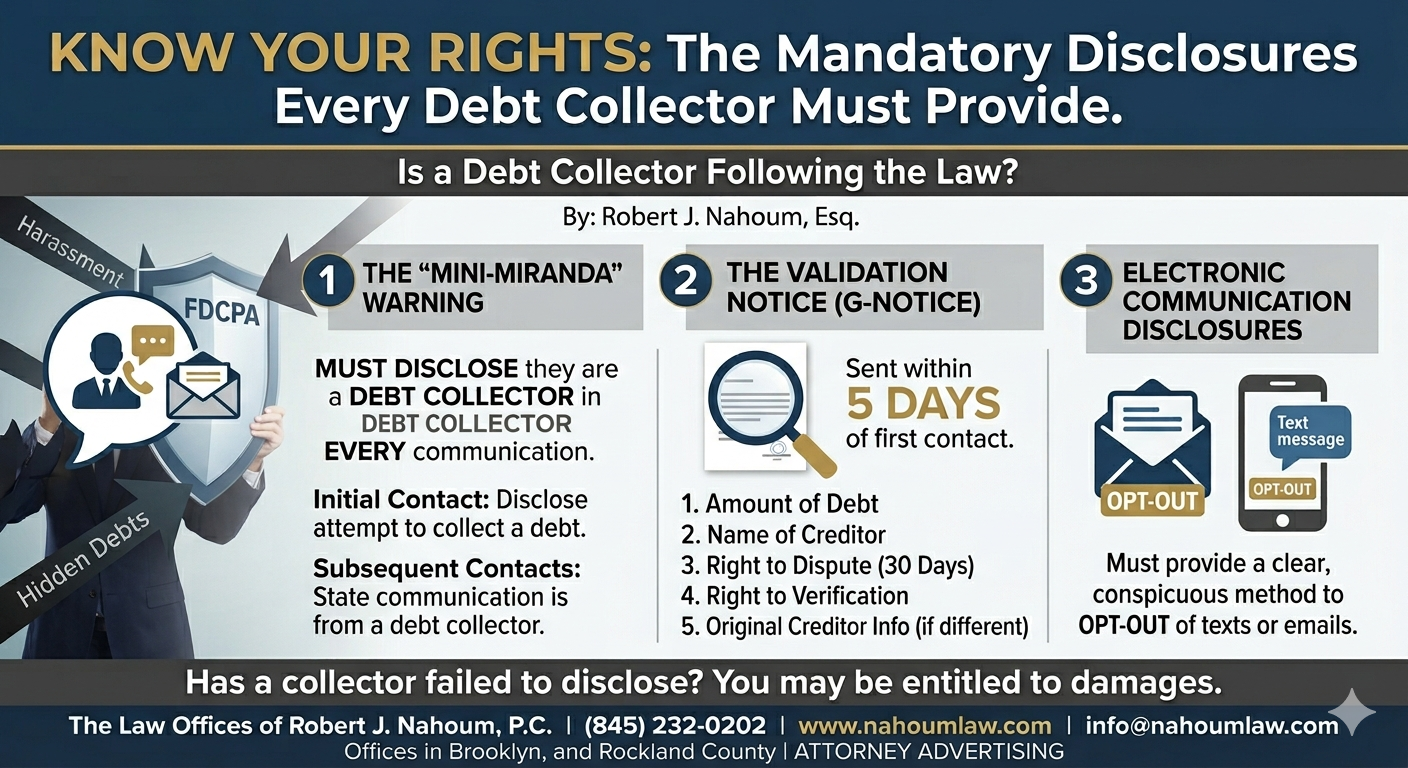
- The “Mini-Miranda” Warning
Just as police must read you your rights, debt collectors must provide a specific warning in their communications. This is often called the “Mini-Miranda.”
- In the initial communication: The collector must disclose that they are attempting to collect a debt and that any information obtained will be used for that purpose.
- In subsequent communications: They must disclose that the communication is from a debt collector.
If a collector calls you and pretends to be conducting a “survey” or calls from a “mediation firm” without identifying themselves as a debt collector, they are likely breaking the law.
- The Validation Notice (The G-Notice)
Within five days of their first communication with you, a debt collector must send you a written notice (often called a “Validation Notice” or “G-Notice”) containing five specific pieces of information:
- The amount of the debt: Exactly how much they claim you owe.
- The name of the creditor: To whom the debt is currently owed.
- The 30-day right to dispute: A statement that unless you dispute the validity of the debt within 30 days, the collector will assume the debt is valid.
- The right to verification: A statement that if you notify them in writing within 30 days that the debt is disputed, they will mail you verification of the debt.
- Original creditor information: A statement that, upon your written request within 30 days, they will provide you with the name and address of the original creditor (if different from the current one).
- Electronic Communication Disclosures
Under recent updates to FDCPA regulations (Regulation F), if a collector contacts you via email or text message, they must provide a clear and conspicuous way for you to opt-out of that specific channel of communication. They cannot “trap” you into digital harassment.
When Must These Disclosures Happen?
Timing is everything in debt collection defense.
- The Initial Contact: The “Mini-Miranda” must be said or written immediately.
- The Five-Day Rule: If the validation information wasn’t in the first letter, it must be sent to you in writing within five days of that first contact.
Why These Disclosures Matter
These rules exist to prevent “zombie debt” collectors from tricking you into paying debts you don’t owe, debts that are past the statute of limitations, or debts that aren’t yours at all. By forcing collectors to put their claims in writing and inform you of your right to dispute, the FDCPA gives you the power to stop unfair collection efforts.
What to Do If a Collector Fails to Disclose
Failure to provide required disclosures can be a violation of the FDCPA. That may entitle you to:
- Statutory damages (up to $1,000)
- Actual damages (if you were harmed)
- Attorney’s fees and costs
You do not need to figure this out on your own. If you believe a debt collector failed to give proper disclosures, you can reach out here: https://nahoumlaw.com/contact/
Contact Nahoum Law for FDCPA Help
Facing FDCPA violations from aggressive texts or emails? Nahoum Law specializes in consumer debt defense. Visit our debt collection harassment page or contact us for a free consultation. Read more on FDCPA rights and protect your rights today.
If you need help settling or defending a debt collection lawsuit, stopping harassing debt collectors or suing a debt collector, contact us today to see what we can do for you. With office located in the Bronx, Brooklyn and Rockland County, the Law Offices of Robert J. Nahoum defends consumers in debt collection cases throughout the Tristate area including New Jersey.
The Law Offices of Robert J. Nahoum, P.C
(845) 232-0202
www.nahoumlaw.com
info@nahoumlaw.com
Attorney Advertising Disclaimer: This blog post is for general informational purposes only and does not constitute legal advice. Laws vary by state, and outcomes depend on specific facts. Consult an attorney for personalized guidance. Prior results do not guarantee similar outcomes.