
By: Robert J. Nahoum
Debt Collectors Threaten Jail: The Truth
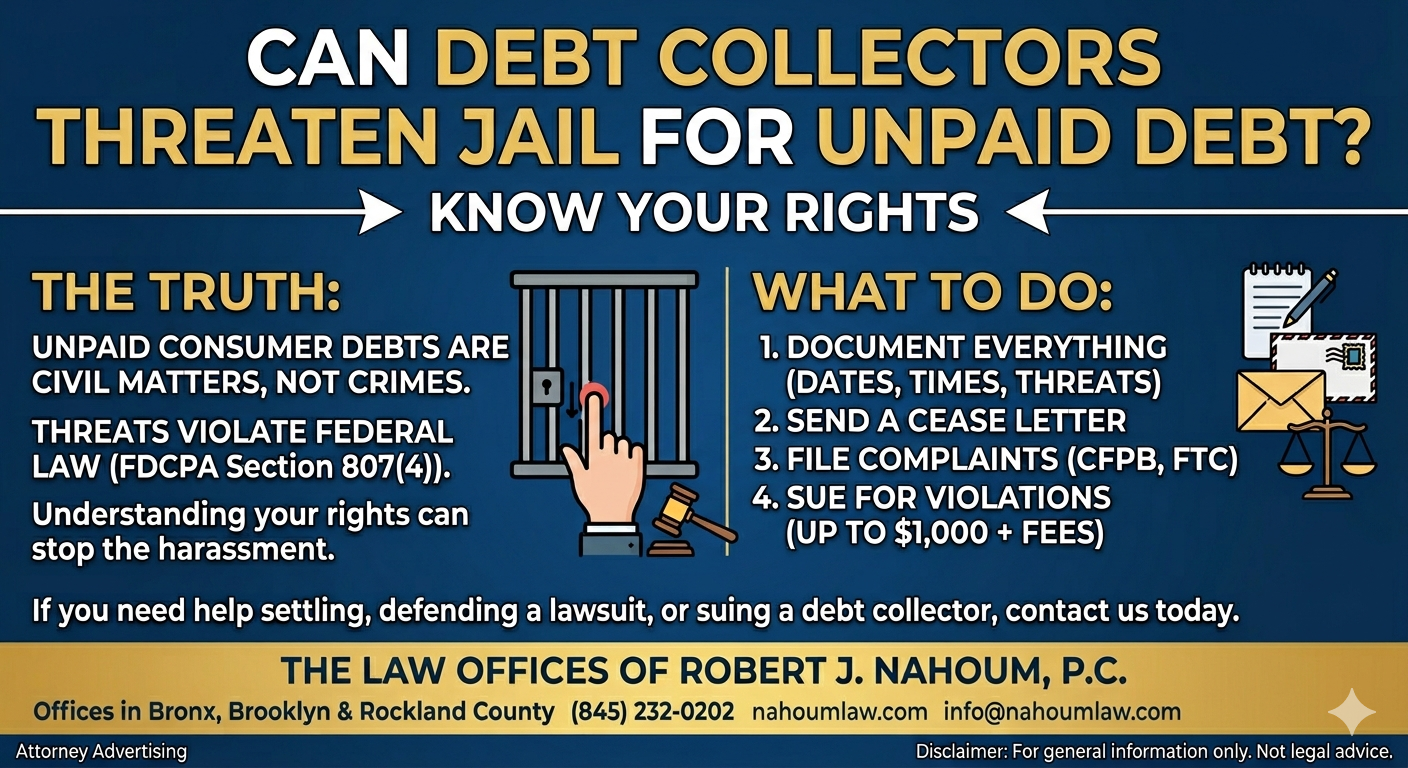
Debt collectors often use scare tactics like threatening jail time or criminal charges to pressure you into paying old debts. In reality, unpaid consumer debts are civil matters, not crimes, and such threats violate federal law. Understanding your rights can stop the harassment and potentially earn you compensation.
Why Threats of Criminal Penalties Are Illegal
The Fair Debt Collection Practices Act (FDCPA) strictly prohibits debt collectors from implying that nonpayment of a debt will lead to arrest, imprisonment, or other criminal penalties. Specifically, Section 807(4) bans “the representation or implication that nonpayment of any debt will result in the arrest or imprisonment of any person” unless it’s lawful, which it rarely is for consumer debts like credit cards or medical bills. The Consumer Financial Protection Bureau (CFPB) confirms: debt collectors can’t threaten arrest for unpaid debt, deeming it harassment.
These threats are false because failing to pay a civil debt doesn’t trigger criminal prosecution, unlike tax evasion or child support.
What to Do If a Debt Collector Threatens Jail
- Document everything: Note dates, times, caller details, and exact threats, evidence for complaints or lawsuits.
- Send a cease letter: Demand they stop contact in writing; they must comply except for key notices.
- File complaints: Report to the CFPB or FTC.
- Sue for violations: FDCPA allows up to $1,000 in damages plus fees if you win.
If you need help settling or defending a debt collection lawsuit, stopping harassing debt collectors or suing a debt collector, contact us today to see what we can do for you. With office located in the Bronx, Brooklyn and Rockland County, the Law Offices of Robert J. Nahoum defends consumers in debt collection cases throughout the Tristate area including New Jersey.
The Law Offices of Robert J. Nahoum, P.C
(845) 232-0202
www.nahoumlaw.com
info@nahoumlaw.com
Attorney Advertising Disclaimer: This blog post is for general informational purposes only and does not constitute legal advice. Laws vary by state, and outcomes depend on specific facts. Consult an attorney for personalized guidance. Prior results do not guarantee similar outcomes.