
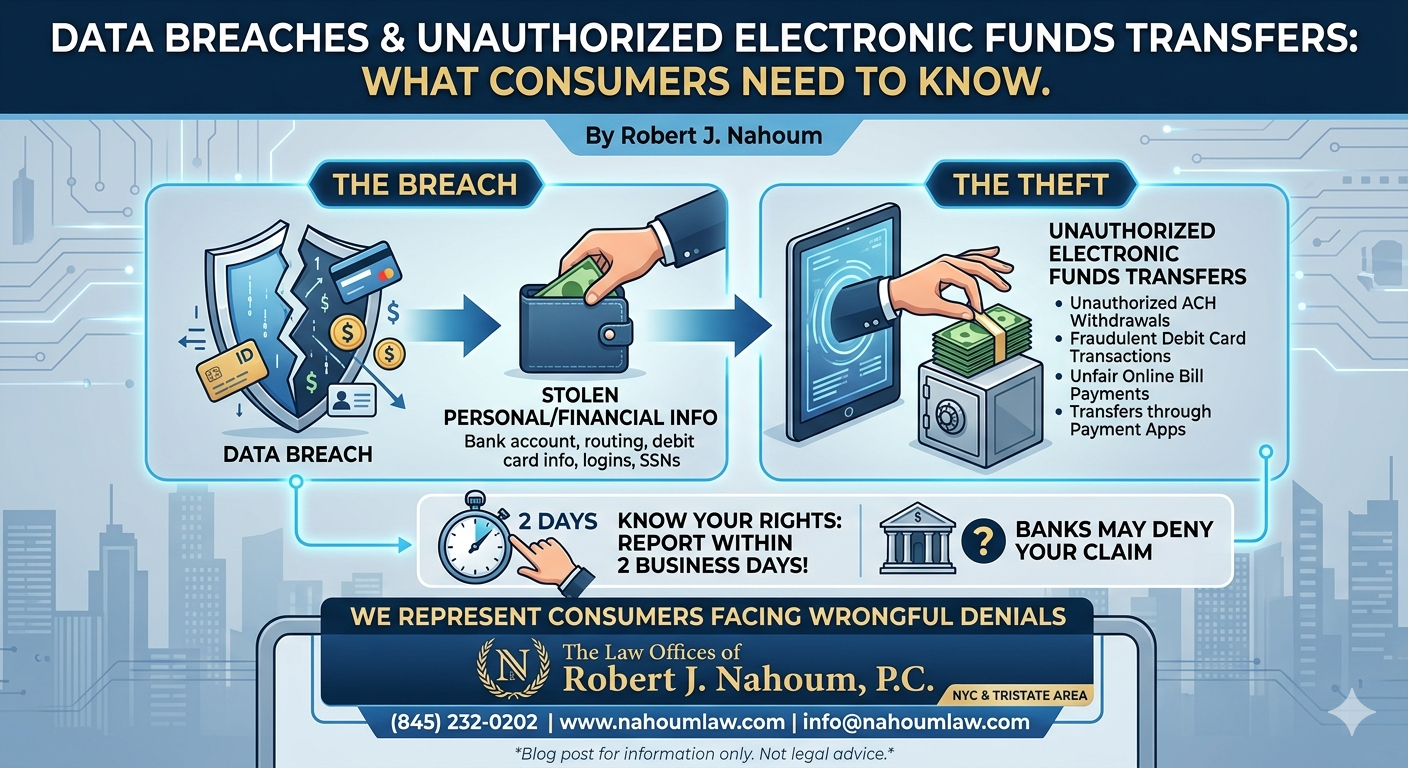
By: Robert J. Nahoum
Data breaches are no longer rare events; they are an unfortunate and routine part of modern life. One of the most damaging consequences for consumers is the rise in unauthorized electronic funds transfers (EFTs), where money is withdrawn from a bank account without permission.
If you have ever discovered unfamiliar withdrawals from your checking account, a data breach may be the underlying cause.
How Data Breaches Lead to Unauthorized Transfers
A data breach occurs when sensitive personal or financial information is accessed or stolen by unauthorized individuals. This can include:
- Bank account and routing numbers
- Debit card information
- Online banking login credentials
- Social Security numbers
Once this information is exposed, often through hacked companies, phishing scams, or compromised payment processors, fraudsters can use it to initiate electronic transfers directly from your account.
These transfers may appear as:
- Unauthorized ACH withdrawals
- Fraudulent debit card transactions
- Online bill payments you did not authorize
- Transfers through payment apps linked to your bank account
In many cases, consumers do not realize what happened until days or weeks later.
Common Data Breach Scenarios
Not all breaches are obvious. Some of the most common scenarios that lead to unauthorized EFTs include:
- Retail or service provider breaches: A company you trusted stores your payment data, which is later hacked.
- Phishing attacks: You receive an email or text that appears legitimate and unknowingly provide your login credentials.
- Public Wi-Fi exposure: Logging into financial accounts on unsecured networks can expose your data.
- Third-party payment apps: Weak security or account linking issues can create vulnerabilities.
Even well-known companies have suffered breaches, meaning consumers often have no control over how their data is exposed.
Your Rights Under Federal Law
Consumers are protected under the Electronic Fund Transfer Act (EFTA), which limits liability for unauthorized transactions, but only if you act quickly.
Key protections include:
- If you report unauthorized activity within 2 business days, your liability is generally limited to
- If you delay reporting, your liability can increase significantly
- Banks are required to investigate and correct errors in a timely manner
However, in practice, financial institutions often deny claims, alleging that the transaction was “authorized” or the result of consumer negligence.
This is where legal representation can make a critical difference.
What to Do If You Notice Unauthorized Transfers
If you suspect that a data breach has led to unauthorized withdrawals:
- Immediately notify your bank or credit union
- Request a written confirmation of your claim
- Change all online banking passwords and security credentials
- Monitor your accounts for additional suspicious activity
- Document all communications with your financial institution
- File a complaint with your local police
Time is critical. Delays can affect both your liability and your ability to recover funds.
When Banks Deny Legitimate Claims
Many consumers are surprised to learn that banks frequently deny valid fraud claims. Common reasons include:
- Allegations that the transaction was authorized
- Claims that credentials were shared voluntarily
- Assertions that fraud detection systems did not flag the transaction
- Claims that the consumer failed to protect their account credentials
These denials are often not legally justified.
If your claim has been denied, you may still have strong rights under federal law.
At Nahoum Law, we represent consumers facing wrongful denials of unauthorized electronic fund transfer claims and work to recover improperly withheld funds.
Final Thoughts
Data breaches are often the starting point—not the end—of financial harm. When stolen information is used to drain your bank account, the consequences can be immediate and severe.
Understanding how these breaches lead to unauthorized electronic transfers—and knowing your legal rights—can make the difference between absorbing the loss and recovering your money.
If you have experienced unauthorized withdrawals following a data breach, it may be worth exploring your legal options.
Protecting Consumers Against Financial Deception
If you need help recovering money lost to an impersonation scam, contact us today to see what we can do for you. With offices located in Brooklyn and the Hudson Valey, the Law Offices of Robert J. Nahoum represents consumers in cases throughout the Tristate area including New Jersey.
The Law Offices of Robert J. Nahoum, P.C
(845) 232-0202
www.nahoumlaw.com
info@nahoumlaw.com
Disclaimer: This blog post is for informational purposes only and does not constitute legal advice. Laws and regulations are subject to change. Please consult with an attorney for advice regarding your specific situation.