
By: Robert J. Nahoum
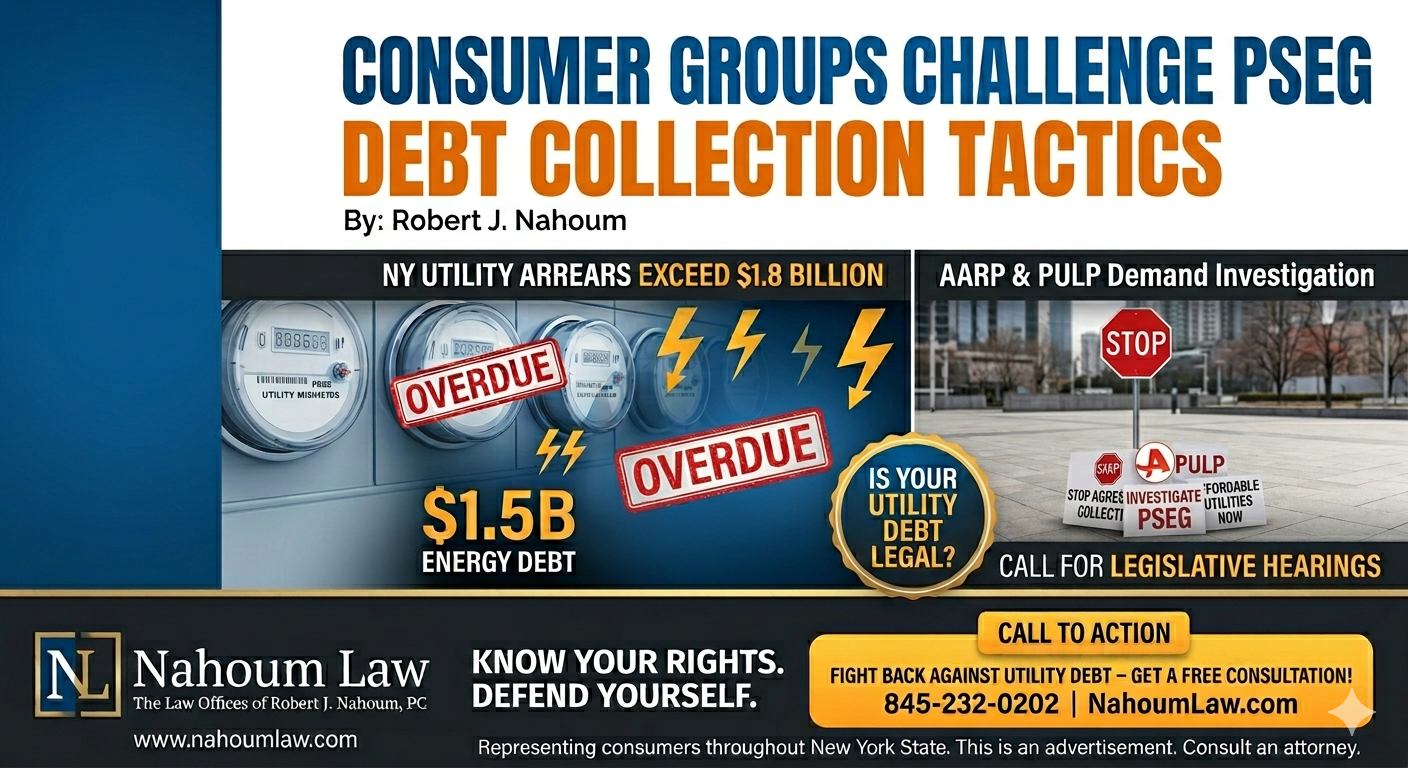
Consumer advocates AARP New York and the Public Utility Law Project (PULP) are pressing New York Governor Kathy Hochul to investigate PSEG Long Island’s utility debt collection practices, as highlighted in a recent Newsday report. This call comes amid soaring utility arrears exceeding $1.8 billion statewide, with over 1.3 million customers behind by more than two months. The groups also demand legislative hearings to scrutinize how utilities like PSEG handle overdue bills, protecting vulnerable households from aggressive tactics.
Utility Arrears Crisis
New York faces a massive utility debt burden, with residential customers owing over $1.5 billion in energy arrears alone. Soaring costs—up to 30% for electricity in upstate areas and 20% for natural gas—have pushed older adults and low-income families into financial distress, forcing drastic measures like skipping meals or other bills. AARP surveys show nine in ten New Yorkers over 50 agree officials must ensure affordable utilities, supporting reforms like bill credits for excess utility earnings.
Advocacy Demands
AARP and PULP seek an independent probe into debt collection, alongside structural fixes like a state-funded utility consumer advocate office and intervenor funding for rate cases. They propose returning excess utility profits to customers via credits and stronger protections against service shutoffs for medical needs or tenants. Recent efforts include expanding programs like HEAP and EmPower+ with $200 million investments to cut bills for moderate-income homes.
PSEG Long Island Focus
As LIPA’s service provider, PSEG Long Island faces specific scrutiny over billing and collection amid Long Island’s high arrears. While PSEG offers assistance like Project Warmth grants and REAP efficiency upgrades, critics argue for-profit models prioritize collections over relief. State penalties hit utilities with $28.9 million last year for poor service, signaling accountability pressures.
Debt Collection Defenses for Utility Bills
Utility debts qualify as “consumer debts” under the federal Fair Debt Collection Practices Act (FDCPA) when third-party collectors pursue them, entitling you to validation rights, dispute protections, and bans on harassment like threats or excessive calls. In New York, even original creditors like PSEG must follow state analogs to FDCPA rules via General Business Law § 349 against deceptive practices, plus the Consumer Credit Fairness Act shortening statutes of limitations to three years on many debts. Consumers facing utility collection lawsuits can raise defenses like improper service, lack of proof, or time-barred claims.
Practical Steps and Legal Recourse
Demand written validation early to halt aggressive tactics, check if the debt falls outside New York’s three-year limit for credit obligations, and document all contacts for potential FDCPA claims. PSEG’s practices may trigger scrutiny under these laws, offering leverage for settlements or defenses. For personalized guidance on utility debt defenses, visit Nahoum Law’s debt collection page or contact us for a consultation.
At The Law Offices of Robert J. Nahoum, PC, we represent consumers in the Hudson Valley, Manhattan, Brooklyn, Queens, the Bronx, Staten Island, and throughout New York State. We offer free initial consultations to review your case and discuss your settlement options.
Contact us today at 845-232- 0202 to schedule your free consultation.
Disclaimer: This FAQ is for informational purposes only and does not constitute legal advice. Laws change, and every case is unique—consult a qualified New York attorney at Nahoum Law for guidance on your specific situation. Prior results do not guarantee outcomes. This is general information, not legal advice; consult an attorney for your case.