
By: Robert J. Nahoum
What does it mean if I’ve been served with a debt collection lawsuit in New York?
Being “served” with a summons and complaint means a creditor or debt buyer has started a court case against you to collect an alleged debt. The papers will name you as the defendant, identify the plaintiff, state an amount allegedly owed, and tell you which court the case is in.
How long do I have to respond?
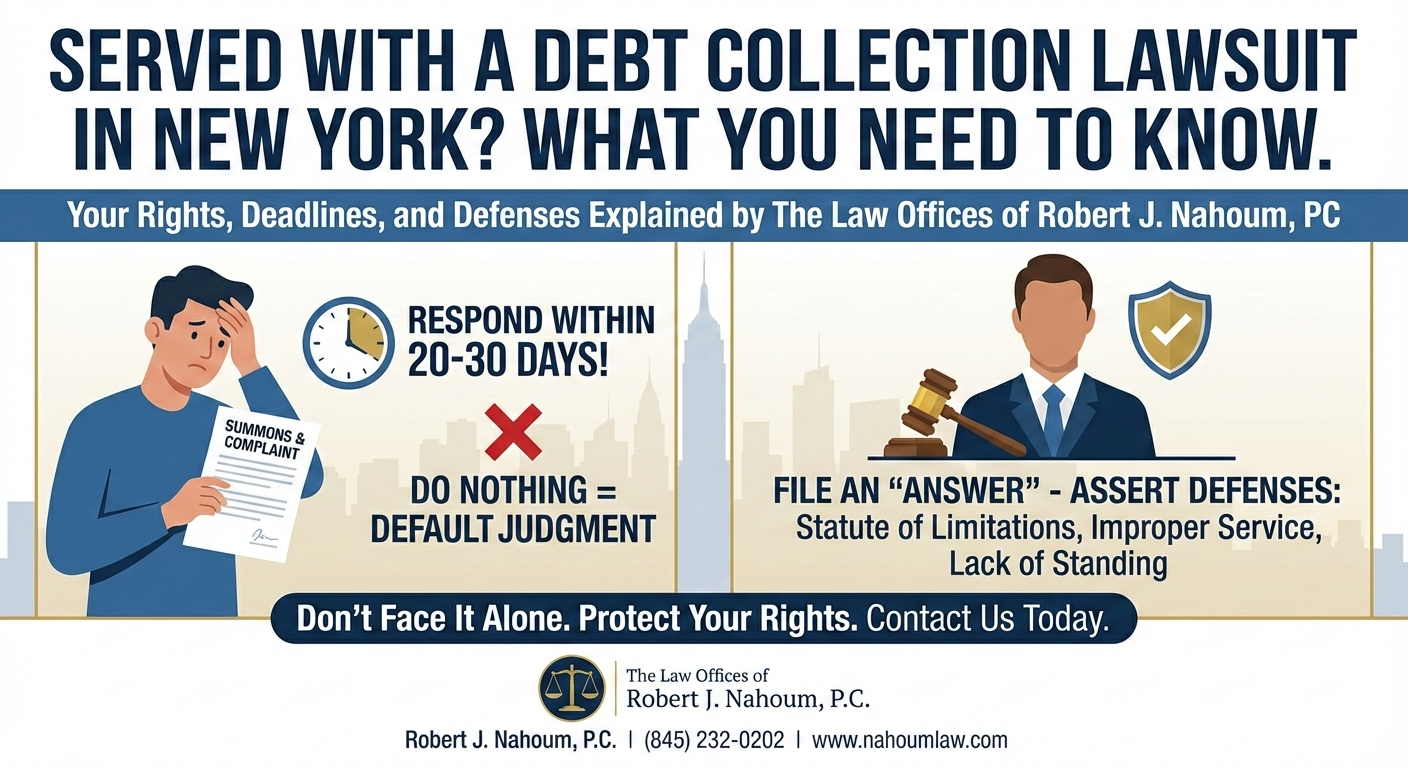
In most New York debt collection cases, you have between 20 and 30 days to respond, depending on how you were served. If you were personally handed the summons and complaint, the deadline is typically 20 days; if you were served by another method (for example, by “substitute service”), you usually have 30 days.
What happens if I do nothing?
If you do nothing, the plaintiff can ask the court for a default judgment against you. A default judgment can lead to wage garnishment, frozen bank accounts, property liens, and serious damage to your credit.
What is an “Answer” and why is it important?
An Answer is your formal written response to the complaint in which you admit, deny, or say you lack knowledge about each allegation. The Answer is also where you raise legal defenses (affirmative defenses) and any counterclaims you may have against the plaintiff.
How do I actually file an Answer in New York?
You generally must:
- Prepare your written Answer, responding to each numbered paragraph in the complaint and listing your defenses.
- File the Answer with the clerk of the court where the case was started (for example, Civil Court of the City of New York or a City/Justice Court upstate).
- Serve a copy of the Answer on the plaintiff or its attorney and keep proof of service.
What defenses can I raise in a New York debt collection case?
Common defenses in New York consumer credit cases include:
- Statute of limitations: in many consumer credit cases, New York’s limitations period is three years from default.
- Mistaken identity or wrong amount: the debt is not yours or the balance is incorrect.
- Lack of standing: a debt buyer has not properly proven it owns your specific account, including the full “chain of title.”
- Improper service: you were not served according to New York’s service rules.
Are there special rules for debt buyers and credit card lawsuits?
Yes. New York’s consumer credit reforms require extra documentation before a default judgment can be entered in consumer credit cases, especially for debt buyers. Plaintiffs must provide affidavits and records that show the original agreement, the amount charged off, and a complete chain of title if the debt has been bought and sold.
Can I assert counterclaims against the debt collector?
If the collector violated federal or New York debt collection laws, you may be able to assert counterclaims in your Answer. Potential counterclaims can arise from false, deceptive, or abusive collection tactics or suing on time‑barred debts.
Do I have to go to court after I file my Answer?
Yes, you should expect to appear when the court schedules conferences or hearings. If you fail to appear after answering, the court can still grant relief to the plaintiff or dismiss your case, depending on the circumstances.
Can I settle the case after I’ve been sued?
Most New York debt collection cases can be negotiated and settled at any stage, including after an Answer is filed. Settlement may involve a lump‑sum payment, a payment plan, or, in some cases, dismissal of the case if the plaintiff cannot prove its claim.
Should I speak to the debt collector or only through a lawyer?
Anything you say to a collector can be used against you in the lawsuit, including admissions about owing the debt. Speaking through an experienced consumer protection attorney can help protect your rights and improve your negotiating leverage.
What if the debt is very old?
If the debt is outside the statute of limitations, the plaintiff may be barred from suing or collecting through litigation, and suing on such a debt can itself violate consumer protection laws. Making new payments or written promises to pay on an old debt may unintentionally affect limitation periods, so legal advice is important before doing so.
How can a New York consumer protection lawyer help me?
A lawyer experienced in New York debt collection defense can:
- Analyze the complaint, your documents, and court rules to identify defenses and counterclaims.
- Draft and file a tailored Answer, represent you in court, and negotiate with the plaintiff to seek dismissal or a favorable settlement.
If you need help settling or defending a debt collection lawsuit, stopping harassing debt collectors or suing a debt collector, contact us today to see what we can do for you. With office located in Brooklyn and the Hudson Valley, the Law Offices of Robert J. Nahoum defends consumers in debt collection cases throughout the Tristate area including New Jersey.
The Law Offices of Robert J. Nahoum, P.C
(845) 232-0202
www.nahoumlaw.com
info@nahoumlaw.com