
By: Robert J. Nahoum
When buying a car, especially a used one, dealers often push “extended warranties” as a way to protect you from costly repairs. But here’s the problem: many of these products are not actually warranties at all. They are service contracts, and that distinction can have serious legal consequences.
If you’ve ever felt confused or misled during a car purchase, you’re not alone. Understanding the difference between an extended warranty and a service contract can help you spot deceptive practices and protect your rights.
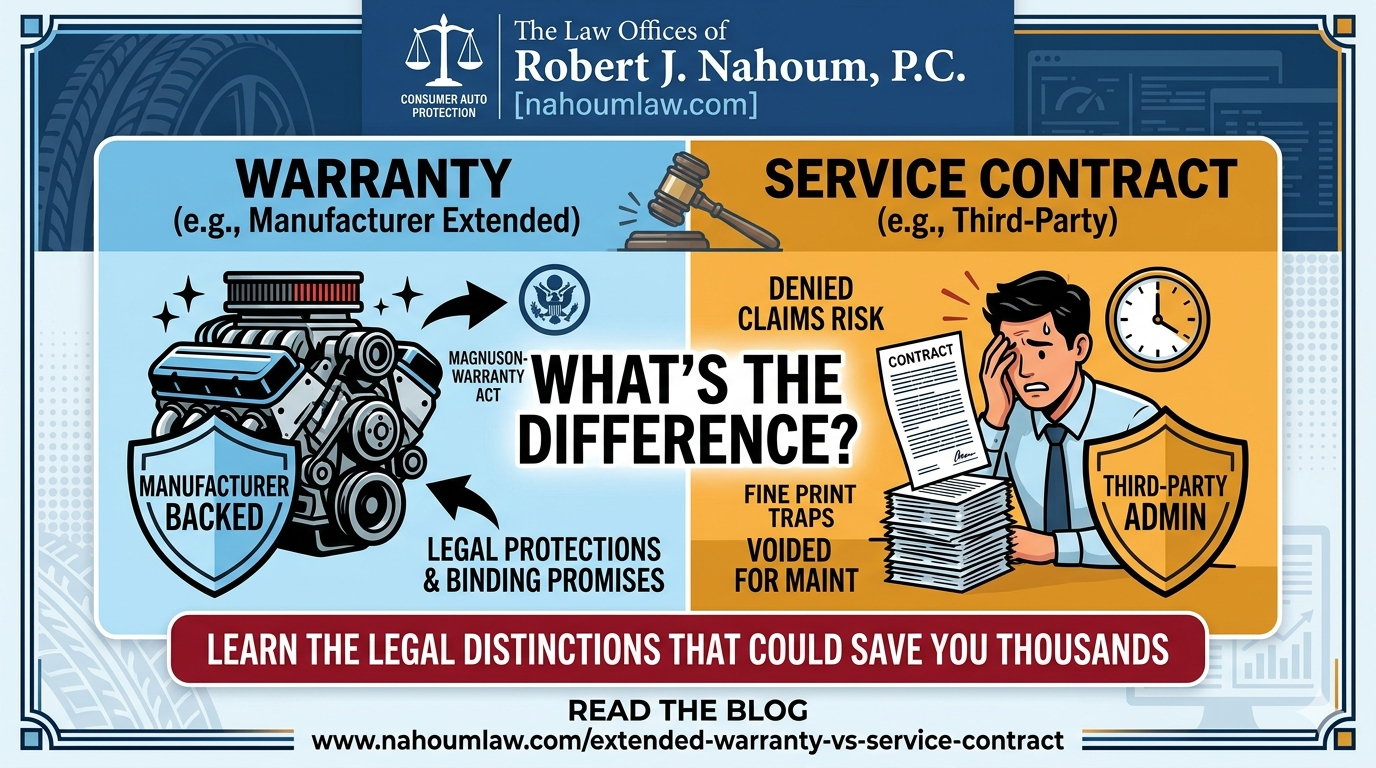
What Is an Extended Warranty?
An extended warranty is essentially a continuation of the manufacturer’s original warranty. It typically:
- Comes directly from the manufacturer or is backed by them
- Extends the original warranty coverage beyond its expiration
- Is governed by warranty law, including the federal Magnuson-Moss Warranty Act
Because it is legally considered a warranty, it comes with certain consumer protections. For example, the terms must be clearly disclosed, and misleading statements about coverage may violate federal law.
What Is a Service Contract?
A service contract (often marketed as an “extended warranty”) is a separate agreement to perform repairs or maintenance. It typically:
- Is sold by a third party or the dealership—not the manufacturer
- Is optional and purchased for an additional fee
- Is governed primarily by contract law and state regulations
Unlike warranties, service contracts generally do not automatically carry the same federal protections. This distinction becomes critical if something goes wrong.
Why Dealers Blur the Line
Many auto dealers use the term “extended warranty” loosely—even when they are selling a service contract. This can mislead consumers into believing:
- The coverage is more comprehensive than it actually is
- The product is backed by the manufacturer
- They have stronger legal protections than they really do
In some cases, this misrepresentation may violate consumer protection laws. If a dealer falsely describes a service contract as a warranty, it could form the basis of a legal claim.
Why the Difference Matters Legally
The distinction between a warranty and a service contract affects several key legal issues:
- Applicable Laws – Warranties are governed by federal law (Magnuson-Moss Warranty Act), while service contracts are usually governed by state law. This affects your ability to bring certain claims.
- Disclosure Requirements – Warranties must meet stricter disclosure standards. If a dealer fails to properly explain terms, that may be actionable.
- Remedies and Damages – Warranty violations may allow for attorney’s fees and additional damages under federal law. Service contract disputes may be more limited unless fraud or deception is involved.
- Cancellation and Refund Rights – Service contracts often include cancellation provisions—but dealers may fail to explain them or honor them properly.
Common Consumer Complaints
In my practice representing consumers in New York and New Jersey, I frequently see cases involving:
- Being told a service contract was required to secure financing
- Misrepresentations about what is covered
- Refusal to honor cancellation requests
- Hidden fees rolled into auto loans
These issues often overlap with broader auto fraud and financing violations. You can read more about these types of cases here.
What You Should Do Before You Buy
To protect yourself:
- Ask whether the product is a manufacturer warranty or a third-party service contract
- Request a copy of the agreement before signing
- Review what is actually covered—and what is excluded, don’t rely on what the dealer tells you
- Check whether the cost is being financed (and accruing interest)
- Confirm with the lender if the dealer says it is “required”
If something doesn’t feel right, it’s worth taking a closer look before signing or simply getting up and walking away.
When to Speak With a Lawyer
If you believe you were misled about an extended warranty or service contract, you may have legal options. Misrepresentation, deceptive practices, and improper financing disclosures can all give rise to claims under state and federal law.
Visit www.nahoumlaw.com to learn more about your rights, or contact The Law Offices of Robert J. Nahoum, PC today to schedule a consultation and find out how we can help you fight back.
At The Law Offices of Robert J. Nahoum, P.C., we represent New York and New Jersey consumers who have been ripped off by dishonest auto dealers. If your deal doesn’t match what was promised, you have rights—and we can help you enforce them.
For a free consultation about an auto‑fraud or deceptive‑sales issue, contact us at our Hudson Valley office or our Brooklyn location.
📞 Call (845) 232‑0202 or visit our contact page: www.nahoumlaw.com/contact