
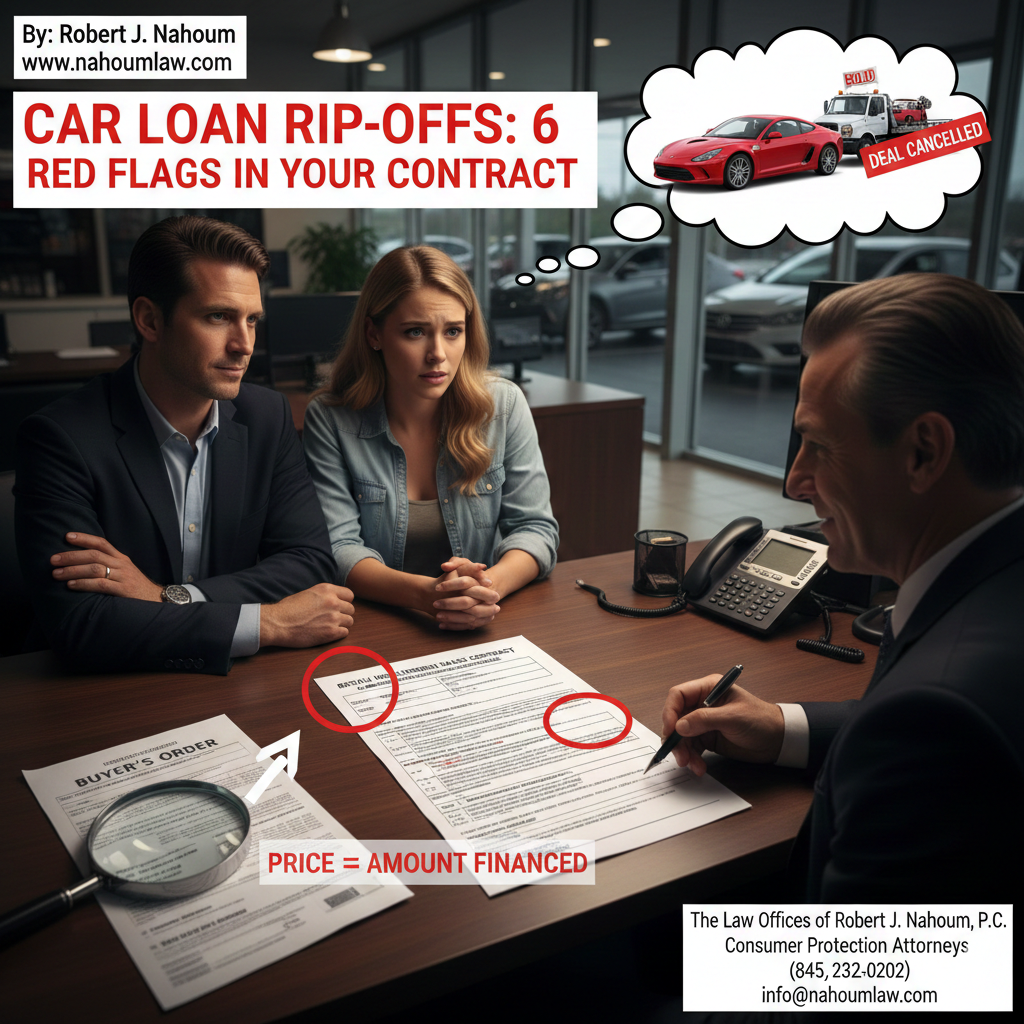
By: Robert J. Nahoum
Walking into a car dealership can feel like entering a high-stakes negotiation. You’ve picked the car and agreed on a price, but then comes the “fateful” moment in the Finance & Insurance (F&I) office. They slide a long, legalistic document in front of you: the Retail Installment Sales Contract (RISC).
Most buyers sign it without a second thought. That is a mistake.
As a consumer protection attorney, I see firsthand how unscrupulous dealers use these contracts to bury hidden fees and predatory terms. Here are the most frequently asked questions about how to analyze your RISC to ensure you aren’t being taken for a ride.
- What exactly is a Retail Installment Sales Contract (RISC)?
Unlike a traditional loan from a bank, a RISC is an agreement between you and the dealer. You are technically buying the car on credit from the dealership, which then usually sells (assigns) that contract to a bank or finance company. Because the dealer “originates” the loan, they have a massive incentive to “pack” the contract with extra profit.
- Where is the “Truth in Lending” box, and why does it matter?
By federal law (the Truth in Lending Act, or TILA), every RISC must have a distinct box at the top containing four critical numbers:
- Annual Percentage Rate (APR): The cost of your credit as a yearly rate.
- Finance Charge: The total dollar amount the credit will cost you.
- Amount Financed: The amount of credit provided to you.
- Total of Payments: The amount you will have paid after you have made all scheduled payments.
The Red Flag: If these numbers don’t match what the salesperson promised you on the showroom floor, stop. Dealers often “markup” the interest rate (known as the dealer reserve) without telling you.
- What are “Junk Fees” and where are they hidden?
Look at the section titled “Itemization of Amount Financed.” This is where dealers hide high-margin “back-end” products. Watch out for:
- VIN Etching: Charging $200–$500 for a $20 sticker.
- GAP Insurance: Often sold at 3x the price your own insurance company would charge.
- Service Contracts/Extended Warranties: Check if these were added without your express consent.
- Nitrogen-Filled Tires: A common 2025 “add-on” that provides little value but adds hundreds to the contract.
- What is “Yo-Yo Financing” (and how do I spot it)?
This is one of the most predatory scams. The dealer lets you drive off the lot with the car, telling you the “financing is approved.” Days later, they call you back saying the financing “fell through” and you must sign a new contract with a higher interest rate or a larger down payment.
How to Analyze: Look for a “Subject to Financing” or “Seller’s Right to Cancel” clause. In New York, if the dealer gives you the keys, the deal should be final. If they try to “yo-yo” you, they may be violating the Deceptive Trade Practices Act.
- Can the dealer charge whatever they want for “Document Fees”?
No. In New York, the “Doc Fee” is capped by law (currently $175). If you see a “Dealer Prep Fee” or “Documentation Fee” significantly higher than this, they are likely trying to circumvent state price caps.
- Why are there blank spaces in my contract?
Never sign a contract with blank spaces. Unscrupulous dealers may ask you to sign an incomplete RISC, promising to “fill in the numbers later” based on the bank’s approval. This is a recipe for forgery. Once you leave, they can inflate the purchase price or the interest rate, and your signature is already on the page.
The Robert J. Nahoum Rule of Thumb:
Always compare your Buyer’s Order (the price you agreed on with the salesperson) to the Amount Financed on the RISC. If the math doesn’t add up to the penny, the dealer is likely “price packing.”
Summary Checklist for Your RISC:
| Check For | What to Look For |
| The TILA Box | Ensure the APR matches your quoted rate. |
| Optional Products | Ensure GAP or Warranties aren’t “forced” as a condition of the loan. |
| The Math | Cash Price – Down Payment + Taxes/Fees = Amount Financed. |
| Signatures | Ensure no blank lines exist and you receive a fully executed copy before leaving. |
Holding Dealerships Accountable
By challenging fraudulent auto sales and financing practices, consumers not only reclaim what is theirs but also help deter future misconduct across the industry.
If you think a car dealer has hidden or disguised the cost of finance, call an experienced consumer protection attorney familiar with auto fraud to discuss your options.
The Law Offices of Robert J. Nahoum, P.C
(845) 232-0202
www.nahoumlaw.com
info@nahoumlaw.com