
By: Robert J. Nahoum
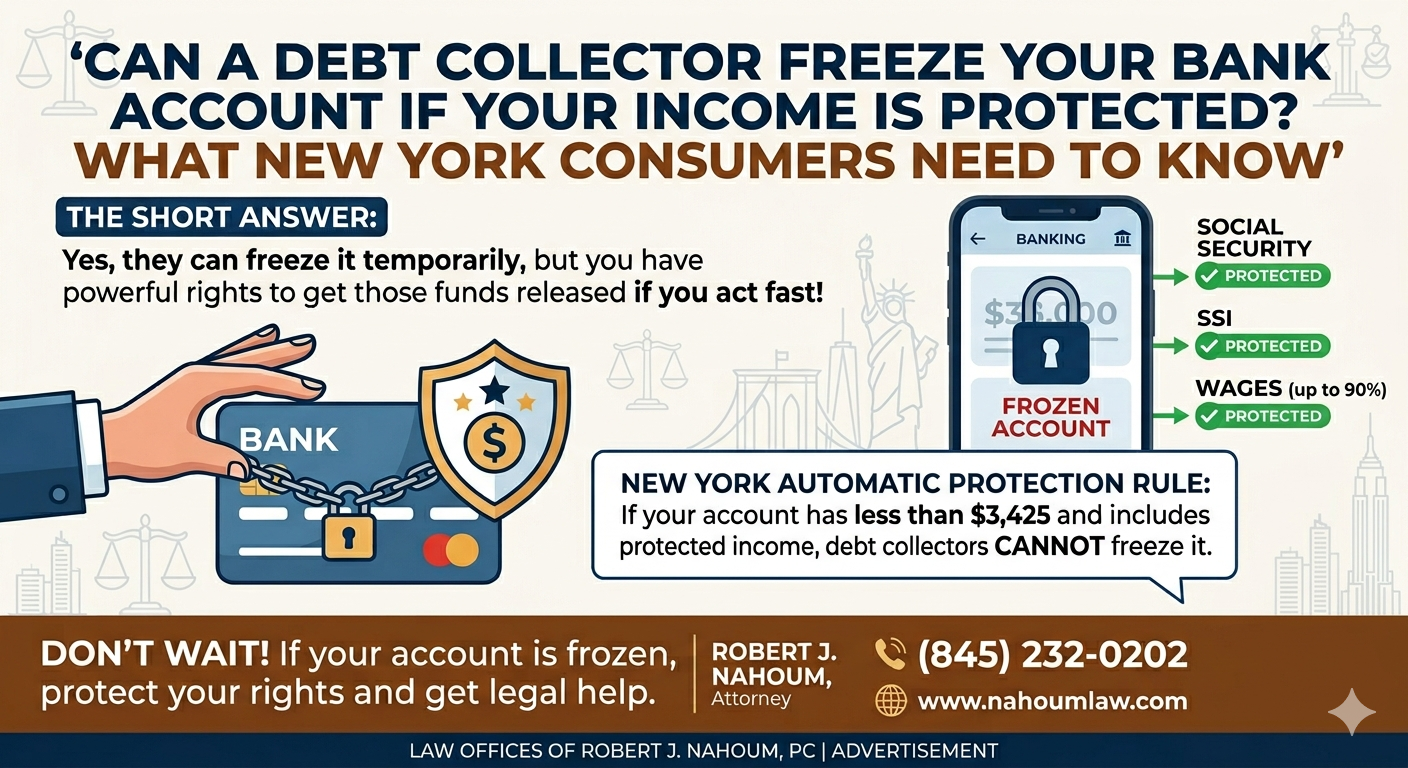
Short answer: Yes, a debt collector can still freeze your bank account even if your income is legally protected, but you have powerful rights to get those funds released quickly if you act fast.
If you live in New York and have been sued by a debt collector, understanding the difference between a freeze and an actual loss of funds is critical. A frozen account is not an immediate loss of money, it’s a temporary restraint that you can often challenge and reverse.
How Debt Collectors Freeze Bank Accounts in New York
Debt collectors cannot freeze your bank account without first suing you and obtaining a court judgment. The process typically works like this:
- The debt collector files a lawsuit against you in civil court.
- If you don’t respond or lose, the court issues a judgment against you.
- The judgment creditor serves a restraining notice on your bank, which freezes funds up to the amount owed.
- Your bank freezes the account, blocking access while the creditor pursues collection.
Importantly, the freeze happens before any money is actually taken. This gives you a window to assert your exemptions and protect your funds.
What Income Is Protected from Debt Collectors?
Federal and New York State law exempt certain types of income from debt collection, even after a judgment is entered. These protected sources include:
- Social Security retirement, disability, and survivor benefits
- Supplemental Security Income (SSI)
- Veterans Affairs benefits
- Federal Railroad Retirement and Civil Service Retirement benefits
- Unemployment insurance
- Workers’ compensation
- Child support and spousal maintenance (alimony)
- Public Assistance and wages earned while receiving SSI or Public Assistance
- Pension and retirement account payments
- 90% of income earned in the last 60 days
If your account receives direct deposits of Social Security, SSI, VA benefits, or federal retirement income, your bank is federally required to review the past two months of deposits and automatically protect those funds.
New York’s Automatic Protection Rule: The $3,425 Threshold
New York provides an additional layer of protection. As of April 1, 2024, if your bank account contains less than $3,425, debt collectors cannot freeze or take any money from it if those funds include exempt government benefits or other protected income.
However, if your account balance exceeds $3,425, the excess amount is not automatically protected, you must take action to assert your exemptions.
What to Do If Your Account Is Frozen
If your bank account has been frozen and you believe it contains protected funds, act immediately:
Step 1: Confirm the Source of the Freeze
Contact your bank to obtain notice of the restraining notice, including which creditor initiated it and the court case number.
Step 2: Gather Proof of Exempt Income
Collect documentation showing that the frozen funds come from protected sources, such as:
- Bank statements showing direct deposits from Social Security, VA, or other exempt sources
- Award letters from benefit agencies
- Pay stubs if claiming the 60-day wage exemption
Step 3: Send an Exemption Claim Form to Your Bank
If your account holds exempt funds above the $3,425 automatic threshold, send an exemption claim form to your bank and the judgment creditor’s attorney notifying them that the account contains exempt income that should not be frozen.
Step 4: Consult an Attorney
Navigating exemption claims, court deadlines, and debt collector tactics can be overwhelming. An experienced consumer protection attorney can help you:
- Identify all applicable exemptions
- Prepare and file the necessary court papers
- Negotiate with the debt collector or challenge the underlying judgment
Why Protected Income Still Gets Frozen (and How to Fix It)
Even though federal and state law protects certain income, banks often freeze entire accounts automatically when served with a restraining notice, they don’t always distinguish between protected and non-protected funds upfront. This is especially common when:
- Protected and non-protected funds are mixed in the same account
- Benefits arrive by paper check rather than direct deposit
- The account balance exceeds the $3,425 automatic protection threshold
The good news: a freeze is reversible. If your funds are exempt, you can get them released by asserting your rights promptly.
How The Law Offices of Robert J. Nahoum, PC Can Help
If you’ve been sued by a debt collector or your bank account has been frozen, you don’t have to face it alone. At The Law Offices of Robert J. Nahoum, PC, we represent consumers throughout New York and New Jersey who are fighting back against aggressive debt collection practices.
Our team can help you:
- Determine whether your income and assets are protected
- File exemption claims to release frozen funds
- Defend you against the underlying debt collection lawsuit
- Assert your rights under the Fair Debt Collection Practices Act (FDCPA) if debt collectors have violated the law
We offer free consultations to evaluate your case and explain your options. Contact us today to protect your money and your rights.
If you’ve been sued by a debt collector in New York, act quickly. Contact The Law Offices of Robert J. Nahoum, PC for a free consultation and find out how we can help defend your rights.
If you have been contacted by a debt collector contact us at (845) 232‑0202 to discuss your options.
Disclaimer: This blog post is for informational purposes only and does not constitute legal advice. Every case is different; you should speak with an attorney about your specific situation before making legal decisions.