
By: Robert J. Nahoum
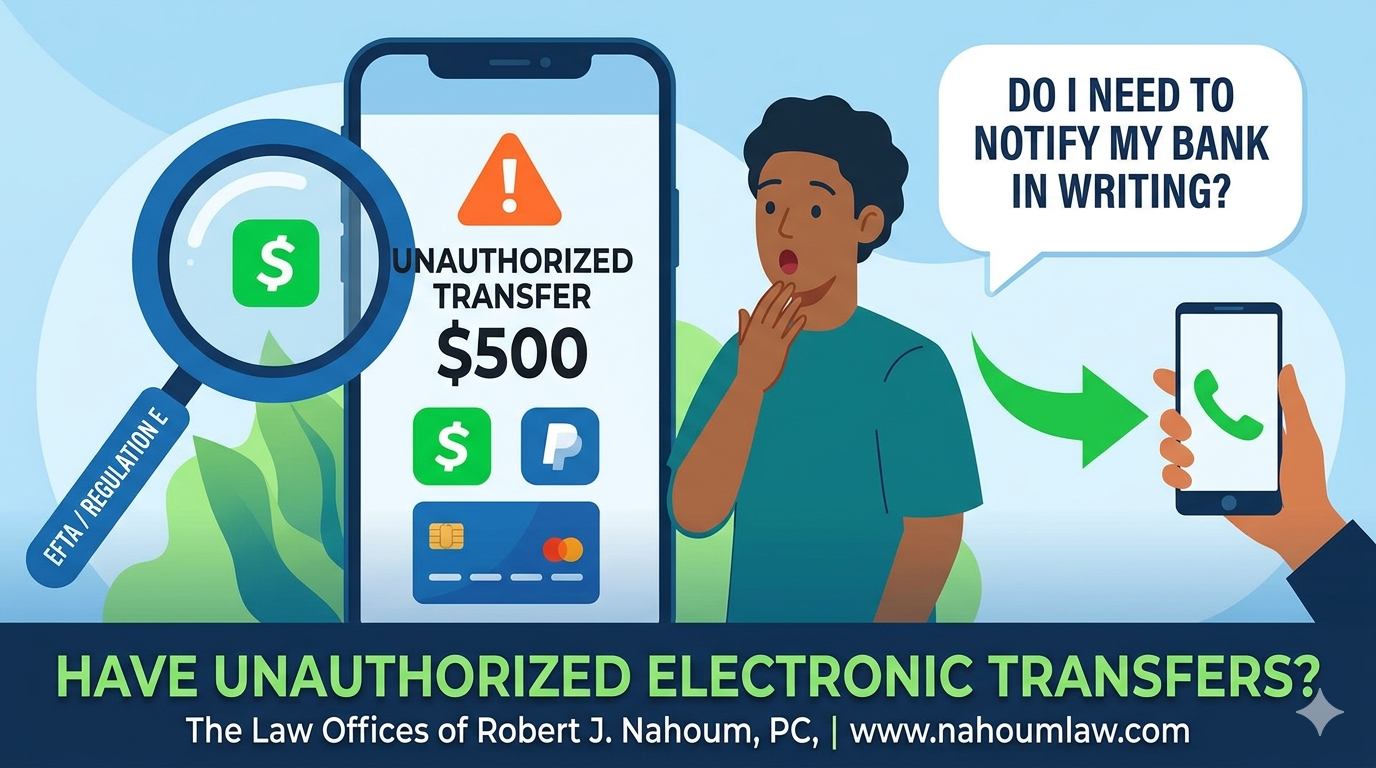
Unauthorized electronic withdrawals, whether from debit card fraud, hacked accounts, ACH scams or CashApp, Zelle or Venmo, are increasingly common. One of the most frequent questions consumers ask is simple: Do I have to notify my bank in writing to be protected?
The short answer is no, but there are important details that can affect your rights.
What the Law Says
Unauthorized electronic fund transfers are governed by the federal Electronic Fund Transfer Act (EFTA) and its implementing regulation, Regulation E.
Under this law, a consumer is required to notify their financial institution promptly after discovering an unauthorized transaction. However, the law does not require that notice be in writing.
You can provide valid notice in several ways:
- By phone
- In person at a branch
- Through online banking messaging systems
- In writing (optional, but sometimes requested)
As long as the notice is given in a way that reasonably informs the bank of the problem, it generally satisfies the legal requirement.
Why Timing Matters More Than Format
While written notice is not required, timing is critical.
Your liability for unauthorized transfers depends heavily on how quickly you report the issue:
- Within 2 business days: liability is limited (typically up to $50)
- After 2 business days: liability can increase (up to $500)
- After 60 days from statement: you may lose protection for subsequent transfers
This means a quick phone call can be more important than a delayed written letter.
When Banks Ask for Written Confirmation
Even though the law does not require written notice initially, banks are allowed to request written confirmation after you report the fraud.
If they do:
- You usually have 10 business days to provide it
- Failing to follow up in writing could affect your claim
This is where many consumers get tripped up. They report fraud promptly, but ignore or miss a later request for written confirmation.
Practical Advice for Consumers
To protect yourself fully:
- Report unauthorized transactions immediately (do not wait)
- Follow up in writing if the bank requests it
- Keep records of all communications
- Review your account statements regularly
If your bank denies your claim or delays reimbursement, you may have legal remedies.
When to Speak With a Lawyer
Financial institutions do not always follow Regulation E correctly. Claims are sometimes denied based on technicalities or incomplete investigations.
Have You Been a Victim of Unauthorized Transfers?
If your bank has refused to reimburse you for unauthorized electronic fund transfers, or if you have lost money due to a delayed report, you may have rights under the EFTA and Regulation E. Banks sometimes wrongfully deny claims, miss investigation deadlines, or incorrectly calculate liability limits.
At The Law Offices of Robert J. Nahoum, PC, we focus on holding financial institutions accountable. We represent consumers in disputes involving:
- Unauthorized debit card charges
- Hacked online banking accounts
- Failure to provisionally credit funds
- Violation of Regulation E investigation timelines
Contact us today for a free consultation to discuss your case. We also invite you to learn more about our Consumer Protection practice area.
Protecting Consumers Against Financial Deception
If you need help recovering money lost to an impersonation scam, contact us today to see what we can do for you. With offices located in Brooklyn and the Hudson Valey, the Law Offices of Robert J. Nahoum represents consumers in cases throughout the Tristate area including New Jersey.
The Law Offices of Robert J. Nahoum, P.C
(845) 232-0202
www.nahoumlaw.com
info@nahoumlaw.com
Disclaimer: This blog post is for informational purposes only and does not constitute legal advice. Laws and regulations are subject to change. Please consult with an attorney for advice regarding your specific situation.