
By: Robert J. Nahoum
A Frozen Bank Account Is Not an Immediate Loss of Funds
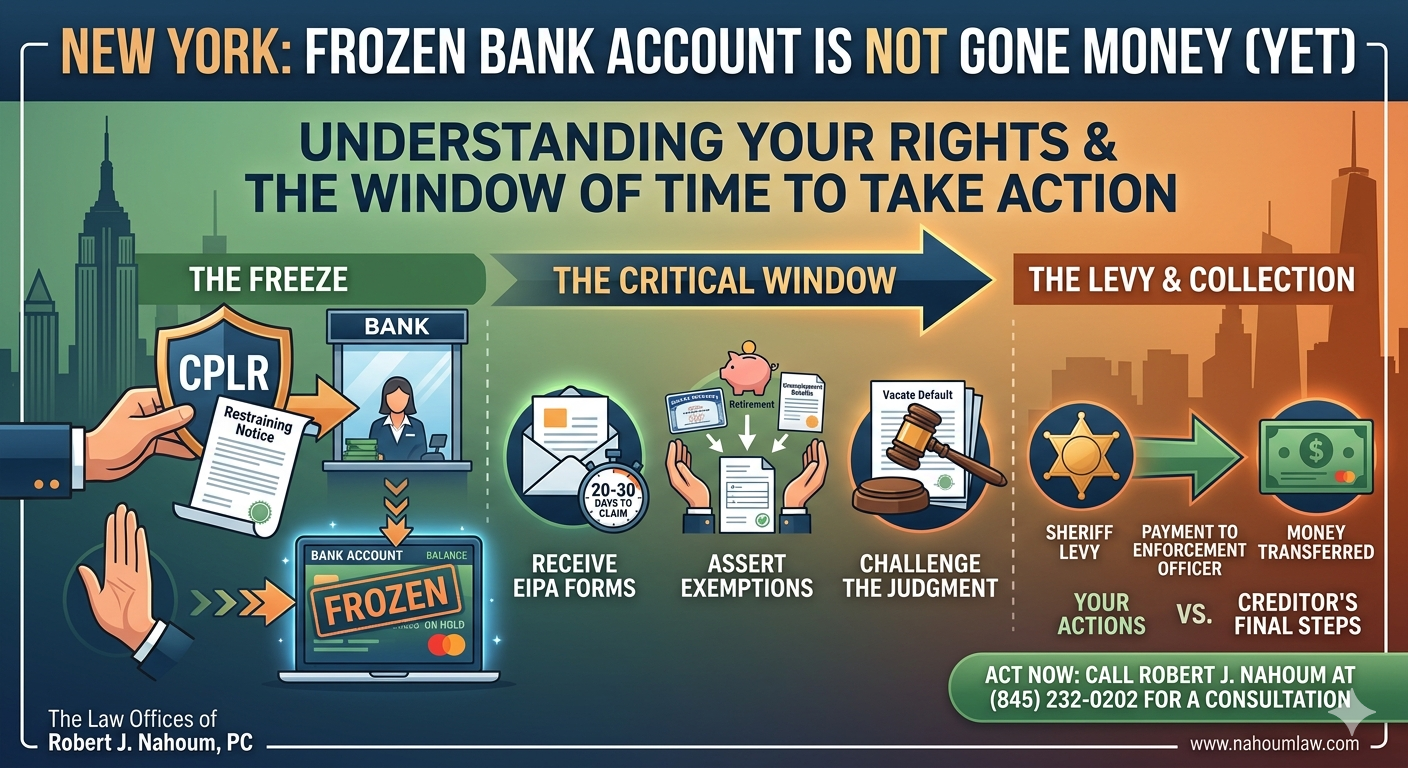
In New York, when your bank account is “frozen,” it means a restraining notice been served on your bank, but the money has not necessarily been removed yet. The restraint blocks you from accessing some or all of the funds while the judgment creditor goes through the required procedures under Article 52 of the CPLR to actually levy and collect.
For many consumers, this distinction is critical: there is a short window of time to assert exemptions, challenge the judgment, or negotiate before any money leaves the account.
How New York Creditors Freeze a Bank Account
In most consumer debt cases, a bank account is restrained only after the creditor obtains a money judgment against you in court. Once the judgment is entered, the creditor’s attorney can serve:
- A restraining notice on your bank under CPLR 5222, which prohibits the bank from allowing you to withdraw the restrained funds.
- Or an execution with levy under CPLR 5232(a), which both restrains the account and sets the stage for eventual payment to the enforcement officer.
If your account is frozen, it often starts with a restraining notice, which is essentially a “hold” but not an immediate transfer of money to the creditor.
For more background on bank restraints, see FAQ: How to Respond to a Frozen Bank Account or Wage Garnishment on nahoumlaw.com.
The Levy Process: What Must Happen After the Freeze
To move from a simple freeze to actually taking money from the account, a judgment creditor must follow specific CPLR procedures.
- Serve an execution with notice on the bank (levy).
Under CPLR 5232(a), a levy on a bank account is made by serving the execution on the banking institution, which creates a lien on the funds in the account at that moment. This is what legally authorizes eventual payment to the enforcement officer, but the funds still sit at the bank for a period of time. - Provide Exempt Income Protection Act (EIPA) notices and forms.
New York’s Exempt Income Protection Act requires that the creditor or enforcement officer serve the bank with an exemption notice and exemption claim forms along with the restraining notice or execution. The bank then must promptly forward those forms to you so that you can claim any exemptions you are entitled to under CPLR 5205 and related provisions. - Wait out the statutory EIPA time period.
After the bank restrains the account and sends you the exemption forms, there is a waiting period (generally around 20–30 days, depending on timing and mailing) during which you may return the exemption claim form and challenge the restraint. During this time, the bank holds the money but does not yet turn it over to the enforcement officer unless there is no valid exemption claim and the time period expires. - Bank remits funds to the enforcement officer if there is no valid exemption claim.
If you do not timely return an exemption form or your claim is rejected after court review, the bank is required under CPLR 5232(g) to pay the levied funds to the sheriff or other enforcement officer after the hold period ends. The officer then remits the funds to the judgment creditor. - Use a special turnover proceeding to force payment in certain situations.
In some cases, particularly where there is a dispute over ownership of the funds (for example, joint accounts, competing claims, or an uncooperative garnishee), the judgment creditor may commence a special proceeding for a turnover order under CPLR 5225(b) or 5227. In that proceeding, the creditor names the bank (and often the judgment debtor and any other interested parties) and asks the court to order the restrained funds turned over to the sheriff or directly to the creditor to satisfy the judgment. The bank and the debtor have an opportunity to respond, raise exemptions, and assert any competing interests, and the court ultimately decides whether, and to what extent, the funds must be paid over.
Importantly, in typical consumer cases no additional court order is required for the bank to release non‑exempt funds after the CPLR and EIPA procedures run their course.
Exemptions: Funds That Cannot Be Taken Even After a Levy
Even after a bank account is restrained, New York law protects certain funds from being levied, particularly statutorily exempt income. Examples include:
- Social Security, SSDI, SSI, and certain veterans’ benefits
- Public assistance and unemployment insurance
- Certain pensions and retirement accounts
- A baseline amount of wages and other income needed for basic living expenses
Under CPLR §5205 and related EIPA provisions, banks must automatically protect a defined amount in accounts receiving direct deposit of exempt benefits, and consumers can claim additional exemptions using the forms mailed by the bank.
For a deeper explanation of judgment exemptions, see Judgment Exemptions in New York and related posts in the Debt Collection section of nahoumlaw.com.
What You Can Do if Your Bank Account Is Frozen
Because a frozen bank account does not mean the money is gone, quick action can make a real difference. Practical steps include:
- Review the court papers and the underlying judgment. Many New Yorkers only learn of a judgment when their account is frozen, often because they were never properly served with the lawsuit in the first place.
- Complete and return exemption claim forms immediately if any of the funds are exempt. This can stop the bank from turning over protected money and may lead to a court hearing to resolve disputes.
- Move to vacate a default judgment where appropriate. If you were never properly served or have a meritorious defense, you may be able to ask the court to vacate the judgment and release the restraint.
- Negotiate a settlement or payment plan with the creditor. In some cases, it is possible to negotiate a reduced lump‑sum or structured payment in exchange for lifting the restraint.
At The Law Offices of Robert J. Nahoum, P.C., we routinely go to court on an emergency basis to file an order to show cause to vacate default judgments and release frozen bank accounts for New York consumers. Learn more on our Frozen Bank Accounts page.
When to Contact a Consumer Debt Defense Lawyer
If a debt collector has frozen your bank account in New York, you should speak with an experienced consumer protection lawyer as soon as possible. A lawyer can evaluate:
- Whether the judgment itself can be challenged or vacated
- Whether the funds in the account are exempt and how to assert those rights
- Whether the creditor complied with the CPLR and EIPA procedures
- Settlement options that may quickly restore access to your money
At The Law Offices of Robert J. Nahoum, PC, we regularly defend New York consumers in debt‑collection lawsuits and help them understand their rights and options. To learn more about how we can assist you, visit our Debt Collection Defense page or contact our office to schedule a consultation.
If you have been contacted by a debt collector contact us at (845) 232‑0202 to discuss your options.
Disclaimer: This blog post is for informational purposes only and does not constitute legal advice. Every case is different; you should speak with an attorney about your specific situation before making legal decisions.