
By: Robert J. Nahoum
Who is Marshal Ronald Moses?
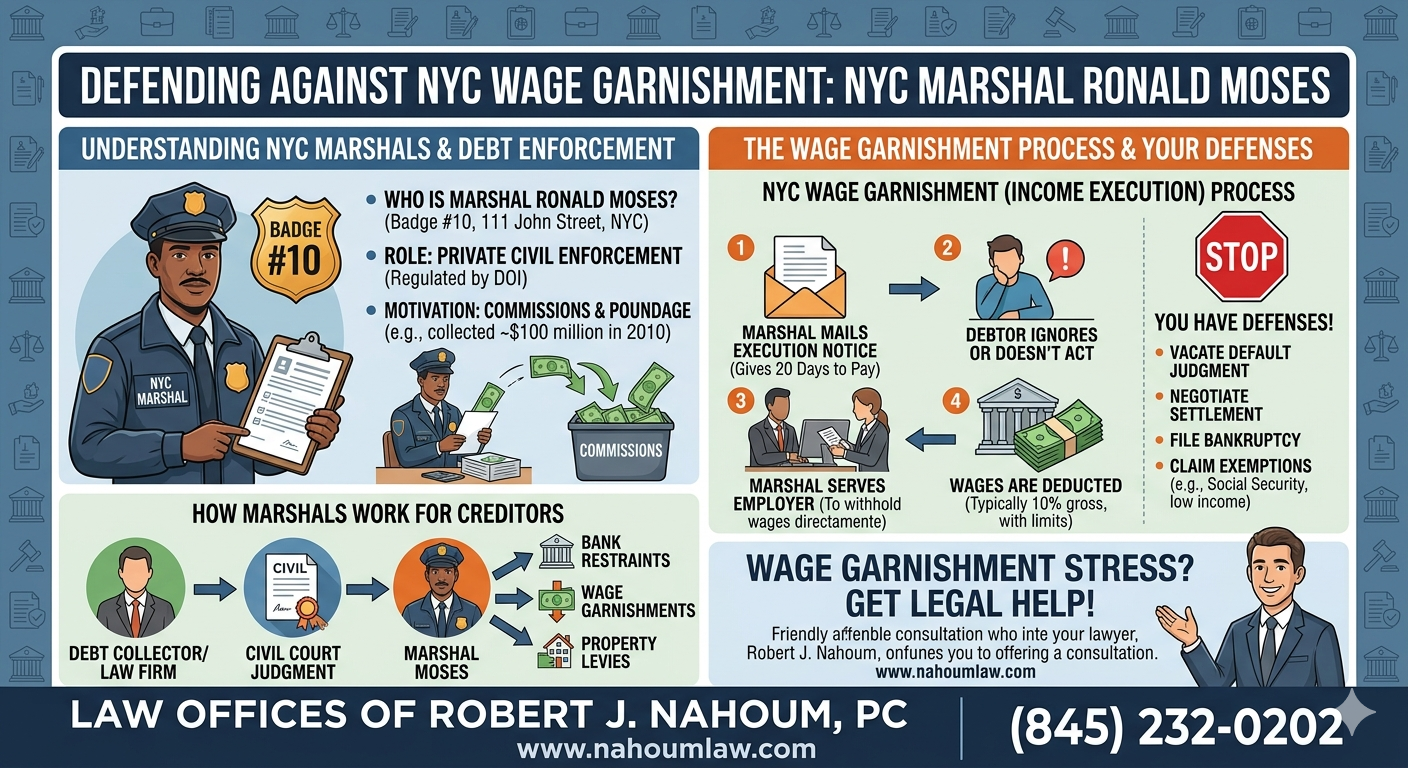
Marshal Ronald Moses, badge #10, is a prominent NYC City Marshal based at 111 John Street, Suite 500, New York, NY 10038. He works with debt collection law firms across NYC to execute Civil Court judgments, including bank restraints and wage garnishments, earning commissions like 5% poundage on collections. In 2010, his office reportedly collected around $100 million, making him one of the top-earning Marshals that year.
NYC Marshals like Moses are private, self-funded civil enforcement officers regulated by the Department of Investigation, unlike salaried county Sheriffs outside the city. They handle most NYC Civil Court enforcement, motivated by fees to pursue debtors aggressively.
Role of NYC Marshals in Debt Collection
NYC Marshals enforce money judgments from Civil Court cases, including debt collection suits, by serving income executions, restraining bank accounts, and levying property. Debt collectors outsource enforcement to Marshals, who collect statutory fees plus poundage on recovered amounts, paying the city a portion. They primarily manage evictions, towing, and judgment collections in the five boroughs.
For consumers sued in NYC Civil Court, a Marshal like Ronald Moses receives the judgment from the creditor’s attorney and initiates collection. This includes sending a “Notice of Garnishment” or income execution notice, giving debtors 20 days to pay voluntarily before employer service.
Wage Garnishment Process
Wage garnishment in New York, called an “income execution” under CPLR §5231, follows a two-stage process after a debt judgment. First, the Marshal mails the execution to the debtor, demanding installment payments (typically 10% of gross wages) and providing an exemption claim form. If ignored after 20 days, the Marshal serves the employer to withhold wages directly.
Limits protect low earners: No garnishment if disposable income is $450/week or less (30x minimum wage); otherwise, the lesser of 10% gross or 25% disposable exceeding that threshold. Exemptions cover Social Security, unemployment, and more; debtors can claim these to stop or reduce withholding.
Your Rights and Defenses
Debtors can vacate default judgments, negotiate settlements, file bankruptcy, or claim exemptions to halt Marshal enforcement. Contacting the Marshal directly for payment plans is an option, but legal review often reveals defenses like improper service or FDCPA violations.
The Law Offices of Robert J. Nahoum, PC, practicing in NYC debt defense, helps consumers stop wage garnishments and Marshals’ actions—visit www.nahoumlaw.com or call (845) 232-0202 for a consultation. Learn more about Marshals vs. Sheriffs in NY debt cases.
You can learn more about our consumer protection and judgment enforcement practice and request a free consultation at https://www.nahoumlaw.com or contact us at (845) 232‑0202 to discuss your options.
Disclaimer: This blog post is for informational purposes only and does not constitute legal advice. Every case is different; you should speak with an attorney about your specific situation before making legal decisions.