
By: Robert J. Nahoum
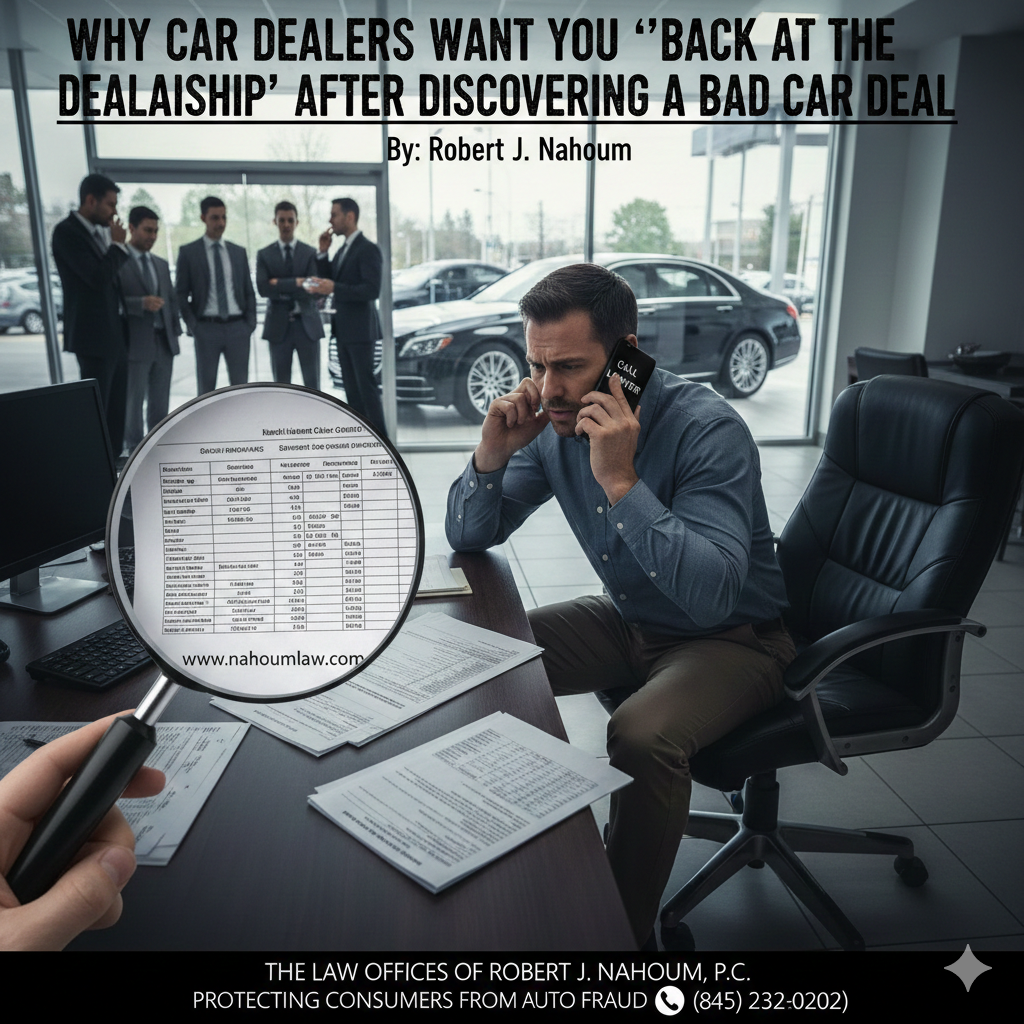
When your car deal doesn’t match what the dealer promised, you may discover an inflated price, hidden fees, or unwanted add‑ons buried in your Retail Installment Sales Contract. Dealers then push you to “come back to the dealership” to fix it—often to limit their exposure to Truth in Lending Act violations and auto fraud claims.
When a car buyer realizes the numbers in their Retail Installment Sales Contract don’t match what was promised—perhaps the price is inflated or hidden products appear, like service contracts or GAP insurance—the dealer’s next move is almost always the same: “Come back to the dealership so we can review your deal.”
That invitation might sound cooperative, but it’s a classic car dealer fraud tactic designed to regain control and minimize liability.
Why Dealers Want You to “Come Back”
Once the contract is signed, the deal is legally binding. If the consumer spots inconsistencies—such as a higher sale price or unauthorized add-ons—it signals potential Truth in Lending Act (TILA) violations or even fraudulent misrepresentation. Dealers know that discussing it over the phone or in writing creates a record. By getting you back on their turf:
- They can pressure you in person into signing a revised contract (“We made a mistake, let’s just fix it”).
- They regain possession of the car if you bring it with you.
- They can attempt to avoid written evidence of misrepresentation.
- They hope to talk you out of asserting your rights or consulting a lawyer.
The Truth in Lending Act and Auto Fraud
The Truth in Lending Act (TILA) is a federal law that requires full, accurate disclosure of all credit terms in auto financing. The total amount financed, interest rate (APR), payment schedule, and all fees must appear clearly and accurately in the written contract at the time of signing.
When dealers include undisclosed add-ons—like service contracts, tire and wheel protection, or GAP insurance—they are inflating the amount financed and misrepresenting the true annual percentage rate. This practice not only constitutes auto dealer fraud, but it can also violate the TILA if the disclosures fail to reflect the real cost of credit.
The “F&I” Department Trick
Most of this deception happens in the Finance and Insurance (F&I) office, where buyers sign their paperwork. F&I managers often present payment terms instead of prices—focusing on keeping the monthly payment the same while quietly adding thousands in hidden products. They rely on the complexity of the paperwork and the buyer’s fatigue after hours of negotiation.
If a consumer later challenges the numbers, the dealer may claim it was “just a mistake” and invite them back to “correct” it. What they’re really doing is:
- Trying to repair a potentially illegal contract before it gets reported.
- Getting the consumer to sign new documents that waive claims or arbitration rights.
- Preventing a complaint to the New York Attorney General or the Federal Trade Commission.
What You Should Do Instead
If you’ve discovered discrepancies in your auto sales or finance contract:
- Do not return to the dealership.
- Do not sign anything new.
- Gather your paperwork and call a consumer protection attorney experienced in auto fraud and dealer deception.
- You may have claims under state consumer fraud laws and TILA.
At The Law Offices of Robert J. Nahoum, P.C., we represent New York and New Jersey consumers who have been ripped off by dishonest auto dealers. If your deal doesn’t match what was promised, you have rights—and we can help you enforce them.
For a free consultation about an auto‑fraud or deceptive‑sales issue, contact us at our Hudson Valley office or our Brooklyn location.
📞 Call (845) 232‑0202 or visit our contact page: www.nahoumlaw.com/contact