
By: Robert J. Nahoum
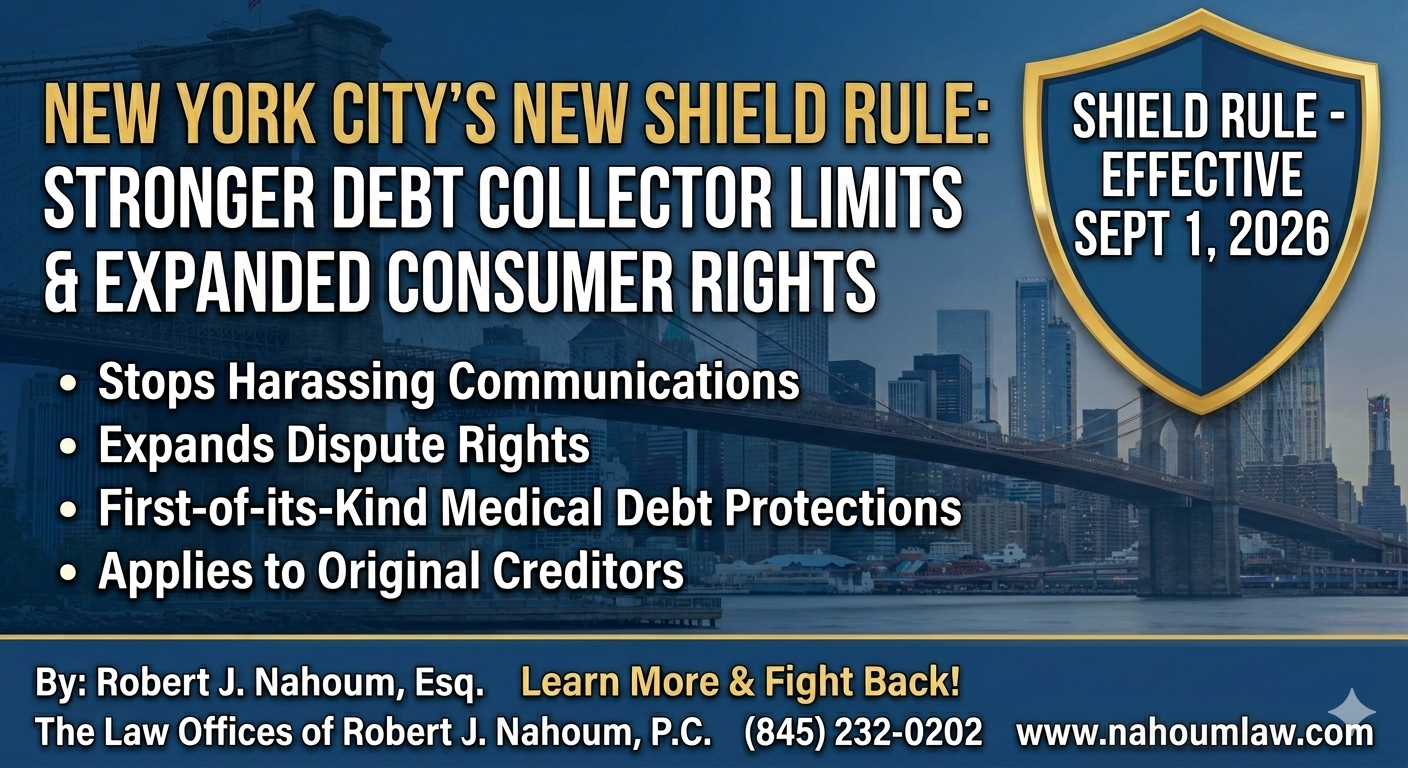
New York City’s new SHIELD Rule adds strong limits on debt collector harassment, expands dispute rights, and creates first-of-its-kind medical debt protections.
What Is the New York City SHIELD Rule?
The SHIELD Rule is a new set of debt collection regulations issued by the New York City Department of Consumer and Worker Protection (DCWP) that give New York City residents some of the strongest protections in the country against abusive collection tactics. It applies to “debt collectors,” which now expressly includes some original creditors—like financial institutions and hospitals—when they engage in debt collection activities on their own debts.
In April 2025, DCWP proposed amendments to clarify that any person, including an original creditor, who fits the definition of “debt collector” must comply with these rules whenever they are engaged in debt collection. The final SHIELD Rule is scheduled to take effect on September 1, 2026, giving collectors time to adjust and giving consumers time to learn their expanded rights.
Stronger Limits on Harassing Communications
One of the central goals of the SHIELD Rule is to curb harassing and excessive communications from debt collectors. Under the rule, collectors face stricter limits on how and when they can contact consumers, building on and going beyond the federal Fair Debt Collection Practices Act (FDCPA) and prior New York City rules.
DCWP has highlighted that the SHIELD Rule institutes a strong “communications restriction,” meaning that persistent, aggressive outreach designed to pressure payments will be much more tightly controlled. While the detailed call‑frequency and contact restrictions are spelled out in the rule text, the bottom line for consumers is that collectors who repeatedly call, text, or otherwise contact you in a way that feels harassing may now be violating both federal law and the new New York City SHIELD Rule.
If you are being bombarded with calls or messages about a debt, The Law Offices of Robert J. Nahoum, P.C. can evaluate whether those contacts violate the FDCPA, New York law, or the SHIELD Rule and help you assert your rights. You can learn more about abusive tactics, including lawsuits on time‑barred debts, in our existing blog resources.
Expanded Rights to Dispute and Verify Debts
The SHIELD Rule significantly strengthens consumers’ rights to dispute debts and demand verification at any stage of the collection process, not just after a first written notice. DCWP and consumer advocates have emphasized that debt collectors must be prepared to prove that a debt is legitimate, and that they must respond promptly when consumers raise disputes.
Under the revised rules, if a person meets the definition of a “debt collector” and is engaged in “debt collection procedures,” they must comply with validation and verification requirements including providing accurate information about the debt and honoring disputes. Certain financial institutions already subject to the federal Fair Credit Billing Act are exempt from some of these validation and verification requirements, but they remain subject to other parts of the SHIELD Rule.
For New Yorkers, this means:
- You can dispute a debt and demand verification even after collection has been underway for some time, not just at the very beginning.
- Collectors must have documentation that the debt is actually yours, in the correct amount, and legally collectible before they continue pressing for payment.
- If you challenge the debt, they must pause certain collection efforts until they respond appropriately under the rule.
If you have been sued in a New York court by a debt buyer or a collection law firm and have questions about whether the plaintiff can prove the debt, our firm regularly defends such lawsuits and challenges collectors who cannot substantiate what they claim is owed.
First‑of‑Its‑Kind Protections for Medical Debt
The SHIELD Rule also introduces new protections targeted specifically at medical debt, which DCWP describes as “first‑of‑its‑kind” in the country. Many New Yorkers fall into collections after an unexpected illness or hospital stay, and the rule recognizes that aggressive medical debt collection can be especially harmful.
Under the new framework, collectors must advise consumers about hospital financial assistance programs that may help resolve medical bills, rather than pushing them straight into collections without exploring available relief. The rule also cracks down on collecting illegal or improperly billed medical debts, reinforcing that no one should be forced to pay a medical bill that does not comply with applicable law or hospital policies.
If you are facing collections or a lawsuit over a medical bill, The Law Offices of Robert J. Nahoum, P.C. can review the charges, examine whether financial assistance should have been offered, and determine whether the collector’s conduct violates federal law, New York law, or the SHIELD Rule.
Original Creditors and Time‑Barred or Illegal Debts
Historically, many debt collection rules focused on third‑party collectors and debt buyers, not the original creditor. The SHIELD Rule closes many of those gaps by clarifying that original creditors—such as banks and hospitals—must comply when they step into the role of a debt collector. As the rule explains, any person, including an original creditor, who fits the definition of “debt collector” and “engages in debt collection procedures” must follow the SHIELD Rule.
DCWP and consumer advocates have also stressed that the SHIELD Rule addresses the problem of collecting time‑barred debt—old debt that is beyond the statute of limitations—and other illegal debts. Collectors face a “zero‑tolerance approach” when they attempt to hound consumers over debts that are not legally enforceable in court.
Suing consumers on time‑barred debt has long been one of the worst tricks in the debt‑collection industry, and our firm has written extensively about this abusive practice and how consumers can fight back. With the SHIELD Rule, New Yorkers now have another powerful layer of protection and a clearer basis to challenge collection of stale or unlawful debts.
How The Law Offices of Robert J. Nahoum, P.C. Can Help
The Law Offices of Robert J. Nahoum, P.C. is a New York consumer protection law firm that defends consumers in debt collection lawsuits and sues abusive debt collectors under the FDCPA and related laws. With offices in Brooklyn and the Hudson Valley, the firm represents clients throughout New York City, the Hudson Valley, and the broader Tri‑State area.
If you have been contacted or sued by a debt collector, a debt buyer, or a collection law firm in New York City, the new SHIELD Rule may give you additional defenses and claims, including in cases involving medical debt, original creditors, and time‑barred or improperly documented obligations. To learn more about your rights or to schedule a consultation, visit the firm’s website at https://nahoumlaw.com, where you can read more about recent high‑volume collection lawsuits and how the firm defends consumers in New York courts.
The Law Offices of Robert J. Nahoum, P.C
(845) 232-0202
www.nahoumlaw.com
info@nahoumlaw.com
________________________________________
Disclaimer: This post provides general information and does not constitute legal advice. Laws regarding minimum wage and exemptions are subject to change; always consult with an attorney regarding your specific case.