
By: Robert J. Nahoum
Judgment creditors in New York often turn to restraining notices and bank restraints as powerful tools to enforce collection after winning a lawsuit. These mechanisms freeze a debtor’s assets, preventing access until the debt is satisfied. Understanding them is crucial for consumers facing debt collection lawsuits.
What Is a Restraining Notice?
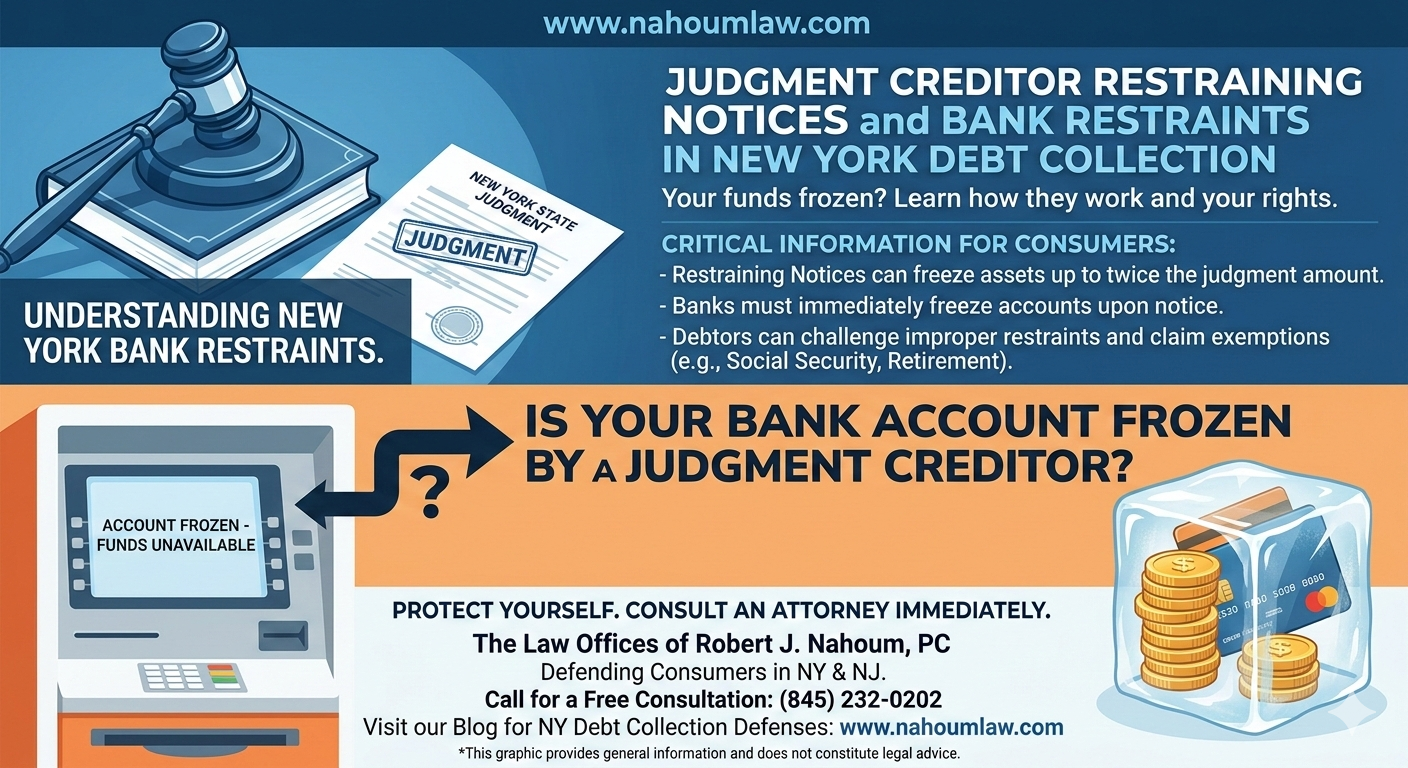
A restraining notice under New York CPLR § 5222 is a court-issued order served on third parties who owe money or hold property for the judgment debtor. It prohibits them from transferring funds or assets up to twice the judgment amount. Banks, investment accounts (other than retirement accounts), or anyone with the debtor’s assets can receive one, effectively halting payments to the debtor.
For example, if a creditor serves your bank, it must freeze your account balance upon locating it, holding funds for up to one year unless vacated. The notice binds all future debts or property coming into the recipient’s possession during its term.
How Bank Restraints Work
When a restraining notice hits a bank, it triggers an immediate account freeze, known as a bank restraint. The bank searches its records, identifies matching accounts, and restrains non-exempt funds without prior debtor notice in some cases. Creditors must mail a notice to the debtor’s last known address within four days if none was sent in the prior year.
This can lock consumers out of checking, savings, or safe deposit boxes abruptly, disrupting daily life. Exemptions apply to certain funds like Social Security, retirement or public assistance, but creditors may contest them in court.
Legal Process and Debtor Rights
Judgment creditor lawyers issue these directly to the bank without having to go through court. They remain effective for one year and can be renewed. Debtors can challenge improper restraints via motion to vacate, claiming exemptions or service errors.
Impact on Consumers
These tools turn a paper judgment into real financial pressure, freezing account funds unexpectedly.
At The Law Offices of Robert J. Nahoum, PC, we represent consumers sued by debt collectors, helping vacate wrongful restraints and assert exemptions. Visit our blog for more on New York debt collection defenses.
Protecting Yourself
Consult an attorney immediately upon receiving a restraining notice. Document exemptions and file objections promptly. For skilled defense against aggressive judgment enforcement, contact Nahoum Law serving clients throughout the tristate area.
The Law Offices of Robert J. Nahoum, P.C. focuses on protecting consumers from abusive or unlawful debt collection practices in New York and New Jersey. If you have been served with an information subpoena or any other post‑judgment enforcement papers, call The Law Offices of Robert J. Nahoum, P.C. today to discuss your options and protect your rights as a consumer.
The Law Offices of Robert J. Nahoum, P.C. represents New York consumers who are sued by debt collectors and who are facing judgment enforcement, including wage garnishments and bank restraints. You can learn more about our consumer protection and judgment enforcement work and contact us through our website at https://www.nahoumlaw.com.
The Law Offices of Robert J. Nahoum, P.C. defends consumers across New York in debt collection cases.
Contact us today at (845) 232-0202 or visit www.nahoumlaw.com for a free consultation.
Disclaimer: This post provides general information and does not constitute legal advice. Laws regarding minimum wage and exemptions are subject to change; always consult with an attorney regarding your specific case.