
By: Robert J. Nahoum
When a debt collector wins a lawsuit and becomes a judgment creditor in New York, the real work begins: turning that paper judgment into money. An information subpoena is one of the primary tools judgment creditor debt collection lawyers use to locate a consumer’s assets so they can enforce a judgment through wage garnishments, bank levies, and property liens.
What Is an Information Subpoena?
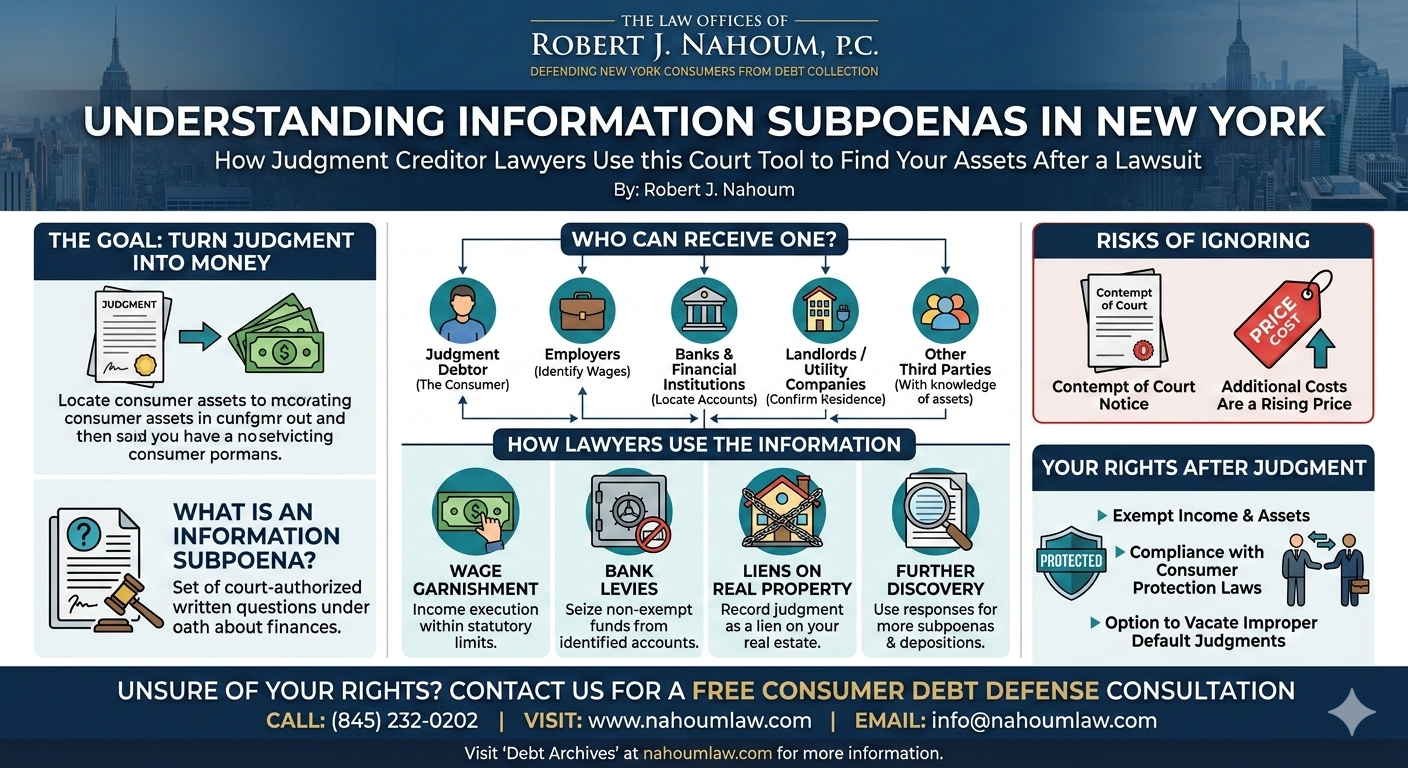
In New York, an information subpoena is a court-authorized set of written questions that a judgment creditor sends to the judgment debtor or to third parties who may know where the debtor’s assets are. The recipient must answer these questions in writing and under oath, providing details about income, bank accounts, real estate, and other assets that can be used to satisfy the judgment.
New York law allows a broad scope of inquiry after judgment, similar to other post‑judgment discovery. Information subpoenas are specifically recognized in the Civil Practice Law and Rules (CPLR) as a post‑judgment discovery device used to obtain financial information.
For more background on what a judgment is and how it affects you, see the debt collection articles on the Debt Archives of The Law Offices of Robert J. Nahoum, P.C., which explain how judgments are obtained and what they mean for consumers.
Who Can Receive an Information Subpoena?
Judgment creditor lawyers do not have to limit information subpoenas to the consumer alone. They can serve information subpoenas on:
- The judgment debtor (the consumer who lost the case).
- Employers, to identify wages that can be garnished.
- Banks and other financial institutions, to locate accounts for possible restraint or levy.
- Landlords or utility companies, to confirm residence, contact information, and sometimes payment sources.
- Other third parties who may know about the debtor’s income or assets, such as business partners, accountants, or former spouses.
Because many third parties have no personal stake in hiding the debtor’s assets, they often respond more promptly and accurately than the debtor.
If you have received an information subpoena and are unsure of your rights or obligations, contact The Law Offices of Robert J. Nahoum, P.C. for a free consumer debt defense consultation.
What Do Information Subpoenas Ask?
Information subpoenas typically include detailed questions designed to paint a full picture of the debtor’s financial situation. Common topics include:
- Employer names, addresses, and wage information.
- Bank names, branch locations, and account numbers.
- Real estate ownership, including home addresses and other properties.
- Other income sources, such as self‑employment, government benefits, or rental income.
- Interests in businesses, contracts, or other financial arrangements.
Once the judgment creditor lawyer receives the completed information subpoena, they can use the answers to choose the most effective enforcement method, such as a wage garnishment, bank levy, or real property lien.
How Judgment Creditor Lawyers Use the Information
Judgment creditor debt collection lawyers use information subpoenas as part of a broader judgment enforcement strategy in New York. Common follow‑up steps include:
- Wage garnishment: If the subpoena reveals an employer, the creditor can seek an income execution to take a portion of your paycheck within New York’s statutory limits.
- Bank levies: If the answers identify bank accounts, the creditor may serve restraining notices and executions on those accounts to seize non‑exempt funds.
- Liens on real property: If you own real estate, the creditor can record the judgment as a lien and, in some cases, pursue a forced sale subject to exemptions and practical limitations.
- Further discovery: If responses are incomplete or suggest additional leads, the creditor can use other post‑judgment tools like depositions or document subpoenas.
Skipping or ignoring an information subpoena can lead to contempt proceedings and additional court orders, which can increase pressure on the debtor and add to the cost and complexity of the situation.
To learn more about how ignoring debt collection papers can lead to default judgments and enforcement actions, see the discussion of default judgments in the Debt Archives at nahoumlaw.com.
Your Rights and How a Consumer Lawyer Can Help
Even after judgment, consumers in New York still have important rights. Certain income and assets are exempt from collection, and judgment creditors must comply with state and federal consumer protection laws. A consumer protection and debt defense attorney can:
- Review the validity of the judgment and enforcement efforts.
- Advise you which income and assets may be exempt from garnishment or levy.
- Help you respond properly to an information subpoena so you do not waive rights or risk contempt.
- Negotiate payment arrangements, settlements, or, where appropriate, move to vacate improper default judgments.
The Law Offices of Robert J. Nahoum, P.C. focuses on protecting consumers from abusive or unlawful debt collection practices in New York and New Jersey. If you have been served with an information subpoena or any other post‑judgment enforcement papers, call The Law Offices of Robert J. Nahoum, P.C. today to discuss your options and protect your rights as a consumer.
The Law Offices of Robert J. Nahoum, P.C. represents New York consumers who are sued by debt collectors and who are facing judgment enforcement, including wage garnishments and bank restraints. You can learn more about our consumer protection and judgment enforcement work and contact us through our website at https://www.nahoumlaw.com.
The Law Offices of Robert J. Nahoum, P.C. defends consumers across New York in debt collection cases.
Contact us today at (845) 232-0202 or visit www.nahoumlaw.com for a free consultation.
Disclaimer: This post provides general information and does not constitute legal advice. Laws regarding minimum wage and exemptions are subject to change; always consult with an attorney regarding your specific case.