
By: Robert J. Nahoum
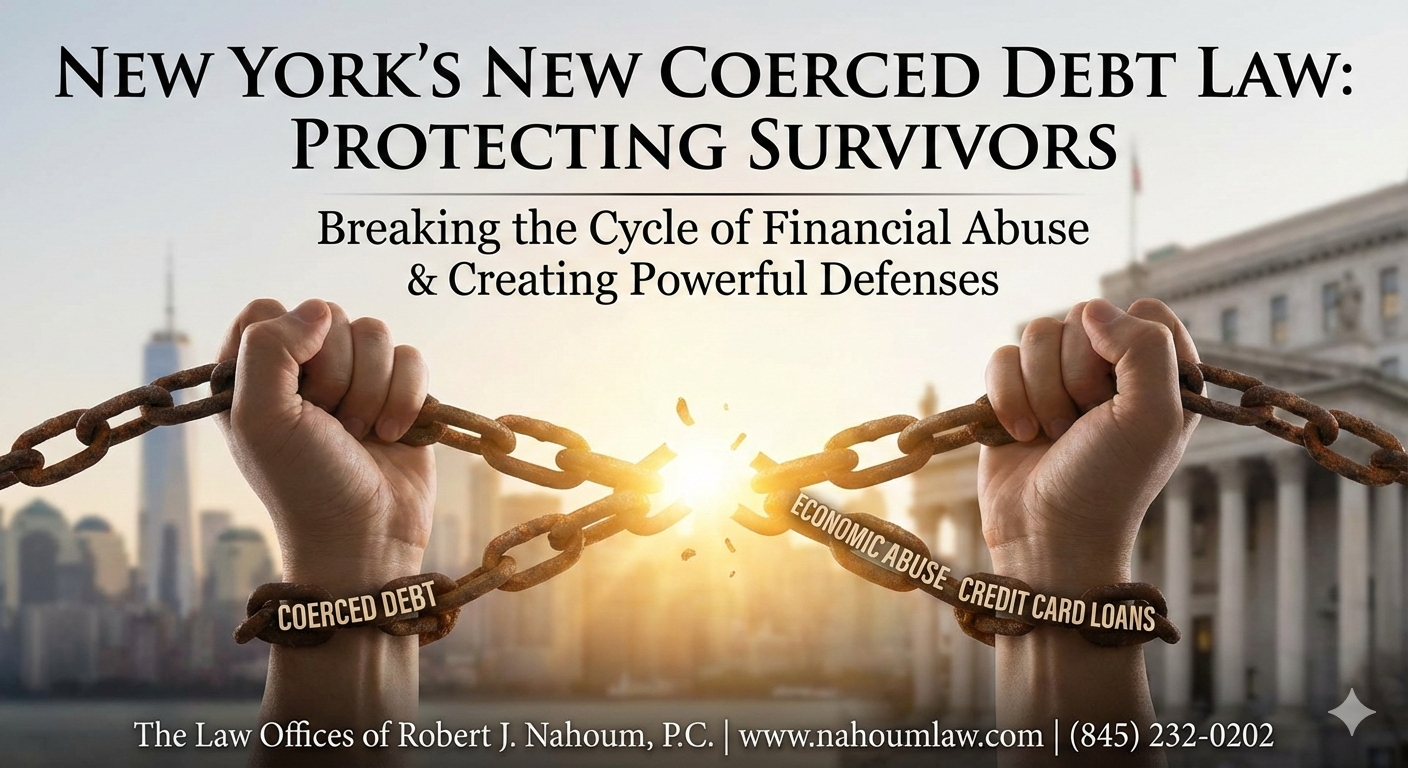
New York’s new coerced debt law protects survivors of economic abuse from coerced credit card, loan, and household debts and creates powerful defenses to collection.
What Is Coerced Debt?
New York has enacted a landmark coerced debt law that targets debts created through economic abuse rather than true, informed consent by the consumer. Coerced debt typically arises where an abusive partner, family member, trafficker, or caregiver forces, tricks, or pressures a victim into debts in the victim’s name.
Under the statute, “coerced debt” is broadly defined as consumer debt incurred as a result of economic abuse, including fraud, duress, intimidation, threat, force, coercion, manipulation, undue influence, or non‑consensual use of someone’s personal information. This definition captures a wide range of conduct, from opening credit cards without permission to misusing powers of attorney or forcing someone to sign loan documents.
Who the Law Is Designed to Protect
The coerced debt law is aimed at survivors of domestic violence, human trafficking, elder abuse, and other forms of economic abuse who are saddled with debts they never voluntarily agreed to take on. Survivors often discover large credit card balances, personal loans, utilities, rental arrears, or other household debts in their name that were opened or run up by an abuser.
Because economic abuse is so pervasive—research shows that nearly all domestic violence survivors experience some form of financial control or exploitation—the new law recognizes coerced debt as a serious barrier to safety and financial independence. By shifting liability away from the survivor and toward the person who caused the debt, the statute helps break the cycle in which victims remain trapped to avoid ruined credit or collection lawsuits.
Key Protections and Consumer Rights
The new coerced debt law creates a structured process for disputing coerced debts and temporarily halting collection activity while a claim is investigated. Once a survivor provides a sworn statement and supporting documentation—such as a police report, FTC identity theft report, court order, or notarized statement from a qualified professional—the creditor must pause collection efforts on the challenged debt.
If the creditor determines the obligation is coerced, it must stop collection, instruct credit reporting agencies to delete adverse information, and, when applicable, notify the original creditor. If the creditor rejects the claim and resumes collection, it must explain its good‑faith basis in writing and advise the consumer of the right to seek reconsideration and to sue. Survivors harmed by violations of these procedures can pursue statutory damages, actual damages, and attorneys’ fees.
Private Lawsuits, Defenses, and Creditor Remedies
In addition to the dispute process, the law authorizes survivors to bring civil actions asking a court to declare a debt, or part of a debt, to be coerced. If the survivor proves coerced debt by a preponderance of the evidence, the court can declare the consumer not liable for that portion, enjoin current and future collection, and order corrections to the consumer’s credit reports.
The statute also creates affirmative defenses to collection suits, allowing coerced debt survivors to raise the issue directly when sued on a credit card, loan, or other consumer account. Importantly, the person who actually caused the coerced debt can be held civilly liable to the creditor and/or the survivor for the coerced amount, including reasonable litigation costs and attorneys’ fees, so creditors can pursue the true wrongdoer instead of the victim.
Safety, Privacy, and Public Enforcement
Recognizing the safety risks faced by survivors, the coerced debt law requires courts to take appropriate steps to protect privacy when a coerced debt claim is raised. Courts may seal records, redact personally identifying information, or use remote appearances where necessary to reduce the risk of further harm or retaliation.
Public enforcement is layered on top of these private rights, as the New York Attorney General is empowered to seek injunctions, restitution, and civil penalties for violations of the coerced debt provisions. This combination of private remedies, affirmative defenses, and government enforcement underscores New York’s commitment to ensuring that survivors of economic abuse are not forced to pay for debts incurred through coercion.
If you need help settling or defending a debt collection lawsuit, stopping harassing debt collectors or suing a debt collector, contact us today to see what we can do for you.
The Law Offices of Robert J. Nahoum, P.C
(845) 232-0202
www.nahoumlaw.com
info@nahoumlaw.com