
By: Robert J. Nahoum
A Frozen Bank Account Is Not an Immediate Loss of Funds
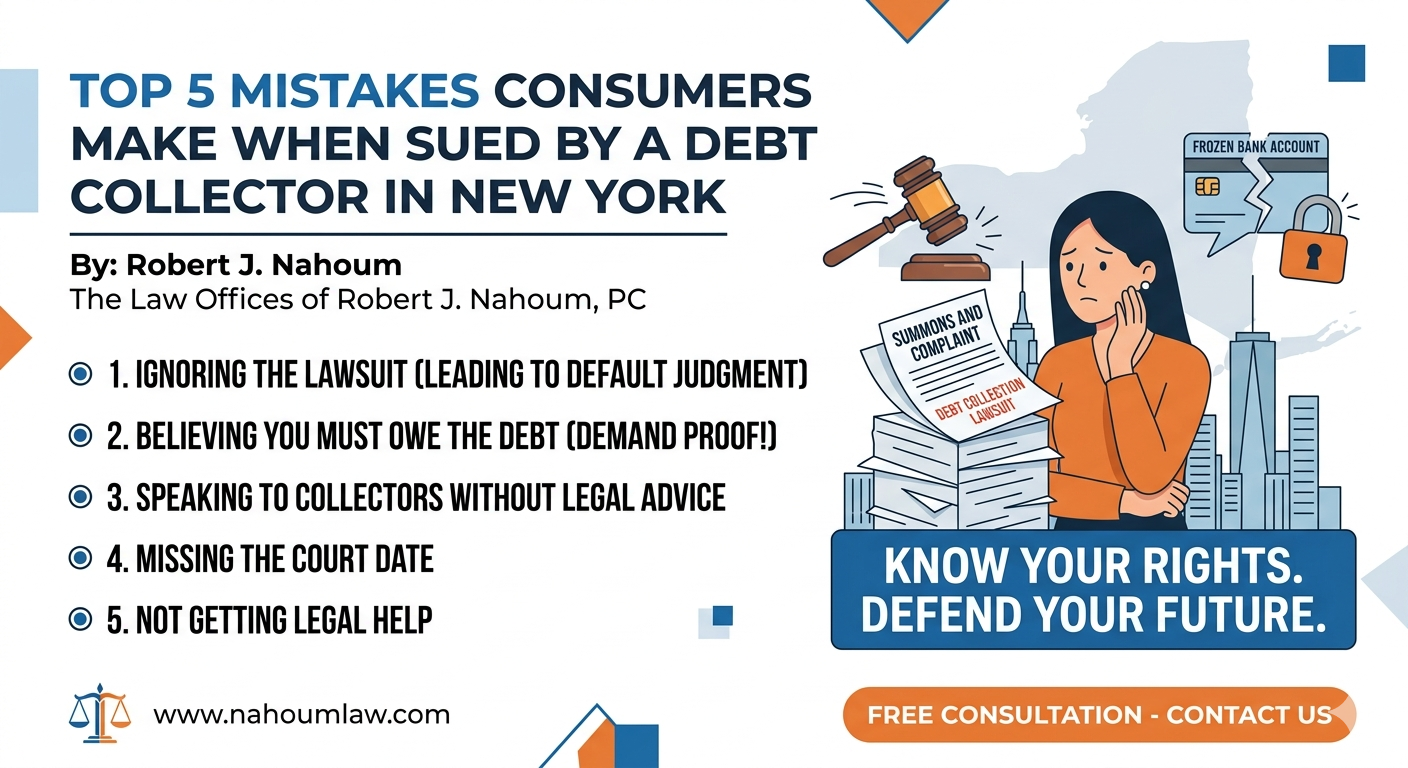
Being sued by a debt collector in New York is stressful and confusing. Many consumers make costly mistakes that hurt their chances of defending the case or negotiating a fair resolution. At The Law Offices of Robert J. Nahoum, PC, we’ve helped countless clients stand up to debt buyers and collection law firms. Here are the top five mistakes to avoid if you’ve been served with a debt collection lawsuit.
- Ignoring the Lawsuit
Doing nothing is the single biggest mistake you can make. When you don’t respond, the debt collector can win by default judgment, giving them the legal right to freeze your bank account or garnish your wages. In New York, you usually have 20 to 30 days from service to file an answer with the court.
Learn more about what to do if you’ve been served with a debt collection lawsuit.
- Believing You Must Owe the Debt
Debt collectors often can’t prove they own or have the right to collect the debt they’re suing on, especially when dealing with junk debt buyers who purchase debts for pennies on the dollar. Always demand proof. You have the right to force them to produce proper documentation showing that you actually owe the amount claimed.
See why debt buyers must prove their case in court.
- Speaking to the Debt Collector Without Legal Advice
Once you’ve been sued, any statements you make can later be used against you. Some consumers admit to owing the debt or agree to settlements they can’t afford. Consult with an experienced New York consumer defense attorney before you speak to the collector or file your court papers.
Our firm offers free consultations for consumers facing debt lawsuits — contact us here.
- Missing the Court Date
Failing to appear in court gives the debt collector an easy win. Even if you filed an answer, you must show up for the scheduled hearing or trial. Failing to appear can lead to a default judgment, damaging your credit and enabling aggressive collection tactics.
Find out what happens if you miss a court date in a debt case.
- Not Getting Legal Help
Debt collection law in New York is complex, and most consumers don’t know about defenses such as statute of limitations, lack of standing, or improper service. A skilled consumer attorney can often get the case dismissed or settle it for a fraction of what’s claimed.
At The Law Offices of Robert J. Nahoum, PC, we represent consumers across New York State who’ve been sued by debt collectors. We understand the tactics used by collection law firms — and we know how to fight back.
FAQ: Sued by a Debt Collector in New York
- Can a debt collector really sue me in New York?
Yes. Debt collectors and debt buyers have the right to sue, but they must prove they own the debt and that you actually owe it. Many lawsuits are filed with incomplete or inaccurate information — which means you may have valid defenses. - How long does a debt collector have to sue me in New York?
In New York, most consumer debts have a statute of limitations of three years. If the collector files after that, you may be able to get the case dismissed. - What happens if I ignore a debt collection lawsuit?
Ignoring the lawsuit leads to a default judgment, which allows the collector to garnish wages or freeze your bank accounts. Always respond by filing an answer or speaking to a lawyer. - How can I tell if the debt collector owns my debt?
Ask for proof. Under New York law and the Fair Debt Collection Practices Act (FDCPA), you can demand documentation showing how the debt was transferred. Junk debt buyers often lack the necessary records. - Can I settle a debt collection lawsuit before court?
Yes, settlement is often possible, either before court or after filing an answer. A consumer attorney can negotiate fairer terms and ensure that the agreement protects your rights.
If you’ve been sued by a debt collector in New York, act quickly. Contact The Law Offices of Robert J. Nahoum, PC for a free consultation and find out how we can help defend your rights.
If you have been contacted by a debt collector contact us at (845) 232‑0202 to discuss your options.
Disclaimer: This blog post is for informational purposes only and does not constitute legal advice. Every case is different; you should speak with an attorney about your specific situation before making legal decisions.